Full Description
In most cases, if a plant or animal is not a "threat" or a "mcguffin" that is required to complete some quest, most gamers just blow them off. Here these plants are just background. They don’t eat people. They might have some function in the ecology, but they don’t boost players or create magical effects. In short, they are normal plants.
Read through the posts before you go and do more.

Please
register
to add an idea. It only takes a moment.
Codex
Broad Oaks
By: MoonHunter
( Lifeforms ) Flora -
Forest/ Jungle There are times at night when you think the evil tree spirits are out to get you. They open their eyes. They reach for you, grasping for your soul. When you try to run, the very ground rebels, you trip and fall, often finding the branches reaching for you in the night air.
[
Show / Hide Submission ] [
Visit Submission ]
Broad Oaks are just that, Oaks that tend towards great width than height, more so than most oaks. The Broad Oak branches are longer, more gnarled, than most oak branches. (These gnarls will often catch fur and fabric of creatures brushing against them as well.) They also tend to fork multiple times near their ends. While they do appear in groves, they will “randomly” appear in any oak forest.
The Broad Oak has a broader root “sphere” than most oaks. Like the branches, the roots fork more than regular oak roots. Many of these roots will run along the surface. They create a “bramble” or area where the dirt under the roots has eroded slightly. This make excellent nesting areas for rodents, snakes (many poisonous), and other small animals. It also makes great places for animals and people walking and running through the area to trip and break their ankles. Of course, in a panic most people will entangle themselves in the other surface roots of the bramble.
In half light or low light, Broad Oaks branches appear more menacing… more spoooky… ent-like. This is not aided by the fact that owls and tree orriented cats tend towards living in them. (Giving glowing eyes in the half light).
Additional Information
How this will play out…. One broad oak with an owl will act like a scary tree. People back up and get “touched” by a low gnarled branch… grabbing them. They will then run away encountering a larger bramble zone and have to make multiple tripping and falling rolls.
Add/View Ideas (0)
Add/View Comments or Vote (4)
Creepers
By: MoonHunter
( Lifeforms ) Flora -
Desert "It was another beautiful sunset in the wastes. In the distance I could see an entire meadows worth of plants sliding to a safer place for the night." Exerpt: A Prospector’s Tale, VOL XXIII Blue Guild Press
[
Show / Hide Submission ] [
Visit Submission ]
Creepers are large ground cover plants, clusters of vines that create a lattice or net. The central pod puts out 12 to 50 runners (vines that can root and continue on). Each creeper can cover about a twelve foot (3m) diameter circle with a slightly sticky tangling net of vines. There are no regular plants in The Wastes. Each vine/ tentacle is able to slowly move. Though they are easily evadable by a conscious adult. It allows them to capture and crush small creatures that disturb a vine (the corpse is crushed and vital fluids sink into the ground to be absorbed by various shallow runner roots). They are not great hunters. Their mobility is used for, well…. mobility. A Creeper can move at a slow walking pace in search for new water/ minerals or less acidic places.
Did we mention that Creepers live in herds or colonies of 5 to 20? They will move together in a large mass. This large mass and their mobility helps prevent the Verners from eating them all up at one time. Because they are eaten by the Verners (or insert other large omnivore/herbavore), they can not grow into large numbers. If they could, they could stabilize the semi-liquid soil, much the way real plants reinforce regular soil. But since they don’t, the Wastes are forever semi-liquid.
Add/View Ideas (0)
Add/View Comments or Vote (0)
Dog Pods
By: CaptainPenguin
( Lifeforms ) Flora -
Any A plant named for its gords, both in the smell of wet dog and for their roughly dog like appearance.
[
Show / Hide Submission ] [
Visit Submission ]
Full Description
Dogpod is a low growing species of gourd which is related to squash and pumpkin. From a tough, thick central stock, there grow twisting, leafy vines which sprawl in a wide circle around the center. From these vines grow it’s name sake, the dogpods.
Dogpods are instantly recognizable. They are about the size of a human head, and for all the world resemble a fibrous, warty, orange-yellow dog curled up to sleep. Though most will tell you that they taste awful, some cultures (generally those who also eat dogs or do not know of dogs) roast and eat dogpod as a staple.
Additional Information
In the early summer, dogpod vines burst out in riots of large pink flowers which smell of wet dog.
Add/View Ideas (0)
Add/View Comments or Vote (7)
Drooping Trees
By: MoonHunter
( Lifeforms ) Flora -
Desert "Just when I thought it could not get any hotter, we cleared the crest of a small hollow. There was the most magnificent sight, a huge shadey tree hidden in the depression. It must of been there for decades for I had never seen a Drooping Tree that large before and in my decades of prospecting since," Exerpt: A Prospector’s Tale, VOL XXIII Blue Guild Press
[
Show / Hide Submission ] [
Visit Submission ]
These fast growing trees look like broad, relatively low weeping willows. They have spread out roots and limbs as to protect them from Verners (as a Verner will not eat what it can not easily get into their huge maws). Most droopers do not live long enough to gain their protective size. The Drooping Trees live only about six years before the toxic nature of The Wastes destroys them, and three of those years are growing to that full size. Few droopers managed to make it to any notable size.
Their wood is soft and full of smokey resin that unleashes an obnoxious smell. So Droopers are useful for little but a bit of shade.
Drooper leaf pods blow on the wind and can be quite a bother. They are like a pea pod - long, but with only one bean in the top most piece. The rest of the curly pod allows it to flitter in the wind. They can nod seed outside The Wastes, as the acid is required to eat through the pod for the seed to germinate.
Add/View Ideas (0)
Add/View Comments or Vote (0)
Flute Grass
By: MoonHunter
( Lifeforms ) Flora -
Any The Wastes are never silent. There is always a baleful music on the wind.
[
Show / Hide Submission ] [
Visit Submission ]
This is a slender short bamboo that grows in the soft ground of The Wastes in a variety of colors. As the ever present winds blow across the low bamboo, a whistling noise occurs. The eerie song actually has an odd vibration to it, keeping The Varner (and some other large predators) away.
This plant could be found in other places as well, but has yet to be transplanted. In places other than the Wastes, it would simply range in color from yellow to green.
Add/View Ideas (0)
Add/View Comments or Vote (0)
Fydres
By: MoonHunter
( Lifeforms ) Flora -
City/ Ruin Fydre tried to destroy cities and return people to the Green in his lifetime. His “curse” attempts to drive people out of the cities.
[
Show / Hide Submission ] [
Visit Submission ]
Fydre was a charismatic and vocal follower of the Old Green (Druidic) Religion. He would often be found in the cities and town trying to get people to return to “the proper pantheon of The Land”, which to be honest, nobody had been following for a good century. Soon after he faded from public view, the weed known as Fydres (or Fydre’s Revenge, Fydre’s Curse, Elven Curse) was noticed in volume. In truth, nobody knows the origins of this plant. It could be something from far, far away born on the wind. It could of been his dying curse.
Fydres is a plant that grows in cracks and compressed earth (out from under heavy things). It is an ugly vine that sends runners out and sprouts a grass-like cluster everywhere it takes roots to ground. It grows like a weed in the unlikliest of places. It is a hardy vine that is fiberous and has tiny pickles. In short, it is a nightmare to remove.
The weed slowly becomes destructive. It expands cracks it grows in, it seems to pull runners tigher with age displacing stones. Thus Fydre disrupts cobblestone streets, helps displace the walls it grows upon, and can help to “decompose” abandoned and not so abandoned places. In short it is the bane of every urban environment of the region.
Additional Information
Any ruins, historical or recent, quickly become overrun by these plants. They crumble to rubble at an alarming rate with the assistance of the plants.
It does not effect just buildings. It is also the bane of any rock formation, as the same “features” helps break down and aid in the errosion of rocks. (Admittedly this does happen more slowly.) Thus making a number of mountain passes and Dwarven holds more dangerous.
It is this fact that it breaks down cliffs and rockfaces that make scholars think it is not some kind of magically created retribution plant, but simply transplanted spores from elsewhere.
Add/View Ideas (0)
Add/View Comments or Vote (4)
Glacier's Sigh
By: Siren no Orakio
( Lifeforms ) Flora -
Tundra/ Arctic The delicate flower of the deepest Arctic, bearing the essence of ephemeral purity.
[
Show / Hide Submission ] [
Visit Submission ]
Full Description
In blossom, a fragile, three-petaled flower, as translucent as new-frozen ice, is lifted towards the sky by a slender stalk of a pale, translucent green, enwrapped from below by three leaves of the same pale green, as if the flower itself were a butterfly to be supported with the most gentle of touches.
Surviving only a few short weeks in the arctic, in the deepest parts of Winter, Glacier’s Sigh is remarkably sensitive to the heat, melting away at human touch, and even the heat of the breath of a man many feet away is enough to cause it to droop and wilt, rendering it nearly impossible to cultivate. More, it will only take root in fresh-fallen snow, never melted and untrod upon.
Additional Information
However, the Glacier’s Breath is not without it’s tenders in the wild, as it is a favored decoration for the fae of the Winter, who’s icy touch can handle it without destroying it.
Over the millenia, the flower has slowly absorbed a small portion of the fae tender’s magic, so exposed as it has been. Thusly, it is prized by wizards and alchemists, who can use it to invoke youth and ephemerability. Properly distilled, an elixer of the essence of Glacier’s Sigh will bestow youth upon the drinker, but also cause them to age far more rapidly.
Add/View Ideas (0)
Add/View Comments or Vote (7)
Goldleaf
By: Kassil
( Lifeforms ) Flora -
Mountains Prized for the metallic sheen of the foliage, this peculiar plant dwells on the banks of mountain rivers, relying on heavy metals and photoelectric power to spread itself
[
Show / Hide Submission ] [
Visit Submission ]
Full Description
Goldleaf, also known as the Lightning Tree and Miser’s Burden, is an offshoot of the oak family, with a rust-red bark on the trunk and branches; the leaves are a rich green with faint traces of golden veins in the early seasons, but as autumn rolls around the green gives way as the golden hue spreads. In mid to late autumn, the trees often exude a scent of ozone; as the trees begin to shed their leaves, cracks and pops are often heard in the mountains as the dull red acorns are flung from the tree in small bursts of sparks, flying as far away as fifty feet before hitting the ground.
The first of the tree’s collquial names, Lightning Tree, stems from both these bursts of sparks during the late autumn and the way lightning strikes are drawn to the oaks due to their relatively high metal content.
The second name derives from the way the tree’s branches drop and sag in the autumn, giving the entire plant a hunched-over and joyless look as it glistens with golden leaves, much like a miser hoarding coins.
Additional Information
Goldleaf grows most readily in areas where the soil contains relatively high levels of iron and gold; thus the hardiest groves are found alongside streams in the mountains, and their presence is seen as evidence that a hopeful prospector is on the right track to strike it rich. The plants draw on the iron to strengthen their limbs and trunk, and to imbue the acorns with enough of the ferrous metal to respond to electrical charges; the gold is seen primarily in the autumn, as the tree’s leaves become natural photovoltaic panels, building an electrical charge within small nodules that the tree’s acorns hang from. When the charge passes the level that the heavily metallic nodes can contain, they discharge, creating a strong pulse of electromagnetic energy that hurls the nearest acorns away on wild arcs. Living creatures in contact with the tree as this happens are likely to receive a strong electrical shock, enough to stun a grown man.
The leaves are prized when they fall due to the concentrations of gold in them; while a single leaf contains only a tiny amount, the complete shedding of a tree’s leaves are sufficient to fetch a good price from any jeweler or alchemist who has need of gold. Mountain-dwelling races sometimes cultivate the trees as a result, burying pulverized gold ore in the groves and selling the resulting autumnal fall to the lowland races.
Goldleaf wood is also prized by those who know of the remarkably sturdiness of it; used as structural supports, it can ensure a building’s ability to remain standing where those crafted of a more common wood collapse, and the metallic density makes it a difficult material to burn. When it does, however, it tends to release toxic smoke, and the ashes often retain a burning heat for long hours after other materials have gone cold.
Add/View Ideas (0)
Add/View Comments or Vote (14)
Headsmans Tree
By: valadaar
( Lifeforms ) Fauna -
Forest/ Jungle A tree of somewhat macabre aspect - its coconut-sized fruit have hair-like fronds hanging down, suggesting decapitated heads dangling from the tree.
[
Show / Hide Submission ] [
Visit Submission ]
Full Description
A medium-sized tree when full grown, the tree stands 20-30’ in height. Foliage and bark are relatively unremarkable - oval leaves with shallow scalloping along the edge, and a smooth, light brownish-grey bark.
What is remarkable about the tree and the feature that gives it its name are its fruit. The fruit are large - 6" - 8" in diameter and have an odd profile, suggesting a nose and chin when looked at from different angles. Adding to the affect is the hair-like fronds which hang down from the fruit’s top.
When seen under poor visibility - night time, heavy rain or fog, the tree has the disturbing appearance of having dozens of ‘heads’ hanging from it.
Additional Information
Despite its macabre appearance, the Headsman’s Tree has no magical properties and no special ties to darkness or infernal powers. This has not, of course, stopped its being ascribed such powers by man. A plant with a wide range - from tropics to temperate climates - it is found pretty much anywhere and is known to most cultures on Neyathis. It has been ascribed mythical properties - the Theosians use its wood almost exclusively in the construction of the many Gallows found there, and this has lead to it being fairly rare within that country’s borders.
The fruit are commonly used during rituals and festivals associated with death or the supernatural.
Its fruit is edible and nutritious, but high in tannins which make it rather bitter. The wood is a good quality hardwood and it is often used for furniture.
Campaign Use
The headsman’s tree is a forest prop, the tree can give a forboding atmosphere, especially when first encountered in poor visibility situations. First glance will paint the picture of a tree festooned with decapitated heads, putting people quite on edge.
-One could introduce magical or monstrous varieties of this tree if desired - it could easily go in that direction. One such tree could act as an oracle or sage of evil aspect, with the fruit actually having eyes and mouths that speak for the tree. For the right type of offering, the tree would answer questions, albeit perilously. If offended, the tree could call forth spectres to assault the offenders.
-These trees could be the favoured abode of various evil spirit-folk, often found with little houses constructed of animal (and perhaps human) bones nestled in it’s branches.
-Death cults appreciate the effect these trees have in inspiring fear and may plant these trees in abandance about their temples and meeting places.
-As warnings/intimidations or even mean-spirited pranks, people might leave these ‘heads’ on people’s doorsteps, possibly makeing them up to resemble their targets.
Add/View Ideas (0)
Add/View Comments or Vote (6)
Isuni Meneratt
By: Nobody
( Lifeforms ) Flora -
Forest/ Jungle An extremely exotic tree that is unlike any other. It is used world wide in the finest palaces and establisments…
[
Show / Hide Submission ] [
Visit Submission ]
Details
The Isuni Meneratt is a tree in the flowering plant family. The plant is native to the Nedishan rainforests where it is called by its native name Teshna Fo-Shet, or “tree of the burned flesh”, as it is most directly translated.
It is a small evergreen tree growing to 10-12m tall, with a long, hollow trunk about three meters across, with the hollow “eye” about a meter in diameter. The trunk is porous, containing small tubes through the trunk that lead from the inside of the trunk, and upward to the outside. The holes on the outside of the trunk are covered with bulbs that are composed of an elastic substance. Covering the entire inner trunk is a thin, brown jelly that slowly oozes out of it’s many tubes.
Further separating the Isuni Meneratt from other trees are its long, sheath type leaves 4-7 meters long and 3-10 cm wide, which hang from the top of the Isuni Meneratt like ribbons that start out black at the top of the tree, and end white at the tip. The leaves are not leathery to the touch like many trees, but are actually composed of a rather spongy material that is always moist with water. These leaves are cold to the touch.
Indeed, not only are they cold to the touch, but they actually cool the air around them as well. In their moist, native climate, this cooling of the air creates a sort of continual rainfall for the Isuni Meneratt, which is good, because the tree requires large amounts of water to survive. The difference in temperature can be quite startling, as the leaves of the Isuni Meneratt can bring the temperature down to as little as 60 degrees Fahrenheit.
The Isuni Meneratt actually contains a natural anti-bacterial, which prevents the tree from rotting, and although it’s skin is relatively weak to physical damage, few animals bother the tree. That is because the pods on the outside of the tree contain an extremely foul smelling chemical, which acts both as a natural pesticide to bugs that penetrate the pods, as well as a strong deterrent to animals who decide to rub up against the tree. When these pods are broken, not a hard task by any means, they pop, releasing their foul smelling contents onto any predators.
The leaves actually absorb both light and heat for the Isuni Meneratt. The light and heat that gets absorbed is transferred to the tree, which then uses that, and minerals from the soil, and water, to form the gelatinous substance that covers the tree’s inner spiral. This substance is extremely flammable, and if enough congeals in a single place, causes a thermal reaction that forces it to ignite. Once on fire, the “eye” of the tree can reach temperatures well into the hundreds, and spouting a gout of flame that leaps dozens of meters into the air.
The air within the "eye" of the tree then expands as a result, forcing extremely hot air through the tubes and into the pods. The pods' less-than-solid structure allows them to expand to almost ten times their original size, where they finally release from the tree, and pull a thin membrane with them that close the pods. The pods now act as hot-air balloons, floating high into the sky, and potentially traveling great distances before they finally land, and collapse in a puff of terrible smelling vapor that keeps animals and insects from eating the seeds inside. Only good soil and large quantities of water will allow the new seeds to sprout. Meanwhile, the Isuni Meneratt, undamaged by the fire due to it's flame retardant inner coating, begins producing new pods and flammable jelly.
Uses
The Isuni Meneratt has become one of the most famous and exotic trees anywhere. Although expensive to maintain, and costly to handle, the Isuni Meneratt is exported to palaces all over the world as a primitive form of air conditioning that is none-the-less extremely effective.
The Isuni Meneratt can only be employed in the finest of places for many reasons. For starters, it requires ample supply of water, and rich soil. Also, extreme pains must be taken to ensure that the tree’s bad smelling chemicals do not cause any problems. This effectively means that the trees must be kept on a basement level below the room that is to be cooled with the tree’s top (it’s leaves only) emerging into the upper room. An air tight seal is needed between the floors to ensure that no bad smells seep through, even a little is enough to fill a room with an unpleasant smell.
This is especially true when the tree lights on fire (causing all of it’s bad smells to rise). This aspect of the tree’s holding area is especially hard to maintain, as a flammable material will easily be immolated during the tree’s breeding cycle. A venting shaft is always required to vent excess heat and bad smells, but the shaft needs to extend far enough away as to not cause the immediate area around the building to smell terrible.
The Isuni Meneratt has other uses as well. The jelly that it secretes is nearly identical to Alchemist’s fire. Indeed, and alchemist rich enough to get an Isuni Meneratt and maintain it, can produce Alchemist’s fire for almost nothing except the cost of the tree. Elitist Alchemists will not even use another method, claiming that they can refine the jelly into a substance far more potent than any other substance.
The leaves also have many uses as material components in cold spells, although this use is rather impractical and not at all cost effective, because the tree will die without the leaves. Lastly, for the brave soul who dares harvest them, the seeds are like hard nuts, and once thoroughly (very thoroughly) cleaned and prepared, has a distinct flavor that can be added directly to soups or stews for flavor, or ground into a very fine spice. It fetches a high price on the market, and is rumored to be an aphrodisiac.
Add/View Ideas (0)
Add/View Comments or Vote (11)
Jewel-of-the-Mire
By: CaptainPenguin
( Lifeforms ) Flora -
Water “Like the Jewel of the Mire, the soul is a bright light along the dark path of time. “
—Scedebus Scholar
[
Show / Hide Submission ] [
Visit Submission ]
Full Description
The Jewel-of-the-Mire is a floating water-flower, that drifts in great mats in the rivers, swamps, and bogs of the Empire. The Jewel-of-the-Mire is similar to the water-lily, even to the point of looking similar, however, the Jewel-of-the-Mire comes in a variety of brilliant colors, ranging from deep indigo to pearly white to blood red. In some places, Jewel-of-the-Mire mats can completely cover the surface of the water, giving the appearance of a great meadow of flowers.
It is, however, at night that the Jewel-of-the-Mire shows its true beauty. During the moonlight hours, the Jewels seem to take on the Moon’s watery luminescence, glowing and releasing slow beads of light (in actuality clumps of the plant’s pollen) into the water below.
Add/View Ideas (0)
Add/View Comments or Vote (4)
King's Finger
By: Strolen
( Lifeforms ) Flora -
Any It is a squeeky clean flower.
[
Show / Hide Submission ] [
Visit Submission ]
Full Description
A small stalky flower that many would first guess as a weed. Small sharp bends on its stalk threaten sharpness but bend under the smallest amount of pressure.
The small groupings of thumbnail sized flowers are a dirty off-white color that are simply ugly. To smell the flower is to conjure a vision of decaying tree rot.
Additional Information
Not many would give it a second chance, but those that have realized that if the flower and stalk are mixed in equal proportions, boiled for 3 hours, and strained that they make the best handwashing water known. The subtle scent perfumes the hand just barely while the strength of it is enough to get the most stubborn boar or deer grease off the gnarliest of fingernails with a single dip.
Add/View Ideas (0)
Add/View Comments or Vote (4)
Liliensa Gigantus Gigantus
By: Murometz
( Lifeforms ) Flora -
Water [
Show / Hide Submission ] [
Visit Submission ]
The Colossal Water Lily, Liliensa Gigantus Gigantus
With leaves measuring some 3-5 meters in diameter and anywhere from 7-10 meters in length (!), and the ribbed, veined undersurface of intertwined leaves and roots, creating a bizarre, neural-network grid or matrix, the Giant Water Lily is truly a magnificent plant, and one that begs to be used in-game, if for no other reason, than to provide a visual of a natural flora, that seems to naturally belong in a fantastic realm.
As a reference, and for further inspiration, try googling images, ‘Giant Water Lily’.
http://images.google.com/images?hl=en&q=Giant+Water+Lily&um=1&sa=N&tab=wi
Nine and a Half Ways to use a Giant Water Lily in a game:
One Griggs are tiny fey with the upper torsos and heads of humans or elves, and the bottom parts of a grasshopper, a sort of grasshopper-taur if you will. These wee creatures prance and play on the flattened floaters, and use the great lilies as gladiatorial arenas as well as concert halls when they play their fiddles and clack their heels in time of merriment.
Two The underside of giant lily can be used as inspiration for the worlds greatest palatial demesne. Perhaps architects of some renown, having studied both the complexity and simplicity of the giant lilys form, and imitated its structure by constructing a wondrous palace for the ruler of some far-flung kingdom.
Three The Sisters of the Unwound Spiral lie on their backs upon the monstrous lilies, by the hundreds, and chant and meditate for forty-eight straight hours. This odd spectacle, and an annual event, takes place during early fall, sometime after the first harvest, as onlookers, gawkers, and the holy gather on the banks of the River-Swamp and stare at the Sisters ritual. The Sisters believe that the giant water lilies were once the very stepping-stones their goddess used, when she first strode forth across these lands in antiquity.
Four In the many legends of the Slow Moving River Clans, the water lily is spoken about with great reverence and pride. It is depicted by the clansmen, not unlike the Norsemens Sagas had depicted Yggdrasil. The Clansmen believe their exists the Grandmother Lily, a plant one hundred feet across and with roots that descend into the very core of the Earth. The dewdrops that form on her surface every dawn, are called Grandmothers Pearls by the clansmen, and are said to suffuse the drinker with great and simple wisdoms.
(The girls name, Lily, here among the clansmen, is considered one of great fortune destiny for the girl so named, and is indeed one of the more common appellations here)
Five A great race is run once a year along the meandering waters of a certain river, studded here and there with giant water lilies. Each year young men and women participate and compete in earnest in order to earn the prestige and the prizes that go to the winner. The race is long distance and fraught with difficulties. Aside from the occasional unfriendly river denizens to fend off, there is the need for patience and willpower as sometimes the lilies float apart, and a long wait ensues, as the contestant is not allowed to touch his feet to any surface other than the lilys pad.
Six Rumours among sages suggest that the colossal water lily is indeed an ancient and divine creation, and further speculate, that in some way, all the inherent secrets of any body of water which supports the floating plants, can be discerned by lying prone and motionless on the lilys back for as many days and weeks as it takes to achieve gnosis, after having smoked the dried up and ground, pink and milk-white flowers of the lily in question, of course.
Seven A malignant and nearly indistinguishable relative of the Colossal Water Lily could be a mix of giant lily and Venus Fly Trap. Perhaps a single step onto the innocent looking platform of this creature compels it to enact a sucking mechanism, which plunges the unfortunate stepper, beneath the murky waters, as the lily pad folds in twain violently, and where upon, he or she is molested and quickly punctured by the lilys countless, snake-like roots.
Eight A ceratin cult which dwells amidst the bogs and swamplands, believes in taming and revering the ‘River Spirit’ by offering its fattest and most robust newborn babe of the season, and leaving it sittng in the middle of a giant lily pad, leaving it for the Spirit to come and claim. What sort of creature this may be is anyone’s guess. Chances are, the PCs will not take kindly to this tribal practice, and the chances are even greater, that they will no doubt face the Great River Spirit in a pitched battle, hopping from pad to pad. Frogger anyone?
Nine-and-a-Half Where better than to discover or come upon an imp or familiar,sitting in lotus stance of course, than in the center of the lily pad. The peculiar flora serves as the perfect stage for a PC audience, as they quietly comes upon and witness the forbidden beauty of a basking nymph, swanmay, or dryad. Where better than atop a giant lily, can one stumble upon their yoda-like guru, teacher, or master? Perhaps an ingredient of a particular spell calls for the bottom-most root of the Giant Lily, and some perilous swimming needs to be undertaken, perhaps one particular, indistinguishable, plant of this species, is really a polymorphed queen of a bygone age, awaiting release from her magical prison.
In closing, when selecting river plants for your wetlands campaign, do not forget the magnificent, Liliensa Gigantus Gigantus. I hope to eventually make this part of an open codex, "Nine and a Half Ways to Use A…" featuring bizarre plants and animals of our natural world.
Add/View Ideas (0)
Add/View Comments or Vote (7)
Night Eyes
By: Kinslayer
( Lifeforms ) Flora -
Mountains Sometimes, someone is watching in the middle of the night.

[
Show / Hide Submission ] [
Visit Submission ]
Full Description
Night eyes are tiny, delicate, pale blue flowers with white stigma. They only open at night, and have a unique tendency to point to the mid-point between the two moons.
Even when the night eyes plant is moved, the flowers still point to the moons, but it may take a few hours for them to turn to the correct point. Night eyes will continue to point towards them until just before dawn.
Additional Information
It is worth noting that the flowers do not bloom if neither moon is visible in the sky. This facinating property can potentially be used to tell time, or for navigation, but the plant is far to delicate to the survive rough handling that may be needed for such endeavours.
Add/View Ideas (0)
Add/View Comments or Vote (5)
Orc Rose
By: MoonHunter
( Lifeforms ) Flora -
Any A careful forester keeps an eye out for the Orc Rose. The presence of Orc Roses in an area often shows that Orcs have been, or are, in the area. This way they can avoid suprises.
[
Show / Hide Submission ] [
Visit Submission ]
Full Description
This flower looks like a miniature greenish brown rose, even though it is a flower rather than a bush. This small plant has small stinging nettles along its spine instead of thorns. (98% of people are allergic to the nettles to some degree). The leaves are small and jagged. The flower has little to no smell of its own, but since it only grows in decomposing middin (including offal piles, old latrines, decomposing animals or plant matter), few notice that fact.
Since Orcs tend to live in and around large amounts of middin, ofal, and blood pools, the flowers have become associated with them. (Orc tribes actually spread the spoors as they migrate) In fact, the presence of Orc Roses in an area often shows that Orcs have been, or are, in the area.
Additional Information:
Note other Goblinoids tend to have Orc Roses around them as well.
Add/View Ideas (0)
Add/View Comments or Vote (8)
Orcweed
By: Kassil
( Lifeforms ) Flora -
Any "My god, what is that?"
"Orcweed, sir. Never need a wall with this growing."
[
Show / Hide Submission ] [
Visit Submission ]
Full Description
Orcweed is a tough, ridiculously hardy plant that grows almost anywhere it can find open space. With a stalk nearly as thick as a man’s thumb, shaded a bilious green hue, jagged thorns that jut out in a way reminiscent of orcish tusks, and eye-searingly vivid, powerfully rancid-smelling flowers that thankfully only blossom for a few weeks before withering, it is very definitely a survivor among plants. Even without cultivation, it grows in wild clusters across the countryside,untroubled by much of anything but the hardiest of grazers and the verminous flies that spread the orcweed’s pollen.
Some few settlements have discovered it can be cultivated, however; growing steadily around the year, if dying sections are trimmed away, orcweed can easily reach eight to ten feet in height, with wicked barbs capable of punching through boiled leather and stalks tough and springy enough to withstand an infantry charge, or dissuade most cavalry due to the thorns. For those willing to tolerate the flies that swarm when the orcweed blooms as well as the constant maintenance to keep it from spreading, it makes a fantastic palisade, capable of discouraging even the wildest of attackers - save, perhaps, orcs, who find the smell and color of the flowers appealing, often appearing bedecked in them during the brief blooming season.
Orcweed’s flaws are few, but noticable:
-The thorns are vulnerable to direct fire, which will also tend to scorch the stalk enough to release the vision-inducing fumes into the smoke.
-Orcweed flowers retain their potent stink for close to three months after the initial bloom, with the measurable increase in both flies and appearances by orcish tribes during this time.
-If allowed to die and rot, the pulp in the stalk tends to quickly rot and ferment into a powerfully repulsive sludge that bursts the stalk within a few days, soaking into almost any surface and rendering it unpalatable for anyone with a sense of smell.
Additional Information
Orcweed also has some few medicinal properties, if the side effects can be tolerated.
-The thorns, ground to a powder, can be inhaled through the nose to dull the sense of smell for those who need to work in potent-smelling conditions; unfortunately, for the few weeks it takes for the effects to wear off, the users are prone to spontaneous nosebleeds.
-The flowers, dried and used to brew a tea, produce a purgative effect, but leave the user suffering from a rancid taste in the mouth for several days thereafter.
-Smoke from burning green orcweed can help produce visions in those seeking them, but the hideous odor of the smoke clings to everything touched by it for days.
If harvested and dried, the flowers can often be traded or sold to orcs after the blooming season is past; some chemical component is the flowers’ scent actually smells sweet to the orcish senses, and their spectrum range is skewed such that the flowers actually having a pleasing hue rather than eye-burning.
Unfortunately, convincing the weed to remain in the stand where it is wanted is a difficult task, year-round; if care is not taken, stands of orcweed will rapidly be found blooming in gardens, middens, and in a few cases, chamberpots left too close to an open window during the brief blooming season. Added with the way that orc tribes will tend to show up every few days while the flowers retain their odor, most settlements still prefer a solid wooden wall over the orcweed thicket-wall.
Ecology
Orcweed, not surprisingly, is not an entirely natural creation. The shamans of an orcish tribe now extinct were responsible for it, seeking to make a plant the tribe could use for decoration (the flowers), utility (the tough, sturdy stalks make excellent carry-poles, and can be used for shamanic visions), and weaponry (for a few weeks, the orcweed’s thorns make excellent spear points).
Unfortunately, the tribe was unaware of how prolific the plant was once bred, as up until the final generation was deemed a success and planted outside, all the former generations had been carefully controlled and kept isolated to keep the botanical breeding from going awry.
Now, orcweed competes fiercely with just about everything else that grows, having no natural predators save the orcs interested in harvesting stands for their own use.
Add/View Ideas (0)
Add/View Comments or Vote (7)
Pixie Flowers
By: Scrasamax
( Lifeforms ) Flora -
Any Pixie flowers are small flowering ground cover. The plant itself is a creeping vine that can cover the side of a building like an ivy.
[
Show / Hide Submission ] [
Visit Submission ]
Pixie flowers are small flowering ground cover. The plant itself is a creeping vine that can cover the side of a building like an ivy. The leaves are broad and waxy to the touch, thick and dark green. The plant is slightly resistant to fire so some villages in its native habitat will encourage the plant to grow over their homes as a fire retardant. This is really more of a cosmetic matter than actual protection.
The plant gains its name from its flowers. During the spring, and early summer, it produces a prolific display of flowers in a riot of colors. One plant can have white, blue, red, purple, yellow, and orange blossoms. The flowers are iridescent in nature, making them very bright and hard not to notice during the daytime. At night, they shimmer and sparkle. The petals of the flower are asymetrical, with two petals drooping low into faux legs, while the upper petals unfold to resemble perhaps the wings of a butterfly.
In some regions, it is called a butterfly Vine rather than Pixie Flower. during the fall it produces hard seed pods that are neither poisonous, nor very nutritious. The pods are carried away by wind and water, and under extreme circumstances will open.
Additional Information
Herbalists and plant lovers refer to the seeds as Pixie eggs.
Add/View Ideas (0)
Add/View Comments or Vote (7)
Plutonen Bulbs
By: Wulfhere
( Lifeforms ) Flora -
Any One of the more unnerving of fungi, “Liche Fungus” has its uses…
[
Show / Hide Submission ] [
Visit Submission ]
The three grooms would never have come this deep into the wood, if Sir Longen hadn’t ordered them to find his wayward destrier, Bradbend. The stallion was truly a marvelous horse, but its legendary ability to escape its stall was more than a nuisance.
As they walked through the forest, none of them could hide their fear. The gnarled trees and heavy undergrowth were somewhat unnerving, but the horrors they feared most were the wood’s legendary phantoms, the ghosts of a legion of rebels, chased to this dark place, then slaughtered by the soldiers of the Empire. The three men muttered superstitiously to each other as they moved through the brush.
Then, with relief, they spotted Bradbend! He was peacefully cropping at the grass in a small clearing. The men spread out to surround the elusive warhorse, crooning softly to it as they approached. Kiley was the first to reach the clearing, but stopped dead in his tracks, a look of incredulous horror spreading across his features! As the other two caught up, they too froze, horror-stricken by the contents of the field.
There, lying on the ground, were dozens of bodies, withered, distorted, and grey. Mute gasps of terror and agony were written on each misshapen face; blank grey eyes stared fearfully at unseen assailants!
In their midst, the stallion munched contentedly on the moist grass.
Memento Mori
The strange fungi called “Plutonen Bulbs” or “Liche Fungus” are most often observed in areas where numerous creatures have been slain. They have the needs of other fungi, preferring a moist, cool environment to grow in, but they are clearly a creation of necromancy: After a period of heavy rain, they will spring up in places that have seen a great deal of traumatic death. They tend to grow in massive colonies, which form quickly, growing over the course of several days. Each of these colonies tends to take the shape of some creature that died in the immediate area, gradually assuming the form that the deceased had just prior to death. As this effect is based on the psychic residue of the deceased, colonies seldom form an exact double of the corpse, instead tending to have exaggerated features that reflect the victim’s self-image. The distortions are most noticeable in cases of suicide, where the image may reflect the victim’s self-loathing, or violent deaths, where the death wound and the victim’s suffering may be exaggerated.
Somehow attuning to the “echo” of a life that has been traumatically snuffed out, colonies of Necronen Bulbs will grow into an approximate form of the deceased, as they looked when they were dying. Growing into the approximate shape of the deceased, they eventually begin to emit an unearthly phosphorescence. The light emitted by these colonies is not bright enough to see by, but can be rather unnerving.
The Uses of “Liche Fungus”
Plutonen Bulbs tend to dry out over the course of a few weeks, each colony leaving behind a withered-looking husk. These husks become quite fragile, and burst open at almost any touch, belching forth a massive cloud of foul-smelling spores. These spores taste as unpleasant as they smell, and have been used to repel predatory animals in some regions.
The portions of Plutonen Bulbs visible above ground are only a portion of the whole fungus. Beneath the soil, they tend to extrude hundreds of small bulb-shaped nodules, each of which stores water for the fungus. In dry environments, these nodules can be dug up for water, although harvesting them without dousing oneself in pungent spores can be difficult.
While it does not require a residue of traumatic death to grow, Liche Fungus grown away from such an environment does not seem to grow as quickly or as large, forming flabby nodules perhaps two handspans across. A few alchemists have experimented with the virtues of such a fungus and have determined that it can be made into a potion that will allow one to predict impending death. Unfortunately, the revolting taste and smell of this concoction have limited its use, as the drinker is often taken by violent retching, lasting long after the potion has worn off.
In a few areas, spores of the Plutonen are kept as a means of recreating death scenes after the fact. Investigators will sprinkle the spores through an area to recreate a death scene. This allows them to determine whether the deceased was moved after death or other changes were made to the area. This is done in only the most thorough of investigations, however, as the area must be kept moist for several days, and eliminating the fungus afterward can be problematic.
The Origin of Plutonen Bulbs: The Fall of Torimus
In the history of religion, few sects have been as obsessive in their ancestor-worship as the Necrannen Brethren. Their obsessive genealogical research and determination to render spiritual homage to every last one of their forebears made the worshippers of Necrannen famous for their persistence.
It was a great misfortune for their humble sect that they were more determined than prudent. When Cleus, the addled nephew of bloodthirsty Emperor Setentian, converted to their sect, they began ferreting out the details of his family history with their legendary bloody-mindedness. In a matter of weeks, their determined research had uncovered secrets of his lineage that the Emperor would prefer never be divulged.
The bloody-handed Emperor, not one to trust to the discretion of men of religion, dispatched the infamous Basilisk (23rd) Legion to annihilate the sect and raze their temple compound (particularly its damning genealogical researches). When they arrived at the temple, they set to work with the grim efficiency that made them infamous, slaughtering all within and putting the ancestral shrines of finely-carven wood to the torch.
As they completed their bloody task, the Legion’s commander, Torimus, was startled to see Camrich, the Necrannen High Priest, stagger to his feet. The dying man lurched toward him, asking, “Do you remember me?”
In response, Torimus quipped, “Yes, but I’ll have forgotten you by tomorrow.”
The priest nodded his head in negation and opened his mouth. From within the man poured forth a spray of foul-smelling powder, a veritable torrent of spores. When he was done, all that was left of the dying priest was a dried husk.
A few days later, Torimus awoke to find himself surrounded by dozens of his victims, all frozen in their death throes. It happened again the day after that.
A few weeks later, Torimus fell on his sword, hoping that he could escape the endless legions of the dead that constantly grew around him. Some say that the husk of Liche Fungus that sprang up where he fell can still be found in the ruins of his villa, barely recognizable as human.
Add/View Ideas (0)
Add/View Comments or Vote (10)
Qanquen Trees
By: MoonHunter
( Lifeforms ) Flora -
Forest/ Jungle The name for and the tree itself come from a land far away. The name means Long Wall in some foreign tongue. It is representative on how these trees grown.
[
Show / Hide Submission ] [
Visit Submission ]
Each Qanquen is tall and pointed, much like a pine tree in shape. However, it is not an evergreen. Its bark and leafs are much like an oak or silk oak. They are quite pretty, though they produce a great deal of “litter” each fall (and these leafs decompose very slowly, taking upto five years to break down). They are difficult to move through, as the branches are broad, woody, and filled with branching. The litter around them is difficult to slog though. Normally one would move around such a tree, but that is not an option for Quanquen, because there really is no such thing as one Quanquen.
Quanquen trees grow in long clustered lines, two to four trees deep. New trees grow up from the roots of existing trees, so they grow close together. The line continues approximately straight until something (rock, water, cliffside, or just an odd patch of dirt) deflects it. They form a “wall” of tightly clustered trees that is difficult to slip between.
The trees will sometimes follow besides packed paths or ridge lines. A wall will sometimes just turn 30 to 120 degrees, with no discernable disruption. No one knows how the lines grow so straight or why they go the direction they do. Some say they follow magnetic lines, other say they follow the flow of magic, or that they follow underground streams, but no one knows for sure. (One says that they follow the walls of a fey palace/ city in another dimension…but that is more far out than most would accept).
Additional Information
These trees are great for making mazes (both natural and man-made). In fact one can make an above ground dungeon with these trees forming the walls of the “corridors” and they might even make “rooms” from time to time.
Add/View Ideas (0)
Add/View Comments or Vote (10)
Rose Tree
By: manfred
( Lifeforms ) Flora -
Any Quote from an idea of Strolen: “A series of trees drop super spiny seeds to the ground. Only the most durable shoes can keep the spines from stabbing through.”
[
Show / Hide Submission ] [
Visit Submission ]
Full Description
The tree produces wonderful deeply red flowers, faintly resembling actual roses, with what resembles soft white hair around. While not thorny, the flowers then close into hard seeds, the soft hair turns into sharp thorns, making the ground around dangerous. Presumably, it is an adaptation to local reptiles and their hard skin, helping it to stick and be carried to new locations.
To humans, it is a painful thing to pass under the tree in late summer. Most local animals know when to evade it, too. Luckily, a seed stays hard for only a few weeks, a few days at most if it gets wet.
In autumn, the leaves turn to exactly the same red colour, making it stand out among other trees.
Additional Information
Local men like to describe the Rose Tree as a woman, beautiful and tender, but able to wound deeply as well. Some choose this flower when declaring love. Several poems and songs exist, likening pretty girls to the tree, but also warning of their vanity.
Add/View Ideas (0)
Add/View Comments or Vote (7)
Samhain's Kiss
By: MoonHunter
( Lifeforms ) Flora -
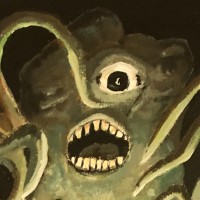
Any Samhain’s kiss is an blue starlike flower that signals the end of period of bounty and the period of loss. It is also symbolically linked to “the other side” and is used in a number of traditions.
[
Show / Hide Submission ] [
Visit Submission ]
Samhain’s Kiss is an odd blue flower. It is small and has five triangular petals that form a star. The color is cobalt blue with touches of white/ silver in its veins. It blooms between the autumnal equinox and Samhain (Halloween). For most peoples, Summer officially ended on October 31, and it became the day that the new year began (for the Celts). On the next day, they die off… shrivelling into dry woody with seed pod top. By the 2nd day, they are all very dead.
Samhain’s kiss is from summer’s kiss goodbye, or from its kiss for good luck. The holiday Samhain has special properties. The barriers between Life and Death, the worlds, and such disolve for this day. Thus spirits and monsters are found this day. This flower is associated with spirits/ monsters/ and crossing the boundries of the world.
Naturally, the still-living did not want to be possessed by spirits or bothered by monsters. So on the night of October 31, villagers would extinguish the fires in their homes, to make them cold and undesirable. They would then dress up in all manner of ghoulish costumes and noisily paraded around the neighborhood, being as destructive as possible in order to frighten away spirits looking for bodies to possess and have the monsters move on, as there were already monsters here.
These flowers are used a decoys. To draw spirits and monsters away from homes, flowers are placed on graves and dead places. In some areas, they decorate the towns with them, as where the flowers are… the monsters are… to lead the other monsters astray.
Additional Information
Note: The icy cold of winter is required for the seeds to germinate. Thus most people’s attempt to domesticate the flower has failed, as they have yet to freeze the seeds.
Add/View Ideas (0)
Add/View Comments or Vote (3)
Scarlett Call
By: MoonHunter
( Lifeforms ) Flora -
Any Scarlett Call: Also known as Blood Tangle, Tryms Mark (Trym being a god of Battle), Hunter’s Eye,Krell’s Mark (Krell being an Evil Spirit whos worship has to deal with blood), Widow’s Tears, Scarlet Call, and Earth’s Wounds. When blood has been shed in anger or waste, The Scarlett Call will be there.

[
Show / Hide Submission ] [
Visit Submission ]
Full Description
The spores that become Scarlett Call can lay dormant for ages. They only sprout when the soil they are in is disturbed and hemogloblin (or some other blood elements) are mixed in. Once they do sprout, they sprout with a vengence.
These plants are quick growing, but not supernaturally quick despite the bardic tales. The green vines remain low to the ground, and flower with small bright scarlet flowers. In fact the low vines are runners, inserting new tap roots into the ground every foot or so. This makes an latice of strong vines that make going in an “infected” field difficult. The low vines are vile as they are slightly sharp (with tiny spines) and slightly sticky (some people feel them as an itchy sting, being allergic to them) The plants are not edible by any beast except when the plant is old and after has released a cloud of spores to the wind. The Wound, what a field of Scarlett Call is called, continues to prosper for a time based on the amount of blood in the soil, a few months if it is just a bloody predator kill to years in the case of a battlefield.
The presence of Scarlett Call denotes the presence of battles, executions, evil rituals, or where local hunters (or predators) have killed and gutted animals without care.
Additional Information
Also known as The Scarlet Call (Scarlett is a proper noun), Blood Tangle, Tryms Mark (Trym being a god of Battle), Hunter’s Eye (so called because they are used to spot where predators have made kills), Krell’s Mark (Krell being an Evil Spirit whos worship has to deal with blood), Widow’s Tears, and Earth’s Wounds.
Add/View Ideas (0)
Add/View Comments or Vote (4)
Silverblooms
By: Phoren
( Lifeforms ) Flora -
Plains The basis for many a bardic tale of courting and love, these beautiful small flowers symbolize new love to many.
[
Show / Hide Submission ] [
Visit Submission ]
Full Description
Small flowers that grow by water in winter and autumn, silverblooms are around 5 inches tall, and when they bloom, they produce an amazing display. Silvery petals uncurl, reflecting the sun onto the water. A sweet smell emanates from them.
Additional Information
So very often used by courting couples in villages, and as gifts for special days. A bunch of them could even be worth a silver, which, for a peasant, is quite a bit of money.
Add/View Ideas (0)
Add/View Comments or Vote (12)
Sky Pods
By: MoonHunter
( Lifeforms ) Flora -
Any A strange sight of the wastes, long green streamers pinned to the sky floating on the wind.
[
Show / Hide Submission ] [
Visit Submission ]
This is a plant that only grows in The Wastes. No other land boasts a plant like this one. The yellow green "strand" appears to be one broad grass leaf, anchored to the ground with some moderately deep roots. It extends into the sky, pulled upwards by several pods. While there are a few pods randomly along the long grass leaf, there is a main cluster of 3 to 8 pods at the skyward end of the strand.
When something begins to eat the strand, it breaks and the rest of the pods float away. The frond can regrow roots when it touches the ground long enough. If it does not, the pods will dry up and explode (in a fiery burst) and shower seeds across a wide area.
If you are having a problem visualizing it, think seaweed fronds.
Oh and they do not grow in other places as they need the odd toxic chemicals from paraliquid soil of The Wastes to inflate their pods.
Add/View Ideas (0)
Add/View Comments or Vote (0)
Tatterdemalions-of-the-Flailing-Leper
By: Murometz
( Lifeforms ) Flora -
Swamp A higly misunderstood flora.
[
Show / Hide Submission ] [
Visit Submission ]
The Tatterdemalions-of-the-Flailing-Leper is a fanciful but somewhat fitting name for this vegetation, a bizarre plant which is extremely rare to find as a "Flailing-Leper", or the mother-plant state, while the pod-like leaves of the plant, the "Tatterdemalions", which tend to fall off, allowing the winds to twirl them for many miles, are more commonly encountered by adventurers.
The Flailing Leper
It is difficult to describe a Flailing Leper in full bloom, without nauseating the reader. A bulbous bush the size of a horse, with countless spines, drooping, sap-filled pods, flies buzzing inside their contours, with crooked stalks and branches extending like broken fingers in all directions, and bizarre rag-like leaves and growths that resemble so many dirty strips of cloth flapping in the wind. The colors of the Flailing Leper mother-plant are a rainbow of obscenities. Rust, ocher, dried blood, fat-tallow, sepia, olivine, mauve, and various flesh-tones, a true kaleidescope of eye-pain. This plant can best be described from afar, as a giant ragamuffin made up of swirling bits of stained, filthy cloth strips, and from near, as a grotesque abomination of nature. The Flailing Leper even makes a horrendous, gurgling noise, further distancing itself from species of common flora. One would expect a foul smell to ooze from the bowels of such a "monster", to go along with the gurgling, but alas, the mother-plant smells feintly of drying leather. A single redeeming trait perhaps?
Tatterdemalions
Once a season, the mother-plant Flailing Leper, will release its elongated rag-like leaves into the air, as it is the weird leaves of this plant, which carry the seedlings, in their many folds and twists. These leaves will usually clump together forming dust-devils of "rags", occassionally taking on mildly humanoid appearences. The tatterdemalions have no leathery smell like the mother-plant, and are harmless in every way. Sometimes wood elves can be seen wearing the Tatterdemalion swirls as camouflage cloaks, but superstitious humans just usually torch the "flying rags" whenever they come swirling into villages.
Additonal Information
This plant is highly misunderstood, as mentioned, and constantly mistaken for other creatures. Some say the Flailing-Leper motherplant resembles a roper, or an otyugh or even a shambling mound, and the Tatterdemalions of the plant, lend credence to legends of ragamuffins, scarecrows, cloth-golems, and yes, even "flying leaf-demons."
Bards strangely, are known to be rather fond of including references to this bizarre plant in their ballads, both those humorous and tragic, challenging themselves to find rhymes to pair with the flora’s name in various innovative and clever ways. It is said in some circles, that if a bard does not have at least one composition featuring or at least mentioning the Tatterdemalions-of-the-Flailing-Leper, he is not worth his salt.
Sinsiter qualities are ascribed the flora as well. Some even say that the plant actually causes leprosy, but that is categorically untrue. Countless adventurers have come back to town, riding atop wagon-loads of the pulled, chopped, and uprooted flora, yet sages can make neither heads nor tails of the giant "vege-beasts", nor make any sense of the possible uses or applications for them. Botanists and alchemists are likewise stumped and confounded.
Most animals avoid the plant, its fleshy pulp is not even edible. Birds refuse to drink the collected dew and rain-water from the plant’s contours. The flora seems to fit no master plan nor food-chain hierarchy. The Tatterdemalions-of-the-Flailing-Leper seems to be merely a revolting, putrid, unredeemable mistake of nature, nothing more and nothing less.
Unless of course, one understands the plant, which so few do, in which case some good can be squeezed from its pulpy, flesh-like form. But only the red-sashed monks of the Herringbone Brotherhood, those secretive explorers of the world’s mysteries, may know the true properties and nature of this disgusting, and even worse, seemingly useless, monstrosity.
Add/View Ideas (0)
Add/View Comments or Vote (11)
The Wizard's Rube
By: Strolen
( Lifeforms ) Flora -
Forest/ Jungle A bright red flower that faces certain directions all in unison.
[
Show / Hide Submission ] [
Visit Submission ]
Full Description
A bright red flower that faces certain directions all in unison.
Nobody can quite understand the power that turns the flower but it is a very enchanting encounter when there is a large shift in the Wizard’s Rube. A bright fiery flower that grows in bunches which suddenly, as a unit, shifts it’s direction 90 degrees. It is considered good luck if you are able to witness a Rube Change, as it is called.
Most often it is very subtle as it slowly rotates its gaze. Every Wizard’s Rube that has been checked has always uniformly pointed the same direction no matter how far apart they are.
Additional Information
There might be something in your world that drives this change.
Add/View Ideas (0)
Add/View Comments or Vote (10)
Thorn Rolls
By: MoonHunter
( Lifeforms ) Flora -
Desert "Tumbling dang danger" the old old prospector said.
[
Show / Hide Submission ] [
Visit Submission ]
These quick growing bushes become round thickets filled with thorns. The thorns ooze some toxins that get into what ever they scratch. Depending on the subspecies, it can be itchy, or neurotoxin or acidic. When the Thorn Roll reaches some maturity and it runs out of water, its shallow roots begin to shrivel up. The wind will free it from the soil. The bush tumbles across The Wastes spreading seeds.
Add/View Ideas (0)
Add/View Comments or Vote (0)
Torren Mangrove
By: MoonHunter
( Lifeforms ) Flora -
Swamp “Evil” often infests swamp. This tree thrives when the other plants wither under the presence of true Evil. However, this is not an evil plant, but a land healing one as nature attempts to reclaim its own.
[
Show / Hide Submission ] [
Visit Submission ]
The mangroves are widely distributed throughout the tropics and the warmer ends of moderate climes, growing in areas of salt water, such as tidal shores and marshes. The Torren Mangrove grow in areas where “dark forces” have been known to inhabit.
The many arching aerial roots make dense tangles that stabilize the surrounding soil, prop the tree, and assist in absorbing water and minerals. The Torren Mangrove draws up liquids and salts from the water into its longish leaves. There, the liquid seems to “evaporate”, leaving behind salt crystals. These crystals protect the plant from animal predation and “negative” vibrations. So while other plants may wilt and decay under dark influences, the Torren Mangrove will thrive.
In addition to being a salt source and a purifier of evil energies, Mangrove bark is an important source of tannin, used in tanning, dyeing, making ink, and medicine.
Additional Information
Information on plants for given environments
http://mbgnet.mobot.org/
Add/View Ideas (0)
Add/View Comments or Vote (11)
Treller Vine
By: MoonHunter
( Lifeforms ) Flora -
Any Treller Vines are impressive enough in the jungle, where they wind along trees adding a riot of color. Then they moved to a new neighborhood.
[
Show / Hide Submission ] [
Visit Submission ]
The Treller Vine is originally a tropical plant, a somewhat symbiotic/ parasitic vine the infests trees, related to the air fern species. It is a long green vine, with small spadish leaves, and small white flowers in the spring. The vines string along the surface, wrapping around branches or moving along walls or trees. It will also put out thin runners that cascade down with gravity which are used for food production.
In the Jungle, Treller Vine lives on trees, creating another layer of green around the bark of the tree. The Vine uses the bark and outer softer wood layers as its’ "soil". It coils around the tree and creates a green fringe. The vine is slightly sticky, trapping bugs and bits of food material that are absorbed by certain sections of the vines. That material is added to the blown dirt and decomposing litter to make a paste like soil on the tree (which serves as home to many jungle insects)
In the beginng the vine strengthens the soft woods of the jungle trees. The lattice of roots adds support. Eventually the vine infests too many levels, adds too much weight, and the wood is weakened and the tree collapses.
Additional Information
Somehow, some Treller Vine spores found there way to more temporate regions. The local trees were harder wood and more resistant to the Treller Vine. (Trellers will infest the temporate trees, but not very successfully.) However, Life found a way.
The spores found bits of mold and soil in the higher spots of houses and castles. It dug into those areas and has thrived. Given the drier environment here, its has more dust and dirt to create it own soil. The wild flowers here (and a few insects) have taken to growing in this new nitch created by the Treller Vines. In no where can this be better seen than in Calanderas, as seen in the City Image - Calanderas submission.
Add/View Ideas (0)
Add/View Comments or Vote (7)
Wyvern's Lure
By: Maggot
( Lifeforms ) Flora -
Other “ew. What is that smell? Where did it come from?”
“Where did that wyvern come from!”
[
Show / Hide Submission ] [
Visit Submission ]
A very ordinary looking plant this, making most observers think it a common weed. Nothing special about at it all, except it’s smell. Giving off a strong stench that sticks to any who come close, this appears to be a mere annoyance but nothing more. Unknown to the adventurer who encounters it though, the smell is actually very simmiliar to that of a wyvern’s. This allows the plant to grow lushly, unbothered by grazing animals such as elk that want to avoid the ‘‘wyvern.’’ The PC’s however, do not know this and will be suprised when animals they encounter, run off in terror upon catching the stench that hangs to them. Horses in particular,will be terrified.It might even draw any wyverns in the area that are determined to deal with the ‘‘intruder.’’
Add/View Ideas (0)
Add/View Comments or Vote (2)
November 8, 2005, 18:47
Lets hack it down and sell it in town!
December 5, 2008, 21:13
October 14, 2006, 17:41
February 12, 2007, 4:15
What a great list of colorful plants, often with good uses, but not needing them to stand out. I like this one very much.
August 16, 2007, 15:44
Creepers
Drooping Trees
Flute Grass
Sky Pods
Thorn Rolls
Ocadian plants
Plants
Dragplants:
Quilan Shrubs
Scrollweed:
Ocadian Fungi
Someday, when stubs can be added to a codex, they will be added.
February 18, 2008, 13:49
A mighty BUMP!
December 5, 2008, 21:19
December 17, 2008, 11:20