A little ‘theory’ about life and resources
I have read somewhere, that not a hundred years ago, the bat was not believed to have any special sense, and the idea that it could produce ultra-sound waves and hear them when they return, was considered nonsense and pure fiction.
As it happens regularly in science, fiction became reality once again. You can hear from time to time about exciting discoveries, with scientists being amazed what is possible. Did you know some bacterias can feel magnetic fields? I don’t know what it is useful for, but hey, who cares?
I think it is a wrong approach to be surprised again and again, how much better would it be to ask: “What IS possible?” in the widest sense, and continue from there.
Wisdom here:
If there is anything that can be considered a ‘resource’, Life will sooner or later find a use for it.
What is that unclear thing called resource, you ask? Anything you want.
Take all elements from that periodic table.
Take all existing molecules.
Take all possible wavelengths of light, and not only of it.
This is fantasy, so take all those unreal things too.
Take all those weird dimensions and planes.
Think of several more things…
...and NOW think of all possible ways Life could use this. You can be sure the reality will be more bizzare than you can imagine. Whatever mysterious power works in your world, you can be sure moss will grow on it one day.
Whether be it simply for food, poison against other life forms, or only a source of information, unless it is much too rare, or really too hard to use, there WILL emerge a life-form able to use it.
One real world example for all:
Around 1970, a transport of freshly-mined uranium from Africa was found to be ‘used’ (ie having not the right amount of critical isotopes) as if it was already in a nuclear plant. Did some terrorists steal it? No, homo sapiens, the bacterias were first again! And made their own reactor…
There are many bacterias able to purify and concentrate various minerals. One type specialized on uranium, concentrated it on a certain location, where it naturally began to work like a reactor. Estimated up-time: several million years.
(From James Lovelock’s Gaia.)
http://www.alamut.com/proj/98/nuclearGarden/bookTexts/Lovelock_Oklo.html
Challenge:
Think of any bizzare life-form, WHATEVER life-form that lives a not-so-standard way. Not the way common sense would expect it. Make it in some way logical or not, just forget the boring everyday logic.
To inspire:
See the World of Kerren and think what other lifeforms can that Warp dingus have attached.
Some organisms tolerate Undead. What if one begins to use that Negative energy thingy somehow, growing while everything around withers? (Free campaign idea here!)
A weird plant (or animal?) that attaches itself to the shoes of bi-pedal humanoids, removes them, and wraps around the feet. And there it stays and survives of things you step on. Right, you can walk on, and it serves as your shoes, for miles and miles. Unremovable at first, when you finally get used to it, it dies as the winter comes. Thanks for the seeds you helped to spread this way.
A minor scavenger that follows you everywhere, and consumes your excrements. Somehow a question of taste? Ewwww….
... the strange world inside your Bag of Holding.
A thin membrane-like being that ‘consumes’ sound waves. Useful for separating dungeon sections, so no sound will get far. May be a simple plant that uses this ‘energy’ to support growth… or may trap denizens and devour them while they scream, your choice.
... it moves around the world, and sometimes stops here and there, to feed on a tiny fraction of the energy neural systems of advanced lifeforms have.DM use: try to foretell PC’s actions. They meet some orcs-> they fight. Comes that strange being, and erases the short-term memory of everyone. So they walk peacefully down the corridor…
and suddenly are in a room with orcs, swords drawn, plus some fresh wounds and minus some ammo and spells. Both sides are confused. Ah, the sweet roleplaying…
Please
register
to add an idea. It only takes a moment.
Codex
Balisk Lichen
By: MoonHunter
( Lifeforms ) Flora -
Any “Man, that is an incredible likeness.”
“What’s that stuff growing on that statue?”
“The better question, what is that statue doing out here?”
[
Show / Hide Submission ] [
Visit Submission ]
Full Description
Though it is called Balisk Lichen, it can be found in any region frequented by a stone transforming lifeform (Balisk, Medusa, etc). It is a strong (nearly impossible to remove) green lichen that is “fuzzy”, like a short green grassy fur. It only grows upon organic materials that have been turned to stone. The lichen will break down transformed lifeforms into rubble. It then expands and grows upon the rubble. Eventually it breaks the rubble down completely, converts into spoors and joins the wind.
The lichen is very toxic when “alive”. Nothing eats it. (It can not be made into a poison because the compound goes innert if it dies (which it does within minutes of being pulled from a rock). Well that is not true. Balisks and other stone transforming creatures have been known to lick and eat the lichen off the rubble. Their salivia seems to disolve the connection between the lichen and the rock. The lichen seems to be the digestive medium for the Stoners. It is concentrated nutrition pulled from the previously organic material.
Add/View Ideas (0)
Add/View Comments or Vote (11)
Blue Fires
By: MoonHunter
( Lifeforms ) Ethereal -
Tundra/ Arctic The Dancing Lights of the Ice Wind are one of the great dangerous in the Land of Snow and Ice.
[
Show / Hide Submission ] [
Visit Submission ]
Full Description
These are small (4” or 10cms) balls of what appears to be glowing blue fire. These ball float through the air at a better than walking pace. They are somewhat intangible; they can slowly force their way through solid objects. Their appearance of rolling blue fire in a small balls allows them to give off light with no heat. In fact, they actually make the world around them colder (as they absorb ambient heat to “feed” themselves). Any place they touch is made icey cold, leaving ice and snow (depending on conditions) in its path.
The Dancing Lights of the Ice Wind (as they are sometimes known) can actually entrance those who look at them long enough. (Actually they can effect the emotions of most lifeforms who look at them long enough).
Blue Fires will often “strike at” living things by flying into them, absorbing their body heat… chilling them to the bone. The average human can take five or so attacks. However many times they will “cultivate” living things, helping them so they can absorb the heat they generate. Causing people to “get together” makes extra heat that they can absorb. They will make humans careless so they can freely absorb heat and the humans will not care while they do it. They can make couples ‘couple’ or make people giddy and dance or any number of emotional shifts at the right time.
Additional Information
Some more intelligent and tame ones will make light for caves and the Humans inside the cave somewhat peaceful, all in exchange for extra heat from its fire.
Add/View Ideas (0)
Add/View Comments or Vote (10)
Campfire Fuzz
By: Siren no Orakio
( Lifeforms ) Ethereal -
Any These small, luminescent creatures are a distant relative of the willowisp, little bits of orangish light that are attracted by the flames of a fire. When enough of them have gathered around a fire, the fire appears to take on a fuzzy indistinctness.

[
Show / Hide Submission ] [
Visit Submission ]
Full Description
These small, luminescent creatures are a distant relative of the willowisp, little bits of orangish light that are attracted by the flames of a fire. When enough of them have gathered around a fire, the fire appears to take on a fuzzy indistinctness.
The Fuzz feeds off the warmth and light of the fire, re-radiating it to the world about it far more slowly than the fire would have. They are non-aggressive, and a Fuzzy fire can be used for everything a normal fire would be used for, though the fire will seem somewhat cooler from a distance. Should someone try to put something into or take something out of the fire, they will part to let them pass. Like other fey, they cannot bear the touch of cold iron, and will flitter away from such very quickly.
Additional Information
Nothing eats the Fuzz, and the Fuzz eat nothing but the warmth of the fire. They will congregate along common campsites, and will often invade homes, though few folk really mind them.
Add/View Ideas (0)
Add/View Comments or Vote (6)
Crevasians
By: manfred
( Lifeforms ) Intelligent Species -
Mountains Crevasians were human long ago. The differences are several, but few were ever noticed by outsiders. They have astrong communal feeling, which _literally_ flows in their blood…
[
Show / Hide Submission ] [
Visit Submission ]
Full Description
Crevasians are conservative and withdrawn people living close to the mountains. There is remarkably little interesting about them, and they tend to stay together anyway. They do not travel, so few care. Oh, and just one thing: they are NOT humans.
Crevasians most probably were humans long ago, but whether it is a matter of some random mutation, or a magical incident, is not sure. Differences are several, but few were ever noticed by outsiders, except for that thing with their veins and skin.
Their skin is indeed thinner than most races have, and while it protects against dangers of outside like it should, it is considerably weaker against inside forces. If a Creavasian is in an intense emotional state, or under hard physical stress (meaning faster heart-beat), his/her veins can thus burst open through the skin, and blood freely flows out.
This is of course a major disadvantage. While adopting a careful lifestyle, Crevasians have created a number of mental exercises and techniques, for control of both emotions and body. Many are now able to close such veins quite fast with strong concentration.
Another technique is said to come from a pair of lovers, and has deeply changed the little enclave. Forbidden for a few centuries, it was used again and again, because of danger or curiosity. It is widely used now. If one is wounded or sick, they could open a vein, and a close person would open theirs, and with the flow bringing new blood and strenghtening the immune system, they could be cured of their ailment. Of course, some types of blood can react violently (even fatally) with other types. Whether they are able to discern the difference, or could have now all the same blood group, I leave to your choice. (They might very well be uncompatible with ordinary humans now, though.)
Anyway, controlling the very blood flow has become a serious need. Training combined with genes favouring the proper enzymes, created a different race. While still staying away from physical harm, very few suffer of diseases that can the immune system of anyone of them cure. Stimulating the proper organs, some can release the right hormones, vitamins and other important substances, on demand, and be so even more effective healers.
Additional Information
The society of Crevasians was long aware of its hidden weakness, and many indeed see them as weaklings. But recently, another view is coming into favour: they are in fact the more evolved, “higher” life form. That useless violence aside, they are much more fit for life, and who has vaccination in these primitive times anyway? Another strong side is their strong communal feeling, which _literally_ flows in their blood…
Add/View Ideas (0)
Add/View Comments or Vote (6)
Crystal Waveivore
By: Erfunden
( Lifeforms ) Unique -
Space This vast and ancient organism played an important part in the mysterious organization of the cosmos, facilitating the isolated development of inteligent species.
[
Show / Hide Submission ] [
Visit Submission ]
Full Description
The Crystal Wavivore was the last discovery of the Prometheus, a manned deep space probe, before it disappeared into the dark side of the universe. It is important to understand that the Crystal Wavivore is a misnomer devised by the Prometheus’ communications officer (who, since he sent all the others reports back toward the Omegabase, got the last word on the naming of all discoveries, a power he often abused). The Crystal Wavivore is not actually a crystalline organism, but was so named because the creature’s feeding adaptations evoked nostalgia towards one of the communications officer’s favorite childhood playthings, his crystal radio set.
According to the report sent home, the Prometheus first became aware of the Wavivore when it noticed that Stheno-1, the large dense, inert remains of a dead son that the Prometheus had proudly reported as the first celestial body as they entered into previously unexplored space, appeared to be “fuzzy”. Closer examination revealed that the entire rock wa covered in long thin spines sticking out into the frozen void of space at nearly uniform perpendicular angles.
Once samples were taken and analyzed from the surface of Stheno-1, the crews astrogeologist and xenobiologist agreed that the spines were portions of a gigantic alien organism. The xenobiologist went on to name the creature the Wavivore and theorize that it either grew or contracted each spine as an antenna, which it used to collect the energy of passing electromagnetic waves and that each spine had a complimentary “body section” buried just below the surface of the dead sun followed by a deep root, which acts as an electrical ground. Essentially, she said, the Wavivore fed off waves with frequencies between 3km and 30cm, storing up the energy in organs at the base of each spine. Stored energy is used by the Wavivore to grow longer, collecting the necessary minerals from the sun’s remains and, after the spine has reached an optimal length, to send runners laterally across the surface to start a new spine. Like all deep space life discovered so far, the desolate nature of the environment dictates that the Wavivore must grow very slowly. There is some question as to whether the Crystal Wavivore is actually one giant organism covering the entire surface of Stheno-1 or an enormous colony of individual spines, similar to Coral on Earth or the Daedalus Rats of Theseus-12.
It is noted that while the Prometheus was alongside Stheno-1, waiting for the samples to be brought back from the surface, they started receiving strange radio signals from beyond Stheno-1. Clips of these signals sent back with the report to the Omegabase have been analyzed and declared to be the first sign of intelligent extraterrestrial life. Apparently Stheno-1 is located directly between the only two systems known to harbor intelligent life. While one Wavivore antenna will not hinder the progress of a radio wave, the billions of spines that cover the surface of Stheno-1 absorb all the energy of passing radio waves, creating a barrier that forced the two intelligent species to develop without knowledge of each other’s existence. The crew of the Prometheus realized all this and knew that by passing Stheno-1 they would be passing out of contact with the rest of the human race. They decided to hold to their course and bravely be the first humans to contact the alien intelligence. As expected, nothing has been heard of them since the passed into the “dark side of the universe” fifty years ago. Another human vessel is en route to Stheno-1 is establish a radio bridge around the Wavivore.
Additional Information
Although it is only known to occur on Stheno-1, a cold, barren lump of rock int he middle of deep space, it is thought that the Crystal Wavivore could live anywhere with sufficient radio saturation. This could be in the midst of an urban society with radio communication (although a large enough Wavivore colony would be detrimental) or on a rock orbiting a pulsar. It is possible that a sample containing the “body section” of a Wavivore could set roots and grow in any acceptable location.
Add/View Ideas (0)
Add/View Comments or Vote (5)
Gharjoy - A type of Gargoyle
By: MoonHunter
( Lifeforms ) Ethereal -
City/ Ruin Gharjoy are one of the seven things that are called Gargoyle. They may be the origin of all things Gargoyle.
[
Show / Hide Submission ] [
Visit Submission ]
Full Description
Gharjoy are astromorphs, astreal creatures. They are powerful hunting creatures who are “territorial”, patroling their regions for things that pollute their territory. Their “visage” is quite horrific to those who can see them.
Gharjoy consume pawns (bundles) of negative energies. Each pawn is a combination of negative emotions, memories, and power- a sin in some parlances- Evil in others. They hunt any negative astromorph or pawn in their region.
Gharjoys, being positive energy creatures who fuze negative energy, have more “weight” than most astromorphs. They utilize the destructive energies to hunt and destroy other negative energy pawns and negative astromorphs. This balance of polarities allows them to focus upon the physical realm. Like all astreal things, unless they are anchored to the material in some way, they can only limitedly sense and interact with the physical. After finding a suitable anchor, they can bind themselves to the material and hunt there.
What constitutes an anchor? They are stone statues that have horrific visages - grotesques. Such an appearance (and associated primal archetypes) has resonance for them, making it suitable. It is unclear if someone seeing a Gharjoy in the astreal was the reason for carving a grotesque, or a Gharjoy simply came to anchor in such a statue because it was there. It is also unclear if the number of gargoyles/ grotesques on certain churches was done to attract Gharjoys, or if just the Gharjoys came to them.
A Gharjoy’s region is any bounded area, be it a building, a walled enclave, or ley bounded zones. They are creatures of habit and will not exceed their region.
Gharjoys hunt at night, searching for sources of negative energy in their region. They will attack as a violent spectre or poltergiest, generating fear (which generates lesser pawns) and taking the energy of sin/evil from the target (which has the side effects of injury the target’s mind and body).
Additional Information
This spirit, like the Spirit of Predator (Shark), may have moved upon the worlds, creating the various things that echo the Gharjoy’s basic elements. This theory has been debated again and again without conclusion. The only ones that might know are the Gharjoys and they are not talking.
Add/View Ideas (0)
Add/View Comments or Vote (3)
Globs
By: manfred
( Lifeforms ) Fauna -
Any Globs are a partially amorphous life-form of the shape-changing kind.
[
Show / Hide Submission ] [
Visit Submission ]
Full Description
Globs are a partially amorphous life-form of the shape-changing kind. It is not a single-celled organism, as one might think. It is rather composed out of smaller groups of cells, specialised for their purposes, like feeding, movement or neural, but the little glob is practically identical with any other within the big glob, which is composed of thousands and more.
The little glob can theoretically survive alone, but more globs offer more options. Communication via the neurons can organize it, and construct a body fitting its enviroment, and move towards better food or defend from enemies. When the number is high enough, signs of intelligent behaviour start to show up, and sufficient size and time can make a glob truly intelligent.
An old glob could learn to communicate with humanoids, can slowly shape-change into any form, is practically immortal, and wounded by few things.
So why don’t these creatures rule the world by now?
Little globs are ill suited for survival. Big globs have not the advantage of numerous inborn instincts basically any creature has, from little insects, through animals, up to humans. It must learn everything necessary and anew as it grows. If you loose a hand, it is terrible, but you are still the same being. A glob that has a part cut off looses a part of its memory. If it is not attached fast, some of the memories are lost as the part becomes alive in itself. Smarter blobs learn to relocate globs with important memories inside, and are not so willing to change their shape wildly.
Globs are a fleshy substance, they cannot create a skeleton, hide, nails or horns. They gladly use tools for work and protection, when they learn to use them.
As for reproduction, big globs can in theory split in two at any time, but it takes a very intelligent glob and long planning to make the offspring similarly smart, a random split is likely to produce two chaotic insects, with the critical memories disconnected. A little glob is a group of cells, and reproduces as they do.
The primary sense is sight, hearing and smell is much weaker. All little globs have seeing cells, granting the big glob a complete 360 degree view, but a very shortsighted. Globs do not wear clothes, by the way. Some globs learn in time to evolve good ears, some even a voice.
As for personality, globs have no genes for it, and are so a pure chance-creation, the random product of trial and error of survival.
Additional Information
Globs rest often, but never sleep.
Add/View Ideas (0)
Add/View Comments or Vote (3)
Grassbiter
By: Dozus
( Lifeforms ) Fauna -
Plains “Careful where you step. There’re grassbiters ‘round here.”
-Farmer Jorl
[
Show / Hide Submission ] [
Visit Submission ]
Full Description
An adult grassbiter is about two feet in length. The lizard is somewhat torpedo shaped, with a squat body and blunt tail. The jaw is nearly as tall as it is wide, housing a set of sharp, serrated teeth, large for a creature of this size. A thick lip-like structure surrounds the mouth. Its four legs are thick and strong. A grassbiter is covered with tiny scales which chance color to blend in with its surroundings, usually grasses. On the back of its neck is a dark patch of scales that is vaguely mouse-shaped.
Additional Information
Grassbiters are an unusual creature in their eating habits. A grassbiter will lie silently in the grass, occasionally crawling slowly, waiting for its prey. Prey varies, usually deer, oxen, or other grazing animals, but they have been known to attack even wolves and snakes. When an animal approaches a grassbiter, it remains hidden due to its camouflaged coloration. When the prey is in the grassbiter’s range, it will leap up, suction whatever part of the animal it gets its mouth around, and removes a large chunk of flesh with its powerful jaws. The grassbiter then releases and scurries away into the brush, leaving its prey stunned and injured. The wounds are very distinctive: perfectly cut ovals of missing flesh. Farmers know this mark well, and tread warily in their fields when livestock show such bite marks. The dark patch of scales on its neck is believed to attract predatory animals such as foxes and larger lizards, which perhaps provide more nutrients for the grassbiter.
Grassbiters live alone except when mating. Their normal habitat is tall grasses, though they are also known to live in more dense forests. Despite their seeming aggressive nature, they are easily frightened when caught by surprise and will run after their first bite attempt.
Role-playing Hooks
They’re everywhere! - While travelling through farmlands, the players are chased down by a farmer waving a hoe. The farmer explains that there has been a sudden surge in the grassbiter population, leaving crops impossible to harvest safely and livestock tainted, covered head to toe in fist-sized bites. The farmer begs the players to resolve the infestation. They could walk through the farmlands hunting down every last one, or perhaps investigate a deeper cause (is the infestation a symptom of a bigger problem?).
Add/View Ideas (0)
Add/View Comments or Vote (11)
Grex
By: Appaloosa
( Lifeforms ) Flora -
Forest/ Jungle Proof that some times truth is stranger than fiction. (Sometimes)
The Unique Life cycle of the Grex. A forest Decomposer.
[
Show / Hide Submission ] [
Visit Submission ]
Full Description
Grex is a simple and humble slime mold that can often be found under the litter layer of a forest. For most of it’s life Grex lives as a single celled organism that feeds upon tiny things so small not even the keenest hunter’s eye can see them, that live trapped under dying leaves and such in the forest. However when food supplies run short in an area and a few of the Grex start to die off from starvation everything changes.
Once the food supply is exhausted the first Grex that succumbs to starvation will send out a chemical message to other Grex in the area. This signal draws Grexes into a single confined area. Individual Grex move towards the signal’s center. The Grex then begin to aggregate, or clump together. Waves of Grex are visible as expanding spirals or concentric rings formed around the dead Grexes. The Grex begin to clump into one solid mound of slime. The mound then orientates it’s self into a head and a rear tail like region, forming a Grex Slug. The Grex Slug is capable of free movement and will crawl to an area on the forest floor that is sparsely littered with leaves. The Grex Slug will then sit up on it’s tail end and form an ooze stalk proboscis. The stalk extends from the Grex Slug upward for two to three feet. At the head of this stalk is a sticky bulbous mass know as the fruiting body. The fruiting body’s sole responsible is for secreting a toxic sticky gel that acts on the nervous system to paralyze and kill prey. The Grex is now hunting.
A master of the waiting game, the Grex Slug will stay motionless for up to several days waiting for a hapless small creature to blunder into it’s trap. Grex is not particular about it’s prey any bird or animal will do nicely. Once the animal has contacted the sticky blub the neurotoxin takes immediate effect paralyzing the animal and causing reparatory and cardiac arrest leading to death. Once the trap is sprung the Grex Slug begins to enjoy it’s bountiful feast. Once well fed the Grex Slug will deposit spores in the remains of it’s meal and will crawl off to die leaving nothing more of it’s passing than a slime trail. The remains of it’s last meal a gift for the next generation of Grex.
Additional Information
Grex itself is not a horrible dangerous organism to most large animals or human like organisms. However a popular fairy tale told to young children, particular those whos families live on the boarders of a forest, is that once a crazy and evil mage enchanted Grex Slugs to grow to enormous size then turned them lose in a deep area of the forest. Children are then told never to venture into the forest for fear of being eaten by a slimy Grex.
Add/View Ideas (0)
Add/View Comments or Vote (14)
Grolen - A type of Winged Gargoyles
By: MoonHunter
( Lifeforms ) Fauna -
Mountains There are seven or so types of lifeforms considered Gargoyles by the less informed. This is one.
Grolen are another semi-sentient creature which is called a Gargoyle in popular parlance.
[
Show / Hide Submission ] [
Visit Submission ]
Full Description
Grolens are reminicent of frogs or toads. They are thin winged humanoids, approximately 4 feet tall (1.2M) with a 10 foot wingspan (2.5M). Their skin is greenish grey and is bumpy. In the wrong light, it could be a stone camoflauge pattern. Their broad feet and hands are webbed. The webbing is not used for swimming, but for creating suction to stick to smooth rocks. Each finger or toe has a sharp talon, good for ripping flesh or hooking onto rocks. Their eyes are wide and bulgy. Their mouth is broad and unlike a frog’s, filled with two rows of razor sharp teeth. They have a forked tongue. Their wing appear to be batlike, long membranes between thin fingers.
Grolens are better gliders and flyers. Their territorial and pack mentality (4-6) make them dangerous ambush predators in mountain passes.
Notes:
a) Their vision is deep into heat spectrum. That is how they can spot so many targets against the cold stone.
b) They will utilize tools they find (spears knives and such), but they can’t make anything.
c) They are warm blooded, but they conserve energy by being lathargic in the cold and sunning their wings to warm themselves.
d) They can hybernate at the drop of a hat. The troop will often goto sleep in an ambush position, to be awakened at a moment’s notice.
There are more frog-like variations of this species. They are perfectly amphibeous, using their wings to “swim” as well as fly (limitedly).
Add/View Ideas (0)
Add/View Comments or Vote (2)
Hotheads
By: Zylithan
( Lifeforms ) Fauna -
Tundra/ Arctic Hotheads are small badger-like animals that inhabit the frozen lands of the north. They are cute, furry, playful ... oh yes, and quite dangerous if you’re not careful.
[
Show / Hide Submission ] [
Visit Submission ]
We had been walking across the barren frozen north for nearly a week in search of the great Ice Pillar when we first began to come across the pits. While all around us the white snow glistened and reflected the sun’s rays we began to pass a series of strange holes that looked like they had been bored into the snow and ice. At first these curiosities piqued our interest, but we could find no explanation for them after inspection and our mission could not stand delay. Upon seeing steam come out a a nearby hole, we concluded they could be caused by thermal vents in the earth and went closer to investigate and perhaps warm our numb fingers. With a loud crunch and a scream, my faithful squire Furtham disappeared before my very eyes. I heard screams coming from below and saw that he was somehow trapped with his arms above his head inside a ten foot deep hole in ice beneath my feet. Quite remarkably the hole was so narrow and slippery that he could not climb out of it or even move hardly at all. I quickly scrambled over to him, lay on my stomach and reached down into the pit to grab his arm. Then, the ice shelf beneath me collapsed.
-excerpt from the journal of Sir Orin of Veda, Knight of the Chalice, describing his discovery of the Hotheads.
Full Description
Hotheads are brown furry mammals that look vaguely like bagers and which can grow to roughly two feet in length. Unlike badgers, Hotheads have no eyes and instead rely on their large floppy rabbit ears to track prey by listening to vibrations, as they can hear the footsteps or breathing of another animal from tens of yards away. When they capture their prey, they usually press their sensitive ears tightly against their heads to prevent being damaged by the relative amount of noise of a squealing victim. Once this occurs, they rely on their fine senses of touch and smell to last until the prey quiets down again.
The most remarkable feature of a hothead is a hard plate on top of their head. This plate is an absolute marvel of science and is what gives Hotheads their names. The hard shell is made out of a thermoelectric material which converts normal electrical nerve impulses to heat. Meanwhile, the surrounding tissue is very rich in blood vessels, which carry heat away from the plate and to the entire top of the animal’s head. The hotheads can control when the plate is active and can quickly tunnel through ice with these plates. In areas where there is soil underneath the ice, the hotheads use their claws and teeth to dig through the dirt.
It takes a lot of energy (food) to maintain their high body temperature in the frozen lands, and because hotheads are small and not particularly dangerous in open combat they are sneaky fighters. They create and live in extensive tunnel networks under the ice, and will bore holes almost all the way to the surface. The hotheads will create hundreds of these thin ice traps and wait for foraging animals to fall in. The hotheads try to make their pits such that animals like penguins, moose, bear (whatever animal lives in their biome in your world) will be immobilized. The hotheads will check these traps periodically and receive an effortless frozen dinner.
Hotheads will also occasionally track prey and try to capture them on the spot, especially if they are very hungry. They have learned that humans often rescue each other, and thus will set multiple traps or begin to feed on a victim’s ankles before his allies can pull him out. Only if absolutely necessary will they engage in “fair” combat, using their numbers (they also stay in packs) and their sharp teeth and front claws to injure prey/attackers.
Hotheads are very social creatures, and will playfully chase each other around in circles, nip at another’s floppy ears and even melt the ice out from under a sibling as a sign of playful affection. The young are very curious and may pop their heads out of their holes like prairie dogs, although their elders vibrate angrily at this because it may warn away prey. Hotheads are rather cowardly animals and will not choose to fight if they have other options (running away, quickly boring a tunnel too small to be followed through, or leaving a cloud of obscuring steam behind from a section of rapidly sublimed ice). They are, however, very loyal to their pack. If one Hothead is in trouble the others will endeavor to trap or distract its tormentors to save their friend.
Additional Information
1) If hotheads are unprepared loud noises can cause extreme pain, and they will retreat. Because of this many native peoples refuse to travel the north without a large collection or drums and cowbells to keep the hotheads away.
2) Because of their cute and playful nature hotheads could make a fun pet or circus attraction if they could be domesticated.
3) Their thermoelectric plate is nonmagical in nature, but could serve as an ingredient for any number of heat or electricity/lightning based magic items.
4) It is rumored that a variant of hothead exists, very similar in nature, except they can not heat up their headplate. These nameless creatures resulted when the ice shelf receded, leaving no use for the hot head plate, which wasted resources. Over time the animals lost the ability to heat their headplate, and it now serves merely as a protective covering. Despite this seemingly major change, these animals still act in much the same way, digging holes in dirt with their claws (which have grown larger and sharper).
5) The hotheads have an active partnership with the Bulral and a strong hatred of the skets, two creatures linked to this article. For brevity, I included that in the other posts only.
Inspiration
Credit for inspiration goes to Discover Magazine, April 1, 1995 Prank Article.
Add/View Ideas (0)
Add/View Comments or Vote (5)
Isuni Meneratt
By: Nobody
( Lifeforms ) Flora -
Forest/ Jungle An extremely exotic tree that is unlike any other. It is used world wide in the finest palaces and establisments…
[
Show / Hide Submission ] [
Visit Submission ]
Details
The Isuni Meneratt is a tree in the flowering plant family. The plant is native to the Nedishan rainforests where it is called by its native name Teshna Fo-Shet, or “tree of the burned flesh”, as it is most directly translated.
It is a small evergreen tree growing to 10-12m tall, with a long, hollow trunk about three meters across, with the hollow “eye” about a meter in diameter. The trunk is porous, containing small tubes through the trunk that lead from the inside of the trunk, and upward to the outside. The holes on the outside of the trunk are covered with bulbs that are composed of an elastic substance. Covering the entire inner trunk is a thin, brown jelly that slowly oozes out of it’s many tubes.
Further separating the Isuni Meneratt from other trees are its long, sheath type leaves 4-7 meters long and 3-10 cm wide, which hang from the top of the Isuni Meneratt like ribbons that start out black at the top of the tree, and end white at the tip. The leaves are not leathery to the touch like many trees, but are actually composed of a rather spongy material that is always moist with water. These leaves are cold to the touch.
Indeed, not only are they cold to the touch, but they actually cool the air around them as well. In their moist, native climate, this cooling of the air creates a sort of continual rainfall for the Isuni Meneratt, which is good, because the tree requires large amounts of water to survive. The difference in temperature can be quite startling, as the leaves of the Isuni Meneratt can bring the temperature down to as little as 60 degrees Fahrenheit.
The Isuni Meneratt actually contains a natural anti-bacterial, which prevents the tree from rotting, and although it’s skin is relatively weak to physical damage, few animals bother the tree. That is because the pods on the outside of the tree contain an extremely foul smelling chemical, which acts both as a natural pesticide to bugs that penetrate the pods, as well as a strong deterrent to animals who decide to rub up against the tree. When these pods are broken, not a hard task by any means, they pop, releasing their foul smelling contents onto any predators.
The leaves actually absorb both light and heat for the Isuni Meneratt. The light and heat that gets absorbed is transferred to the tree, which then uses that, and minerals from the soil, and water, to form the gelatinous substance that covers the tree’s inner spiral. This substance is extremely flammable, and if enough congeals in a single place, causes a thermal reaction that forces it to ignite. Once on fire, the “eye” of the tree can reach temperatures well into the hundreds, and spouting a gout of flame that leaps dozens of meters into the air.
The air within the "eye" of the tree then expands as a result, forcing extremely hot air through the tubes and into the pods. The pods' less-than-solid structure allows them to expand to almost ten times their original size, where they finally release from the tree, and pull a thin membrane with them that close the pods. The pods now act as hot-air balloons, floating high into the sky, and potentially traveling great distances before they finally land, and collapse in a puff of terrible smelling vapor that keeps animals and insects from eating the seeds inside. Only good soil and large quantities of water will allow the new seeds to sprout. Meanwhile, the Isuni Meneratt, undamaged by the fire due to it's flame retardant inner coating, begins producing new pods and flammable jelly.
Uses
The Isuni Meneratt has become one of the most famous and exotic trees anywhere. Although expensive to maintain, and costly to handle, the Isuni Meneratt is exported to palaces all over the world as a primitive form of air conditioning that is none-the-less extremely effective.
The Isuni Meneratt can only be employed in the finest of places for many reasons. For starters, it requires ample supply of water, and rich soil. Also, extreme pains must be taken to ensure that the tree’s bad smelling chemicals do not cause any problems. This effectively means that the trees must be kept on a basement level below the room that is to be cooled with the tree’s top (it’s leaves only) emerging into the upper room. An air tight seal is needed between the floors to ensure that no bad smells seep through, even a little is enough to fill a room with an unpleasant smell.
This is especially true when the tree lights on fire (causing all of it’s bad smells to rise). This aspect of the tree’s holding area is especially hard to maintain, as a flammable material will easily be immolated during the tree’s breeding cycle. A venting shaft is always required to vent excess heat and bad smells, but the shaft needs to extend far enough away as to not cause the immediate area around the building to smell terrible.
The Isuni Meneratt has other uses as well. The jelly that it secretes is nearly identical to Alchemist’s fire. Indeed, and alchemist rich enough to get an Isuni Meneratt and maintain it, can produce Alchemist’s fire for almost nothing except the cost of the tree. Elitist Alchemists will not even use another method, claiming that they can refine the jelly into a substance far more potent than any other substance.
The leaves also have many uses as material components in cold spells, although this use is rather impractical and not at all cost effective, because the tree will die without the leaves. Lastly, for the brave soul who dares harvest them, the seeds are like hard nuts, and once thoroughly (very thoroughly) cleaned and prepared, has a distinct flavor that can be added directly to soups or stews for flavor, or ground into a very fine spice. It fetches a high price on the market, and is rumored to be an aphrodisiac.
Add/View Ideas (0)
Add/View Comments or Vote (11)
Lux Mites
By: Shadoweagle
( Lifeforms ) Fauna -
Any These mites fly silently and are small enough to be nearly invisible to the naked eye. If it was not for light, no one would know they were there. These creatures absorb and re-emmit light, turning dim to bright, and bright to blinding.
[
Show / Hide Submission ] [
Visit Submission ]
Full Description
A small insect, not dissimilar to a firefly, which, as a defense mechanism, is able to warp waves of light, magnifying it and intensifying. It increases the ‘Lux’ value substantially, and, using these extremely bright flashes of light, is able to confuse, distract or even blind both its predators to make a hasty getaway, or to confuse its prey (smaller insects).
These creatures are mostly nocturnal, but they will operate in daylight hours. If trapped in full sun, they will glow so brightly they "burn themselves up".
Additional Information
Now, If an adventurer were to catch several of these and place them in a transparent vial or bottle - He now has an inexhaustible, efficient light source when traversing those dark dungeons. The insects will increase the light value substantially, so even the dimmest of rooms will be lit up - of course, it wont work in pitch black, as the insects would need SOMETHING to work off.
Now, this would also be useful in brighter areas: A goblin swings a sword at an ally, you flash them with these insects, the goblin gets blinded or distracted, thus missing its foe, and hitting another goblin instead.
Add/View Ideas (0)
Add/View Comments or Vote (4)
Magma Borers
By: Scrasamax
( Lifeforms ) Third Kingdom -
Underground The Magma Borer is a large creature native to the extreme world of Crematoria. Scientists and planetologists have yet to be able to explain so many things about the planet and the unknown lifeform that made it possible.
[
Show / Hide Submission ] [
Visit Submission ]
Full Description
The Magma Borer is a large creature native to the extreme world of Crematoria. Scientists and planetologists have yet to be able to explain the fact that despite have a wildly violent atmosphere, Crematoria has a breathable oxygen atmosphere. The planet swings from 700 degrees F on the day side down to a chilly -100 degrees on the night side. Spontaneous combustion follows the night terminator, eliminating the oxygen supply from the air. The rich mixture of sulfate and carbon compounds in the air further fuels the combustion wave that circles the planet.
Planetologists discovered some of the geothermal vents that dot the savage and broken landscape of the planet do not exhale the typical mixture of carbon gases, vaporized sulfer and other volatile chemicals. Quite amazingly they found geysers of O2 gas. The emission rate was very steady from the vents, and measurements from the vents remained at a constant rate, whereas the emission from the other poisonous vents changed with each passage of the combustion wave.
Robot exploration devices repeatedly penetrated these O2 chimneys and found something extrodinary. Deep under the crust, usually 1500 to 2500 feet beneath the rock there are living creatures. They resemble terrestrial baranacles with thick, dense shells that seem impervious to heat and the pressure found at such depths. The creature inside is a composite organism, a synthesis of a silicone based life form that refines the gases and minerals of the sub-crust into digestable matter for the larger carbon based creature. The entire beast is at least 15 feet wide, and weighs an estimated 5 to 8 tons.
The creature exhales oxygen, nitrogen, and other trace gases as it metabolizes the excretions of the silicate creatures that line it’s shell. Little more is known about the creatures, as the violent climate doesnt lend itself to research, and no way has been found to extract such a large animal from its burrow without killing it.
Additional Information
thought of this beastie after watching Chronicles of Riddick and wondering how in the hell did Crematoria have a breathable atmosphere with no O2 generating plants or other primitive life. Voila, the Magma Borers.
Add/View Ideas (0)
Add/View Comments or Vote (7)
Manna Fleas
By: MoonHunter
( Lifeforms ) Ethereal -
Any These creatures have the uncanny ability to feel the ripples of magic, so they travel through planes, rather than distance to find food.
[
Show / Hide Submission ] [
Visit Submission ]
Full Description
These are extraplanar flea like bugs, with the ability to move between planes. These creatures have the uncanny ability to feel the ripples of magic, so they travel through planes, rather than distance to find food.
Their food? They feed upon manna threads… the left over pieces of disturbed manna flow after a spell is cast. While feeding, they glow with an intensity of based upon the power of the spell. They come from nowhere, so unless the energies in the area are dismissed appropriately ( a good spell check or some careful casting) they often appear. You can tell the quality of a wizard or wizardly school by checking their work rooms for Manna Fleas.
The creatures seem to fly or hover, but actually they are walking on a surface in another realm. Once they are fully in our sphere, they stay on surfaces, interacting with the “real world”.
They don’t just feed on manna threads. They will bite and feast of the blood of those who have used magical power, but will ignore mundane animals and people. The bites are just like flea bites.
Add/View Ideas (0)
Add/View Comments or Vote (16)
Marching Barnacles
By: Dozus
( Lifeforms ) Fauna -
Water “Jones, when was the last time ye cleared yer hulls?”
“Mm, a few months back. Why?”
“Yer ship. She’s comin’ outta the water.”
[
Show / Hide Submission ] [
Visit Submission ]
Full Description
In water, marching barnacles are indistinguishable from ordinary barnacles. Like any barnacles, they accumulate on stones in the water and the hulls of ships, and are difficult to remove. What makes marching barnacles distinct is that they are mobile.
Once attached to an object, a marching barnacles will wave its tiny, feathery legs about constantly, catching tiny particles to eat. These tiny legs are surprisingly strong given the barnacles’ size. When a large number of marching barnacles accumulate, they act as one organism, moving their legs in a single direction. The motion the barnacles cause can be enough to propel a vessel or stone, albeit only very slightly. Strangely, the barnacles consistently move objects eastward.
This frequent movement apparently strengthens the barnacles’ legs, and when on the sea floor or shore, mature barnacles can literally crawl. This has led to a various unusual occurances. Ships covered in marching barnacles may actually move out of the water when docked, and will continue marching until they dry out and die. Stones and ancient shipwrecks are also known to rise out of the water and march inland, sometimes for miles before coming to a rest. Such an incident is recorded by the historian Thyras:
In that time, Rescara was a prosperous and busy port, frequented by ships of all types. The bay of Rescara was reknowned for its cleanliness. During the war, however, the bay fell into disrepair and pollution, causing myriad undesirable fauna to spawn. It was, however, these fauna that would save the city. As the Harpani barbarians entered the besieged city, the ancient watch tower of King Phaestares - which had long ago been lost in the Floods - rose from the water and onto the land. The Harpani feared it was their sea god bringing wrath for their sins, and they fled far off to never return. The tower eventually tipped and fell. On examination, barnacles with thick and strong tentacles were found on its underside, which the sailors immidiately identified as ‘marching barnacles.’ Seeing that it was these normally troublesome creatures that aided Rescara in its time of need, the Assembly passed legislation that forbade all to kill the barnacles in the Rescara port. The law still stands.
-Historian Thyras, Cities of the Republic
Additional Information
Sailors consider marching barnacles an annoyance and will remove them whenever at port. Seeing a ship slowly lurch out of the water at port is a clear sign of a green captain.
Not a few sailors swear by marching barnacles, saying they aid in both navigation and sailing. If ever lost at sea, one can observe marching barnacles to gain direction, as they consistently move eastward. Treasure hunters have been known to raise the barnacles in small boxes filled with water. If a treasure is found beneath the waves that is too heavy to bring up, the box can be placed beneath or near the treasure and opened slightly. The barnacle larvae hopefully attach themselves to the treasure and, after a few months, the treasure will become mobile, allowing treasure hunters to follow it to a better location.
Some sailors swear that they can control marching barnacles and allow their ships to move swiftly in the water. While most sailors dismiss this as fantasy, it has been suggested this is a plausible phenomena. The famous inventor Hyrfidel created a series of magnets on swinging wooden arms. The contraption, he claimed, would be attached to a mainmast and the magnets moved about to control the direction the barnacles swim. He hypothesized that the barnacles always swim eastward just as a compass always points northward. If a compass could be affected by magnets, why not barnacles. The contraption, however, was not particularly popular and is largely considered a failure.
Add/View Ideas (0)
Add/View Comments or Vote (20)
Medusa Tree
By: manfred
( Lifeforms ) Flora -
Forest/ Jungle This tree has a somewhat unclear bush-like appearance. But so far, nothing special. The actual reason why is it called after medusas, is his power to deter any hostile creatures, and to be sure, all creatures
[
Show / Hide Submission ] [
Visit Submission ]
Full Description
The Medusa Tree is not called after certain mythical beings, but rather after common sea medusae. It does not look very akin to them, having numerous “tentacles”, actually thin branches, covered with many fuzzy leaves, that move with the faintest gust of wind, giving the whole tree a somewhat unclear bush-like appearance. But so far, there is nothing special.
The actual reason why is it called after medusas, is his power to deter any hostile creatures, and to be sure, all creatures:
A) The leaves exude a chemical or biological substance that is aggressive to most living beings. Effects range from a mild rash, through paralysis up to death for the really unlucky. Of course there are a few creatures immune to the allergen by now.
B) The tree has the power to assault visitors with electric shocks (or for fantasy, some sort of magical shocks might be also possible), strenght depending on the contact one has with the leaves. Of course, the wood of this tree would be highly sought after for certain magic items, and hard to get.
C) Looking like a strange, but common tree, it is actually a metallic lifeform, growing out of depths of the world, slowly and tirelessly. The electricity comes from it’s “roots” reaching miles below; so this is actually the lifeform’s ofshoot. Should the root be broken (due to earth movements, for example), it will wither away into a pile o rust within days. Understandably, it is very rare, considered even unique and an important omen by some folk.
The tree itself is not sentient, it is just growing very slowly, and found a means to protect itself from the surroundings.
Add/View Ideas (0)
Add/View Comments or Vote (5)
Midarans
By: MoonHunter
( Lifeforms ) Third Kingdom -
Any Midarans come from a middle island in the far sea. They have become well known for being traders and merchants. They are also know for being quite magical. Then there is their appearance.
[
Show / Hide Submission ] [
Visit Submission ]
Full Description
Midarans have milky white skin, alabaster smooth. Literally. They are of stone, a perfect white marble. Their eyes are usually lapis, but other colors are sometimes inlayed. Some of the females have lips that are inlayed of other colors. The males and females both have "hair", stone that is a different color and texture than their normal stone. This hair will move and flow mimicing real hair. They often go without clothing, showing off their Grecian perfect bodies. However, they will often wear clothing that fits the local norms.
They are wiley traders. They are also known to be excellent mages, though they will seldom show off their powers except in dire emergencies.
They have a taboo about speaking of their origins or their families, though they claim to have families. No one in the known world actually knows their origins, but the speculations abound. It is assumed that they are Magichena, magically constructed lifeforms… golems that can animate each other. However, their origin and source is unknown to modern society. They have been trading in the known world for a few centuries now, and are part of the local social fabric in a number of places.
Additional Information
Unknown by most, they are related to others: The Stayers. The Midarans are the Go-ers of the Stayer’s history. If you need background and history, read the Stayers’s post. Their is no anamosity either way between the two groups, though relations are a bit "stiff".
Add/View Ideas (0)
Add/View Comments or Vote (6)
Observers
By: MoonHunter
( Lifeforms ) Constructed -
Any They are so cute. They follow you around like a puppy. It is a badge of honor to be interesting enough to be followed by one of them.
But, “What is their purpose?”, “Who are they observing for?”, and “Why?”
[
Show / Hide Submission ] [
Visit Submission ]
This is adopted from Element Masters/ GateWar RPGs
Observers are three and a half feet (1.2 meters) tall humanoids. Their skin is milky white and very smooth (except around the joints, where it is slightly wrinkled). They have no visible or known sexual organs. There feet are fairly oversized. Their hands are normally clasped behind their back.
Their flatish heads are dominated by two huge eyes (which can see in the entire electromagnetic specturm, and can do spectral anaylsis). They have tiny slit noses and no real mouth. They can hear, but have no observable ears (perhaps their eyes pick up the vibrations?)
They communicate with each other, when that happens, by staring in each others eyes. Sometimes small flashes of light are seen.
Observers do not eat, sleep, nor excrete. Breathing seems to be an optional behavior. They generate a nearly impenetrable forceshield. Perhaps they are absorbing ambient energies and focusing them. The theories vary.
Additional Information
Observers do nothing but observe. They waunder the world watching. Sometimes they will stay in one area of interest or following an interesting individual or group. They seem to witness history and remember it. People often take great pride in the fact that Observers find them interesting enough to watch.
Observers were obviously made for this task. Who made them and who is record of history is currently unknown.
Add/View Ideas (0)
Add/View Comments or Vote (5)
Ocadian PitFiend
By: MoonHunter
( Lifeforms ) Flora -
Desert Ephemeralstability wrote:
The ochre sands stretch for miles around. Something kicks up the dust. It’s a yak. A desert-yak. It ambles slowly, nuzzling the ground for the low-growing shrubs. The ranger freezes. “Stay very still,” he warns. “Don’t move at all.” “What is it?” you ask, breathlessly. “It’s the most dangerous creature in the whole Ocadian desert. And it’s about to eat that yak…”
[
Show / Hide Submission ] [
Visit Submission ]
Full Description
The Ocadian PitFiend is a colony creature, where several different lifeforms combine together.
1) On the surface there are what appears to be shrubs. They are actually two different plants living together. One is Brycanthis, which produces a low woody shrub, the other Sochrin Vines, primitive relatives to Treller Vines. Combined, they make a low woody shrub with green leaves and small red flowers. Neither of these plants should be able to survive in this environment due to soil and water requirements, but as part of the colony, they can.
2) Deeply, there is Ocadian Fungi. The giant subsand relatives to the mushshooms can grow to huge sizes, encompassing several acres underground. They are just under the heat level (where the sun’s warmth no longer warms the sand/ soil). They provide liquid and stability for the PitFiend.
3) In the Middle combines three creatures. Ocadian SandCoral (or a variation of) is the backbone of the creature. These small creatures eat organics in the sand, protecting themselves from heat and predators by creating small shells of silicon… thus creating a coral. They create the stable foundation for the plants to root to and the Pitfiend to grow from. It is unclear if it is two or three kinds of microplants that make up the Fiend Proper. One plant produces “spoors” that stun and can immobilize creatures once stimulated (stepped on or agitated by chemical signals produced by the bush plants being disturbed). In addition the spoors begin the digestive properties. They grow on the surface out of the SandCoral. The colonies of Sand Anemones will shoot their “once in a life cycle” tentacle… drawing the creature into the pit. (they will then reproduce, drawing upon nutrients from the caustic goo inside the bulb). Inside the bulb of the fiend (held together by coral and the plant roots) is a number of microplants and animals that digest flesh quickly and even can break down bone and metals. The goo inside the bulb can completely digest a human in about four hours, passing nutrients and water out of the bulb to the rest of the colony. In fact they are so acidic that they must remove the water quickly less it becomes so unacidic that they die. One of the microcolonies of the goo does nothing but that.
The Yak was attracted to really nice looking plants that should not be able to survive here in the desert. It seems to act drunk, unsteady. It is slowed and stunned by breathing in spoors. Then tentacles shoot out, drawing its prey underground. If small enough, it disappears completely under the sand… but the Yak is too big, it appears to slowly sink into the sand among the nice bushy plants.
Even if you rescue someone from the bulb, part of their body will be dissolved and will be infected by a number of microbes that will continue to try and digest the victim. Even being near the plant is dangerous, as inhalation of the spoors will lead to tiredness, fatigue, paralysis, and begin to break down the lungs and wet tissues they touched, causing bleeding from the eyes, nose, and lung… as they are slowly digested by the spoors.
In fact, the rizone (mushroom) element counts on things getting away… they will then decompose and feed both it and the PitFiend.
Spoors will be an issue for people, but by the time people realize someone has been infected, not only have all of you have been effected, but much damage has already been done. The PitFiend wound (swallowed) can be stopped by the “Old Ranger Trick” of swabbing the wound with a honey and water mixture. Magic can resolve some of it, but there will be 1-6 “diseases”/ parasites that will need to be removed (thus 1-6 spells of removal). Also one of the microflora put out a strong anti-magic field (for a microanimal) so it is difficult to resolve anyways. After all, it is the most dangerous creature in the desert. It can kill from a distance, it can kill you if you escape, and it will make you “gone” if you stray near it.
Additional Information
The only thing that gives this creature away are the innocent shrubs that are somewhat out of place and the caustic smell that bubbles up if it is digesting something.
Add/View Ideas (0)
Add/View Comments or Vote (14)
Rainbow Snails
By: Strolen
( Lifeforms ) Fauna -
Underground Both beautiful and delicious, these highly sought creatures are almost extinct in some areas.
[
Show / Hide Submission ] [
Visit Submission ]
Full Description
A cave dwelling crustacean that is extremely sensitive certain waves of light because it almost solely uses its eyes to find the small bits of mold that it uses to eat. The mold reflects a certain wavelength color that the crustacean can see. Bad thing is it needs light to see the mold, but the requirement for seeing the mold is having sensitive eyes.
To protect its eyes from the main force of light it has created a super reflective shell that reflects all the light away from its eyes keeping it from being in direct light. At the same time as saving its sensitive eyes, the shell also splits the light waves into a rainbow and spreads it out in front of it so that the specific wavelength light that reflects off the mold is concentrated.
The snail-like creatures can grow up to a foot long by 3/4 foot high but are very rare.
Additional Information
The shell is a favorite among royalty for its rainbow creating ability.
Add/View Ideas (0)
Add/View Comments or Vote (7)
Sheen Leech
By: Moonlake
( Lifeforms ) Fauna -
Plains
A variety of bizarre but otherwise harmless insects.
[
Show / Hide Submission ] [
Visit Submission ]
Full Description
At a glance, a Sheen Leech appears much like a caterpillar except for its colouring which normally ranges from silver grey to midnight blue. This perception only holds, however, until the moment when one observes a Sheen Leech making a diet on flies and other small insects. For then its unique tongue darts out from its mouth in one quick motion, much like lizards. Rather than directly capturing insects with their tongues, however, Sheen Leeches use a sucking motion to draw insects into the lone suction cup that is located at the tip of their tongues. Besides this, the other distinct physical characteristic of a Sheen Leech is that it has a transparent outer layer of membrane-like skin.
This insect is named for its ability to remove the sheen off polished steel and leather during its mating season, which it slowly ‘leeches’ off said items through its suction cup. The sheens acquired in this way reacts with its skin membrane, producing mesmerising patterns frequently of a metallic colour but sometimes with hints of an earthy brownish colour mixed in. Such patterns are the means by which Sheen Leeches attract mating partners.
Additional Information
Items whose sheens have been removed by Sheen Leeches do not degrade in quality in any way as a result of the ‘leeching’. That is, a polished sword might appear lusterless after the ‘leeching’ but still retains its sharp edge and a suit of leather armour is just as durable as before.
Usage in Roleplaying
Lustreless equipment?
The players camp in the opens overnight and wake up to find that any of the steel/leather equipments that were previously shining had become dull overnight. What's going on?
Add/View Ideas (1)
Add/View Comments or Vote (5)
Sincewela
By: Scrasamax
( Lifeforms ) Constructed -
Any Eww…take a look at that nasty beast!
[
Show / Hide Submission ] [
Visit Submission ]
Full Description
The Sincewela is an obviously strange creature, a thick and ropey mass of crimson cilia and several large prehensile tentacles. They are highly mobile, able to climb and cling to nearly any surface via a sticky secretion generated by the red cilia. The tentacles are tool using limbs, and can wield one handed weapons with ease, they can also be used to make physical attacks
the_heck.jpg|left|The Sincewela]
Their mode of sensory perception has yet to be discovered, but the Sincewela is able to penetrate all illusion based magics, as well as foil all invisibility spells and magic items. In truth, the Sincewela uses several senses, the most notable being a biolelectric sense akin to a shark. The second is a motion and vibration sense that is something between touch and hearing. The third sense is a nearly supernatural sense of smell, Sincewela can detect and sort out pheromones, allowing it to sniff out gender and race with ease. These senses, not possessed by the average race, cannot be replicated with normal magic.
As a constructed being, the Sincewela have no known means of reproduction, though they do have an interest in females of the species. This is a general desire to be in closer proximity to females than males since the Sincewela thinks females have more interesting and variegated pheromones.
Additional Information
Created decades ago by the Alchemist Chemish III, the Sincewela have served as his pets and body guards. Since each one ranges from the size of a small dog to the impressive size of a horse, he has ample companionship and protection. The smaller specimens serve as laboratory assistants, while the larger ones spend their time hiding from natives and feeding.
Chemish had no desire to create a monster, so the Sincewela sustain themselves on absorbed pheromones, nutrients absorbed through the air and by rainfall. They have a decided weakness in that they must remain moist at all times or their vitality rapidly decreases until they perish. Salt and other finely ground abrasive compounds are effacious at wounding the Sincewela and will ward them away quite well. Another factor in their creation is that they are for the most part very shy. If a person is not threatening, they will evade and hide, rather than pursue.
Folk Stories
The locals have gotten glimpses of the Sincewela, but all of the ones officially seen have been the diminutive lab assistants. A few locals, youths and laze about drunkards have seen the mature 1000 pound specimens, though no one believes them on the matter. They have names like ‘Old Swampy’ the kraken that supposedly lives in the local bog, or ‘Big Red’ the ghost of the Pine barrens, that sort of thing.
Add/View Ideas (0)
Add/View Comments or Vote (10)
Spoilsbugs
By: MoonHunter
( Lifeforms ) Fauna -
City/ Ruin Adventurers and Beetles both quest after the same things. The Beetles tend to win.
[
Show / Hide Submission ] [
Visit Submission ]
Full Description
Spoilsbugs are fist sized black beetles which normally burrow through the earth like moles and live on all kinds of minerals which they chew up with razor-sharp mandibles.
Whilst they eat all metals, their favorite food is gold, silver and other precious and semi-precious metals. The will also nibble on rock with high metal contents. They will also eat most crystal (like gems and crystal).
They are very slow walking about. They tunnel through stone at about the same speed. However, they are relentless.
They can give a nasty bite with their mandibles, although they only ever bite living things in self-defence. Their bodies are so hard that when attacked, they roll into a ball and can survive being stomped on, being struck with swords, and being thrown around.
Add/View Ideas (0)
Add/View Comments or Vote (2)
Sshpah (Wordfishes Of Hloth)
By: CaptainPenguin
( Lifeforms ) Intelligent Species -
Water The Wordfishes of Hloth, known also as the Sshpah, are strange composite-minds of the Hlothian jungles.
[
Show / Hide Submission ] [
Visit Submission ]
Full Description
A Sshpah, as an individual, is not a single being but rather a single mind composed of many individuals, these individuals being a school of fish.
Each of these fish (also known as a Sshpah or a Wordfish) is a rather ugly stiff-bodied, rubbery grey-black fish, about a foot long, with a slick hide studded with wart-like protrusions in long rows. These fish have a large, rounded head which is a bone-white color, with two small piggish eyes and a short two-fingered "trunk" protruding from the lower jaw.
Each Sshpah is composed of a school of roughly 10 to 15 of these Wordfish, who inhabit the muddy rivers and marshes of the Hlothian jungles. Alone, each fish is a perfectly capable animal, roughly as intelligent as a parrot or small monkey. However, when two fish come within five feet of each other, they begin to communicate in a staccato "fishsong" of clicking, scratching, and low growling noises, combined with a crackling generation of electricity from organs located in each fish’s tail. The more fish are added to a "fishsong" the more communication occurs- a resting Wordfish is rather quiet, but the entire school, when convened, fills the water with a small storm of electrical and audio "noise".
Each Sshpah is such a "fishsong". Incapable of deep thought when dispersed, when convened the Wordfishes of Hloth form some of the wisest beings in the world. Their minds are composed of the interplay of noise and electricity among individual fishes; the closer the fishes swim together, the deeper thought the Sshpah is capable of. Long ago, Wordfish had very little capability to remember, but over the course of thousands of Spawnings, the fishsongs learned to store individual memories and pieces of information in the minds of each individual Wordfish so that they could gain the ability to recall information.
Individual Wordfish are able to remember their role as part of a fishsong mind, perform fairly complex actions that were planned while they were in communication with their brethren, or even attempt new strategies of their own reasoning, but they are not capable of complex symbolic thought and are not wise in any way. Each fish has a strong urge to return to its school, or if the old personality is somehow extinct (through the wide dispersal or destruction of the other fish in the school), to seek the formation of a new personality and identity with other lone Wordfish. At need such a fish can survive indefinitely on its own as a regular animal, though it will experience a sense of loss and loneliness.
Though they are capable of rapid bursts of speed and leaps, Wordfish are not capable of rapid sustained swimming. They prefer gentle, quiet waters to rapidly-flowing currents. Each fish can crawl or wriggle on land and can survive in moist air for three to five hours, but a Sshpah mind cannot maintain itself outside of water.
When two Sshpah individuals meet, the waters crackle with storms of electrical signals, grunts, squeals, and clicks which explode between the two fishsongs. Usually two members of each school serve as a conduit through which conversation can be facilitated (without a "bus" to transfer the communications, discussion resembles random noise). Separated, two fishsongs can converse in a manner not dissimilar from human conversation, especially when concerned with concrete ideas and physical realities. However, to discuss more deep and intimate concepts, a full mixing of the two schools can be affected. This creates a loss of consciousness for all individuals, but a melding of Sshpah minds, and it is useless for sharing technical information or logical reasoning. It is, however, good for sharing emotions, memories, and implicit understandings.
The individual fish that make up a Sshpah live no longer than 15-25 years, but the overall personality is significantly more durable. As old Wordfish die and are replaced (or if, in a highly extraordinary occasion, two Sshpah minds "trade" individuals), someone may be formed who is significantly different from the original, though possessing some of the recognizable characteristics, traits and memories of the original being. Among Sshpah this "personality drift" is no different than humans might regard the differences between themselves as children and themselves as adults. After many generations of drift, a Sshpah mind may be totally divorced from its foundations and unrecognizable in terms of the individual it once was- this is the true "death" of a Sshpah.
Wordfish reproduce in two ways- first the physical, in great Spawning frenzies during the rainy season, triggered by instinct. These Spawnings are the only form of time kept by the Sshpah. The second form of reproduction is mental. The newly-hatched Wordfish fry are incapable of interpreting the electrical and audial signals that make up a fishsong. They remain at their hatching place in the shallow swampy lakes deep in the Hlothian jungle, feeding and growing until they are strong enough to enter the large lakes and streams and gain the ability to make their bodies’ receptors sensitive to the signals of other Wordfish. At this point, the "teen" fish will "test" many different Sshpah personalities by signalling to them and attempting to find one that is "right" for them. They may be transient members of many different identities before they find one that feels correct for them, at which point they aggregate themselves into the Sshpah identity. This is a semi-permanent arrangement, but in extraordinary occasions a Wordfish may leave a mind and join another (typically in the highly unusual "trade" of one individual for another). A proportion of young Wordfish do not find a mind that they feel comfortable in; these leftovers aggregate to form entirely new minds of their own. Individual Wordfish recognize their spawn through unique subtle chemical cues and scents; Sshpah minds rarely have what could be called "offspring" in a traditional sense, though cases of adoption or mentorship have been noted.
Those Wordfish who for reasons of dysfunction or physical inability to understand the signals of others cannot aggregate into any mind are lost cases, pathetic and lonely pariahs who are doomed to live without the companionship of others. Some charitable Sshpah take pity on these poor fish and coax them into following as "hangers-on" to their own fishsong; others revile these lone fish as broken failures, or gift them with mercy killing to prevent them a worthless shadow existence.
Human relations with Sshpah are rare and strange. Communication between the two is (obviously) difficult, and the differences between human and fish minds is sometimes a barrier (though not as often as might be guessed- a Sshpah personality is not all that different in terms of function than a human one, though the components and the method of cognizance may be wholly at variance). Only in times of great danger or wonder have Sshpah actively sought to communicate with the tribes of the Hlothian jungle, though one Sshpah individual was known to have learned to use the communicators of its individual Wordfish to click, growl, and buzz out a reasonable approximation of human speech to speak with land-dwellers.
Add/View Ideas (0)
Add/View Comments or Vote (7)
The Black Ones
By: MoonHunter
( Lifeforms ) Third Kingdom -
Any The Black Ones are a paranoid’s nightmare. They can take over any single body, or be hiding nearly anywhere. They can see as well in the dark as the light. They can hear nearly any sound, like the faintest heartbeat 10 paces away. They are totally alien, with motivations and drives that are nearly incomprehensable to humans. And the worst part is, they are here and you don’t know it.
[
Show / Hide Submission ] [
Visit Submission ]
Full Description
A Black One is totally amorphous. It can be a fine pool of black, a mm thin, or appear as a glob of clay, a thin black wire, or even a perfect sphere. Their apparent general volume can range from a liter to a few cms square. They can appear as a liquid, flowing any direction it wills, even against gravity, or shift to a solid as they need. They can move through any porous substance, stone, wood, and a variety of other things, like any liquid. Given all these abilities, it means they can flow into a lifeform… hijack it’s solid form for their own purposes… controlling the form’s electromagnetics, and ooze away when they need to.
The black ones are physically a liquid- a complex suspension of conductors and non conductors. Chemically, interesting because the number of hydrocarbons (oil), but normally not considered alive or organic. In the electromagnetic or paramagnetic range, they are active. It is through these forces that they can move and shape their liquid form. If viewed in hyperdimensional ranges, they have additional "mass" and processing abilities, making them impossible to totally destroy.
Each Black One has no eyes, ears, or mouth, yet it can perceive the electromangnetic spectrum and feel sounds and vibrations too faint for an ear to perceive. They can see as well in the dark as the light. They can hear nearly any sound, like the faintest heartbeat 10 paces away. Some think they can "hear" thoughts as well, but that has yet to be proven.
These Creatures are totally alien, with motivations and drives that are nearly incomprehensable to Humans. And the worst part is, they are here and you don’t know it.
These creatures are inspired by the UFO mythology.
..... or they could be real and here.
Okay, these creatures are not completely incomprehensible to Humans, but they operate in near alien way. For example, they may need to leave the planet:, so they need to reach their ship, so they need to find it, then scout the area, around it, then get close to a person who is near the ship, then jump to complete certain tasks her meet their own honor system or cause actions that will open up the 5th dimensional space (blowing something up, stopping a killing, causing an earthquake, changing the electrosphere), then return. Slowly and cautiously take someone over. Then probe the defenses around the ship. then make their move. It is that middle step that seems to make sense to their 4th, 5th, and 6th dimensional perceptions that make it odd for them when observed
Add/View Ideas (0)
Add/View Comments or Vote (7)
The Hair Beast
By: manfred
( Lifeforms ) Unique -
Any Awakened by a Curse, fed by the cries and anger of children, this creature now roams the world.
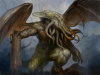
[
Show / Hide Submission ] [
Visit Submission ]
Full Description
Some say that where the Cursed Lands now are, there was an orphanage with a particularly cruel caretaker. If some child would not obey his commands, he would tear their hair out, and this he would sleep on with much delight. Some say his collection came alive one day, from the pain and hate it contained, some say it awakened with the Curse.
The amorphous beast is composed entirely of hair. For this reason it can be practically invisible against the right background, it can creep through tiny cracks and under doors. Some claim it only strangles its victims, some say it drains life of them, as undead do. No one knows for sure, for few have escaped it, ever. It is said it does not harm children.
The Hair Beast is not harmed through common weapons, and even magical ones seem to have little effect. Fire is the only known protection, as it avoids larger fires, and a torch can harm it a bit. When it does burn (a little), it produces a horrible stench.
Additional Information
This is a unique magical creature, possibly undead.
Though it is a unique, it might spawn more of its own… if the conditions were right.
Add/View Ideas (0)
Add/View Comments or Vote (7)
The horrible and hated Nail Worm
By: manfred
( Lifeforms ) Fauna -
Underground The horrible and hated Nail Worm lives in deep caves near the Evil Labyrinth. It is unknown, whether only one monster exists, or there are several. There was at least one guaranteed sighting in the Labyrinth itself.
[
Show / Hide Submission ] [
Visit Submission ]
Full Description
The Nail Worm has no visible eyes, but seems to have other good-working senses. It is about 20 yards long, its body covered with short hair or fur. All grey in color, it is hard to note if not moving. But if it moves, it moves fast and effectively with a sidewards wawe-like movement a few snakes are known to move. Its ‘head’ is not separated from the body, and has no discernible senses. The mouth seems to have many small teeth, or perhaps tentacles. The ‘tail’ is thinner than the rest of the body, and very hard, able to deal strong punches. The beast is maneuvreable and cunning at defeating humanoids.
The Nail Worm meets its prey in underground locations, and somehow produces a thick black cloud. In the ensuing chaos it chooses a victim, and attacks. It should be noted that all attacks deal only subdual damage, be it hitting with the tail, or constricting the victims neck, like some great snakes do. When the victim is knocked out, it begins to feed…
Nobody knows what the Nail Worm normally feeds on, and how does it survive. But the treatment of its victims is know: it begins to suck on their fingers and toes, its saliva dissolving nails.
When the victim returns to senses, the Worm is long gone, and the fingernails too. The victim is free to go and curse that $#%*@ Nail Worm!
Add/View Ideas (0)
Add/View Comments or Vote (7)
The Invisible Lake Beast
By: manfred
( Lifeforms ) Unique -
Water Unseen and striking from suprise, this creature is on its way to becoming a legend.
[
Show / Hide Submission ] [
Visit Submission ]
Full Description
The creature has never been seen and is only heard as a whisper before it attacks. The attacks are swift, brutal, and clawed. It is a messy eater, leaving a distinctive carcass behind.
Additional Information
This is a unique product of a magical catastrophe, and it was actually a bear before.
Loosing much of its cellular structure, it still roughly keeps its original shape. However, it is not only semi-transparent, but also much lighter, up to the point that strong winds threaten to pick it up and dump somewhere else… likely killing it. The bear has learned to stay on the large lake it lived at, light enough to walk it, and holding to the water at the same time. It feeds on fish, as it did before, and occassionaly drowns an unlucky swimmer, giving rise to legends of a terrible invisible beast eating anyone approaching its lake. Be warned that it can move quickly on the lake’s surface, half-running, half-gliding toward its prey…
The only luck is that it lost some of its strength along with its weight and muscles. It is also now a soft, squishy thing, dangerous only if it is allowed to attack. If faces strong opposition, it will withdraw as fast as it came.
Add/View Ideas (0)
Add/View Comments or Vote (2)
The Molochi
By: Siren no Orakio
( Lifeforms ) Third Kingdom -
Other On a world made entirely of molten rock, there is still life.
[
Show / Hide Submission ] [
Visit Submission ]
Full Description
Beyond the psi-pattern of the doomed pilot, a free-floating packet written into the magnetics of the world, there is life. Spurred into being by the psi-pattern’s very existance, there are self-replicating patterns here. Here, where lead is energized to the point where it behaves like carbon, it has taken elements from around itself to create a kind of strange, metallic RNA. The body of life here is composed of magnetic fields, directing and in turn directed by shifting lead-iron molecules, in a hellish parody of aquatic life. Like the oceans of earth, there is a food chain, ranging from the simplest creatures, free-floating bits that convert the thermal energy of the molten sea to magnetics, and a series of larger and more complex creatures that feed off the magnetics of lesser creatures.
The highest of these organisms is a wonder to behold: The purely physical portions of its body are perhaps a meter in diameter, spherical when at rest, stretching to a sort of teardrop up to a meter and a half long and three quarters of a meter wide at its maximum cruising speed, of a surprising 20 km/hr. It’s internal magnetic fields are enough to put a turn of the millenium computer to shame for complexity and computing power, enough so that it can possibly be considered self-aware. With an intelligence to rival a terran dolphin, this predator literally rules the molten sea.
The Molochi have a limited perception ability, for only three things in their world mean anything: Temperature, Pressure, and thus sonics, and Magnetics. Their primitive language is a complex system of magnetics and sounds, and though it is rigid, and in an odd way, poetic, there’s very few ideas for it to carry, and so they simply don’t bother having expressions for them. They are ripe and ready to evolve into full sentience, but for now, there are simply no avenues for this to happen beneath the molten seas. Their ability to move through their world is limited by both the top, where the world cools too far to support the unique chemistry of their lead biology, and by the bottom, where their biology simply disintegrates under the heat.
Additional Information
Add/View Ideas (0)
Add/View Comments or Vote (7)
The Slurg
By: tarock ashar
( Lifeforms ) Fauna -
Any This slug like parasite is actually a symbiote. After attaching itself to a warmblooded host, it feeds off that being. However, its tenticles, growing under the skin, act as secondary nerves, increase the victims nerve responses.
[
Show / Hide Submission ] [
Visit Submission ]
Full Description
A small slug like animal that is a member of the slug family. It is a parasite that attaches itself to any part of a warm blooded animal. It has small teeth on one of its ends. (the end with the eye stalks) and it uses this to open a wound into its host. Then a tongue like tentacle enters through the wound. They go through the body. From here it gradually grows through the eletrical impulses sent through the nerves of the host. It acts as a condutor for the eletrical impulse where it absorbs part of the impulse before sending it along its way.
It improves the reflexes of the host, along with giving it fast healing. Once it one of the tentacles reach the brain the host and the slurg become one mentally. If this happens in an intelligent victim, the victim’s IQ will increase. Unfortunately, this will lead to madness.
Additional Information
You can see tentacles spreading throughout the body of the host from the mian part of the slurg through the skin of the host. It is capable of sudden growth of special tentacles called barbs which it shoots out of the skin of the host and at whatever it precives as a threat to it and or its host.
Add/View Ideas (0)
Add/View Comments or Vote (5)
The Stayers - a type of Gargoyle
By: MoonHunter
( Lifeforms ) Constructed -
Any There are seven or so types of lifeforms considered Gargoyles by the less informed. This is one.
Stayers are classic stone gargoyles, big gothic, bat wings, claws, fang, and so on. They are quite variable in their appearance, but they tend to keep this in common. They are also the defenders of Wizardry - Great Magics.
[
Show / Hide Submission ] [
Visit Submission ]
Full Description
Stayers are the defenders of Wizardry - Great Magics.
The Stayers are the first of what some scholars call Magichena, magically animated things that are “alive”. Unlike many things, they know their history. The Stayers started existance as Guardian Statues, protecting the home of The Last Archwizard. They are of the classic Gargoyle mold, winged deformed humanoids. In an attempt to improve upon the basic guardian statue, the Archwizard gave them the ability to actually cast spells, so they could fly and project magic missiles. The first saw him create the second, those two saw him create the third, until all five original Stayers had been made.
The Stayers were somewhat intelligent and helpful. In addition to being powerful guardian statues, they became assistants… first of the tote and carry kind, but eventually doing a number of mundane and wizardly things for the ArchWizard.
They protected the ArchWizard and his library for nearly two centuries, until his death. The Stayers realized they would continue to protect the ArchWizard and the powerful magics his library contained. It was more than it was just what they were created for, it was their duty. The world could not safely utilize the ArchWizards magics until a new Archwizard was born.
(Just to make sure, they called back the spirit of the ArchWizard just to confer with him. They await his next incarnation when he will retake the ArchWizard mantle.)
So they Stayers found the old notes and made more of themselves. The hardest part of the process was carving new models. Many stayed to protect the Great Library. A few started to make a new archive, as the library was not very defensible. Others went out into the world, searching for dangerous Wizardry to neutralize (or contain until the coming of the next ArchWizard) , wizardly tomes to keep from people who might misuse them, and other odds and ends.
A number of Stayers search for new wizards, to train them in the basics, just in case they might be the next ArchWizard. After a few centuries of this, a few have started a school for wizardry. They even teach a few common mages as well, as even they need a good education.
Stayers are classic stone gargoyles, big gothic, bat wings, claws, fang, and so on. They are quite variable in their appearance, but they tend to keep this in common. They have good speed and the strength of stone. With their magic, they can fly, repair themselves, and cast other spells. They have mage sight, so they can see in low light by seeing the spirits of things.
Additional Information
Go-ers, those that left. They are not Gargoyles per sey, but they have come to be known by the name Midarans.
Add/View Ideas (0)
Add/View Comments or Vote (5)
Unknown Death
By: MoonHunter
( Lifeforms ) Third Kingdom -
Other Your adventurers can name this one, if they survive. The last thing they will hear is: “ppppooockt-t-t-t-t-t-t-t-t-t” before their eyes and ears start bleeding and their body become black and blue… battered by something unseen and untouched.
[
Show / Hide Submission ] [
Visit Submission ]
In a region known for hundreds of deep narrow canyons and a high magical energy, few have investigated it and come back alive. Some say there are monsters here… and they might be right.
Your players will probably not be trying to make too much noise, as there is a great echo here and they don’t want to alert the monsters.
As you preceed into the canyons, the walls are cooler than you would expect for being exposed to the sun… perhaps the nights here are really cold.
Your players hear an odd “ppppooockt-t-t-t-t-t-t-t-t-t” noise(think: sound of tennis ball hitting wall) that seems to echo around the area. It is like something is bouncing off the rocks. The echo will occur for a while then go away.
If the players are around their campfire….they will hear dozens of pppooockt-t-t-t-t-t-t” noises, like three dozen handball games. It is terribly loud. If they scream at each other (or make a sudden loud noise) the sound will intensify in both volume and tempo.
Someone might feel something bounce off them. It feels like the vibration in your chest when you are standing next to a big drum being banged. Their sword or a metal item vibrates like a tuning fork… or they banged it against metal.
They will eventually go away… and the preternatural silence occurs (actually it is normal silence… but it seems so loud and so still after all that noise and vibration.
If they players travel deeper into the canyons (i.e. don’t get the hint), it will begin again. But this time louder and more dangerous. Now people will begin to pop ear drums. They will take damage from the vibration. Things that are crystal or glass or ceramic will break. If the players are not fairly quiet and beat a hasty retreat, they will soon die from ruptured ears, eyes, and black and blue marks all over their entire body.
Full Description
The Living Echos of the canyons are living sounds, much the way an elemental is living fire/ earth/ air/ water. They are somewhat intelligent pack animals (akin to wolves). They bounce around the canyons absorbing heat from the rocks (as food). Fires and the warm blooded bodies of animals are also “food”. In fact, fire will create a feeding frenzie.
Certain common sounds create “disharmony” / “discordance” in their bodies causing them a bit of discomfort. They will put up with this as the character bring new heat for their pack to absorb.
Additional Information
Silence spells are the equivalent of walls of flames to paper golems - that is to say, very deadily. Once they encounter this phenomena once, they will avoid it and the casters like the plague… though they may cause rockslides to indirectly attack said caster/ group.
Add/View Ideas (1)
Add/View Comments or Vote (19)
Vapour spider
By: Kinslayer
( Lifeforms ) Ethereal -
Any Spiders of the moonlight, weaving webs of smoke, mist, and moonbeams.
[
Show / Hide Submission ] [
Visit Submission ]
Full Description
The vapour spider has a translucent and glassy appearance, and a rather soft & fragile body. They only appear at night, and seem more prevalent with stronger moonlight, but this is perhaps only because they are more easily seen. They seem to have no natural predators.
Vapour spiders create webs that are even more ephemeral than the standard variety, yet somehow even more resilient. It is said that they spin their webs not out of silk, but instead of smoke, mist, and moonbeams. Even the pattern of the web resembles swirls of vapour or smoke rather than a typical spiderweb pattern. Yet, when you pass your hands through it, the web is not disturbed, and remains undamaged.
They have never been seen eating an insect, nor has anything ever been seen caught in their webs. Vapour spiders do not even bite in self-defence. Some loremasters believe that they do not exist entirely in this plane of existance, and instead form their webs of visible ether, catching tiny spirit-creatures invisible to the eye.
Additional Information
Add/View Ideas (0)
Add/View Comments or Vote (10)
Verner
By: MoonHunter
( Lifeforms ) Fauna -
Other The toxic lands of the Wastes should support no life. Here the land is slowly corrosive to the touch, causing illness with prolonged contact. The bubbling sulfur and ectomass pools are especially lovely, if you have the right aesthetic. The soil is soft and any heavy object slowly sinks. Other than a few migrant birds and some exotic small insects, The Wastes support only one native lifeform - The Verners - Exerpt from the often wrong but very popular Kalemandi’s Beasts of Lore and World.
[
Show / Hide Submission ] [
Visit Submission ]
Full Description
Verners are best described as glistening, slimy, massive worm centipede hybrids. They range from three meters to twenty meters in length and are a meter and a half wide in their semi-segmented body. Their tentacal like legs allow them to lightly and briefly stride upon the soil of the waste. However, most of the time they "swim" in the strange loam that is The Wastes. While they can "swim deep", most of the time they are just at or below the surface.
Verner’s slime seems to protect them from the acidic soil. However, since the slime has toxic properties, it is not used as a protective material.
They are uniquely adapted to the paraliquid soil of The Wastes. Their primary sense is hearing - and it is acute. They can "hear" and "feel" things in and around the wastes. The sound of people talking on a landskiff or footsteps of a prospector (in those large barrel like shoes they wear) will bring wild Verners like blood in a water will bring a shark. Verners have been known to "jump out of the soil" to capture low flying Soarers or birds.
Verners can eat anything in The Wastes. This list includes the carnivorous mobile mutant plants, passing birds, Soarers, Waste Rats, Waste Knights, and even other Verners (but only those of another breeding group). Anything it can get inside its four element beakish mouth is an option. The most amazing thing is that this list includes rocks and toxic soil. Their beaks can crush most rocks. These materials enter in and pass out in a concentrated form. Verner dung is perhaps the most dangerous and toxic substance known to The Wastes. However it can be refined to retrieve a number of valuable substances from the soil.
Additional Information
Verners were allegedly named after the scout that first discovered them.
The creatures have no other senses than touch and hearing. Having only these senses, they are somehow able to recognize members of their same clutch (Each clutch has five to ten eggs). A female (and they are outnumbered by males in a ten to one ration) will breed every four years or so. No one knows how they are able to recognize their litter mates.
It should be noted that Verners are immune to most of the paramagical effects of the ectomorphs spawned by the HellPits and other ectopools of the waste.
Verners seems to absorb "water" through their carapaces. In areas other than The arid Wastes, this causes them to swell up and eventually explode.
These creatures can be "Tamed" and are used as pack animals in the wastes. The creatures are somewhat charmed by the ringing of musical bells. The tamed ones are set with harnesses that have appropriate "jingle bells".
Add/View Ideas (0)
Add/View Comments or Vote (13)
Winged Geomorphs - A type of Gargoyle
By: MoonHunter
( Lifeforms ) Ethereal -
City/ Ruin There are seven or so types of lifeforms considered Gargoyles by the less informed. This is one.
Geomorphs are related to Earth Elementals in structure and form, but these creatures have more in common with ectomorphs (spirit forms) than true Fey or Elementals. They may be a distant offshoot of spirit dragons.
[
Show / Hide Submission ] [
Visit Submission ]
Geomorphs are related to Earth Elementals in structure and form, but these creatures have more in common with ectomorphs (spirit forms) than true Fey or Elementals. They may be a distant offshoot of spirit dragons.
In reality, they are actually an energy matrix, that soft glowing orb similar to all true Fey. Unlike most Fey, this orb can not shapeshift and become solid into traditional patterns. These matrices find there way into stone, embedding themselves into it, shaping and animating it. The form is normally based on the gente/ bloodline of the GeoMorph, but is normally a winged humanoid with a monsterous face and general human proportions. The form is clawed and the wings are similar to a bats or dragons rather than a feathered form. Some gentes/ bloodlines will be sphynx like, or one appears to be a pile of small rocks in a humanoid form.
Though nocturnal, they can function perfectly well during the day. (There is a theory that sunshine interferes with their control of the stone, which seems to be played out by their reduced speed, dexterity, and strength during the day).
They often appear as statues, which is how they camoflauge themselves in urban environments, however they have other ways. They will often choose perches that match their stone color and pattern, so at a distance they are lost in stone. Some have ways to alter themselves to better match their background, while others can offuscate themselves to appear as a stone outcroping. A prized ability is the one to become invisible.
While totally intelligent, they are alien in their mindset. Their view of time is more geologic, rather than human. This gives them inhuman patience. They also do not see the requirement of movement for actually doing something. Thinking is considered an action for them, and they are logical and highly intelligent thinkers. They are masters of philosophy, astronomy, and mathematics. They are regionally oriented, territorial. The troupe (one to twelve) claims a good sized region which they will share with wet creatures but not other troupes or dragons. They will perfer the highest position in a region and will watch it. Though they appear to have eyes and ears and touch, their sensory abilities are "cosmic"/ nearly clairsentient. They can see, hear, smell, taste, nearly anything within a nearly unlimited line (of sight). Note: Some can bend their sensory perception slight, going around corners or through windows.
While not prone to action, they will protect and defend the integrity of their territory. They tend to attack those with negative affilitations or intents.
There are several ways they "feed". They seem to absorb energy forms. Hunting and consuming gems is a favored past time (where they absorb the gem’s mystical energy). They can absorb the geomatic spirit energy of their region, taking in the energy of the place. This "grazing" often explains their settling into city areas, staking out temples, schools, and museums as prime spots. Some troupes have taken to absorbing energies directly, hunting down "sinners" those charged with negative energies and ripping energies out of them (frequently killing the target), a trick they have picked up from the Gharjoy 1262. Troupes with this habit seem to favor Churches of the Light as their primary habitat.
Geomorphs give birth by two or more of them sharing energies together and then embedding those energies into an egg shaped stone (usually six inches across). As those energies develop, it eventually becomes a full GeoMorph, absorbing stone to make a larger body as it can control more and more stone. Eventually it will merge into a large stone, taking that on as its proper body. Note: They are insanely protective of their eggs (given that they only reproduce once every few decades).
Add/View Ideas (0)
Add/View Comments or Vote (4)
October 30, 2005, 0:47
November 3, 2005, 23:51
May 25, 2006, 10:46
June 27, 2006, 22:18
September 15, 2006, 16:55
December 21, 2006, 21:39
March 28, 2007, 0:36
March 6, 2008, 17:11
I think mostly that people don't know it is here. So I am fixing that.
March 7, 2008, 15:12
Darn. Are we coming out of age? :)
March 3, 2011, 22:41
I remembered running into this Codex the first time 2 years ago and thinking "Wow". Strangely, despite this and numerous subsequent run-ins with this through individual submissions, somehow I never voted on the Codex itself. Correcting this now.
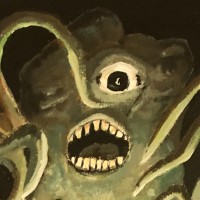
December 19, 2011, 18:24
This is a grand list. Also adding to my to-do list.
December 19, 2011, 20:14
Still loving this codex and all it's entries.