Undead are, simply put, among the most horrific things one can think of. Can you imagine anything more frightening than a being which is dead and yet still walks? Can you imagine the horror of being faced by the hollow shell of being, a hollow shell which must feed?
Well, if you can imagine that, then you must have some inkling that the undead are definitely not being used to their full potential.
I think that there are few things that are more anathema to the human psyche than the living dead; the fear of the thing which should not live is a potent one, even in the modern society of sarcasm and realism.
So why do we not fear the undead? Why do the heroes of our favorite games not flee in horror from the shambling zombie? Why do pale corpse-lords who thirst for blood not inspire shaking terrors from adventurers who come to steal their treasure?
This Codex is devoted to restoring the dead-who-live to their former horrible glory. Here, we will post unique and different kinds of undead, new and more fearful beings from beyond the grave. Ghosts, mummies, zombies, liches, worms-that-walk; all of those and more will be remade in this thread.

Additional Ideas (0)
Please register to add an idea. It only takes a moment.Codex
Azhag By: CaptainPenguin ( Lifeforms ) Constructed - City/ RuinThe Azhag (‘ah-ZHAHG’; from Old West-Carmanian azadg, meaning watchman, sentry), called Tomb Guardians or Demon Shadows, are the terrible Undead guardians of the tombs of the Ancient Ones.
Azhag (Tomb Guardians, Demon Shadows)
The Azhag (‘ah-ZHAHG’; from Old West-Carmanian azadg, meaning watchman, sentry), called Tomb Guardians or Demon Shadows, are the terrible Undead guardians of the tombs of the Ancient Ones. They were originally bound to the various tombs and crypts they guarded by powerful oaths and spells. Some were bound with more than oaths- their souls were chained to the gateposts of the tomb. But as the ages passed, and the Ancient Ones disappeared, many devious and unfaithful Azhag abandoned the tombs which they watched and protected and wandered away to find blood to quench the burning flames of their eternal hunger. Others, freed of their oaths, remained faithful to former masters and stayed, or were held back by chained souls, and their hunger gradually made their souls feral and wild. Thus, though ancient Azhag can sometimes be found in the wilderness, hiding in dark places, others still can be found dwelling in the dusty porticoes of the tombs of an elder race.
The Azhag can take many forms- a tall, spare man outfitted as a watchman in ancient garb, a shaggy black hound, or a watching black owl. However, when they are enraged, or when they encounter a large threat to themself or their tomb, they reveal their true form: the Azhag have, in self-absorbed madness, not only forgotten their former lives, but all sense of what it is to be mortal. They appear as bone-thin, oily-black-skinned, rotting fanged men with a corpselike appearance. Their noses are sharply ridged. Their bellies are swollen with starvation, and instead of hair, they have thick, heavy tentacles, hanging down to the smalls of their backs. They wear no clothing in this state, and multiple unearthly sexual organs and protruding, purposeless bones emerge and recede constantly from their body as they move. Their eyes are milky green and leak a stream of gray bile, which run down trenches in their long faces. Azhag constantly hunger for blood, which is the only thing that can quench the fiery hunger of their starvation.
Azhag are supernaturally strong and fast, despite their crumbling appearance. They are dull-witted and easily tricked, but they are likewise prone to vile tricks and have a sort of animalistic cunning. In addition to their sharp, curved nails, they can use their tentacle-hair to slap and bite foes. Their tongues can elongate to the length of two feet, and have a pair of deadly poisonous spines at the tip.
Azhag are killed by the severing of their tentacle-hair and by the removal of their hearts. In addition, a mad Azhag confined to the tomb will crumble to dust given the news that it is freed of its oath. Azhag are burned by the touch of sunlight; it reduces the places it touches to ash.
Add/View Ideas (0)
Add/View Comments or Vote (4)
Bandage Beasts By: Shadoweagle ( Lifeforms ) Intelligent Species - Desert
Deep within the shifting sands, natives whisper of creatures trapped within ancient tombs, their insane wails audible through feet of solid stone seals.
Read, now, as I delve through the mystery and bring forth the facts about the Tah’k Mumz’kar; the Bandage Beast; The Mummy.
It took four weeks of careful chipping, easing and levering, but the five-man excavation crew led by professor Trimley finally broke through the final stone seal in the tomb. Once they pulled aside the sandstone door, the ray of mirrored sunlight which had lit their way thus-far reflected off several more mirrors within, showering the inner-most chamber with a golden light. Gold reflecting off gold - the treasure in the tomb was significant. The square room was scattered with silver, jewels and precious objects. In the middle of the room rested a large pillar, which held three Sarcophaguses up vertically.
The crew’s attentions were soon diverted at the sight of movement, however. Greed aside, they now put their focus on the entire room itself.There were three figures, in total. Each loosely wrapped head-to-toe in bandages of the color of tar. Amber pinpricks of light shone forth from small gaps in the wrappings, centered where their eyes should be. The first of the figures was pacing slowly, in a limping gait from the left of the room to the right just several feet away from the tomb entrance the crew had just opened. The second figure was another eight feet or so back, walking in the opposite direction of the first. Nearly a dozen bandages around the midsection of the second creature appeared to been partly unwrapped, and at a cursory glance seemed to have caught onto various weapons which were a part of the treasure trove - golden-hilted swords, silver sickles, ceremonial sceptres. The figure was dragging them across the floor as it paced slowly. Deep grooves, carved into the sandstone floor suggested that it had been dragging those weapons for years.
The third bandaged figure was in the far corner of the room, facing the walls. It stepped once to the left, waited a second, then stepped to the right, continuing this pattern like a horse stepping in the corner of a paddock, driven insane with loneliness. All three of the figures appeared to ignore the excavators completely.It took only two seconds for the five men to take in the scene before them. On the third second, The four diggers screamed in terror and fled - Professor Trimley stood perfectly still, frozen in fear and ignorance of what was before him.
As though activated by the workers fleeing, the front-most creature finally turned its amber gaze to the entrance, then it shifted its head to stare at the second bandaged figure. A wispy, cracked voice from beneath the material echoed through the entire room, uttering “Dukhrat.” with a sense of finality.
The second being reacted to this single word violently - suddenly it turned, its limping gait changing into a nimble burst of speed. It flew past the frozen professor and chased down the four workers, easily gaining on them. As it neared the diggers, the hoard of weapons which were attached to its wrappings arose, the bandages acting as though they were a dozen dextrous appendages. The workers were soon caught, and within seconds were gruesomely reduced to dissected mounds of bleeding flesh. The creature did not stop hacking and slashing with its weapons, until its victims were not even recognisable as human anymore, at which point the now bloody and bent weapons suddenly dropped to the floor in unison. The second beast turned and began walking back towards the tomb with its original hobbling pace, weapons scraping against the ground with a grating echo.
In the meantime, the first creature was focused upon Professor Trimley. The black-bandaged figure had turned from its original path and walked steadily to the terrified scholar, stopping just one pace away. From this closeness, the professor could see that the bandages around the beast were constantly moving; tightening, flexing and loosening, writhing like a snake. That same voice echoed from behind the material once more, “Khra Vk’shrau Nuir Vequis?”
The professor was at a loss of words - the beast was speaking in a long-dead language. He couldn’t decipher it. In a stuttering voice, he replied, “I don’t understand…” To which the beast turned to its gaze to second companion and spoke, “Khra Rhalshi Tir Raul?” The second creature shook its head and replied, its own tone slightly deeper but still as eerie, “Nai Shraik.”
Once more, the first beast turned back to the professor and spoke, “Kre’kta Jujaile kore.”
At this point, Professor Trimley was extremely irritated at his lack of understanding. Driven by terror and frustration, he clenched his fists and yelled at the creature, “I can’t understand you!!”
There was silence for a half a dozen seconds as the professor and the beast exchanged stares, and then the creature rose it’s left hand to rest on the professors paralyzed face. The second its bandaged hand touched Trimley’s face, the wrappings around its arm sprung into action, slithering forth and wrapping around the professors head and tightening like a python. The professor flailed wildly as the bandages wrapped tighter and tighter, both suffocating and crushing his head, but the beast did not even notice the blows which were landed upon it.
In one minute, the professor went limp, dead, but the creature did not stop there; it kept tightening slowly, until eventually the skull cracked and caved in, crushing the head into jelly.
The bandage beast released its wrappings from the humans face and turned to stare outside the tomb door, before shifting to glance at its comrade. The world was open to them… It was time to see what had become of it.The third creature did not move through the entire event. It never noticed the five humans. It never noticed its freedom. It merely kept pacing left and right in its own corner, crazed beyond thought.
Tah’k Mumz’kar
(Tark Mum-suck-khar)
The Tah’k Mumz’kar - from which the slur ‘Mummy’ is derived - is an undead beast borne from millennia of solitude and poorly performed death rituals.
A common mistake made by people is the thought that a Bandage Beast is a well-preserved ‘zombie’, much of its flesh and bone still intact. The truth, however, is that the Tah’k Mumz’kar is made when a poorly preserved mummified corpse is left to decompose over many centuries. As the body deteriorates, the herbs, preservatives and oils react with the material and turn it into a blackened color - more than just aesthetic, this reaction makes the material extremely fire-retardant. As the body decomposes, the bandages soak up the essence of the corpse, storing its soul and its remains within the material. Ironically, the rituals in which these corpses were preserved were meant to aid the soul in passing on to the next life, yet instead it is captured in the wrappings surrounding it. Through countless centuries of imprisonment, the inert soul caught in the bandages manages to adapt, and take on the bandages as their own ‘skin’. All that remains within the wrappings is an echo - a ghost of a ghost, which remembers its past life and realizes that it is now no longer what it once was.
Once a Tah’k Mumz’kar is born, it is quite sane and would be able to be communicated with. Unfortunately, nearly every bandage beast is held within ancient tombs which have long been sealed from the outside. They are prisoners within their own mausoleum, unsleeping and unheard for centuries. Nearly all go at least partly mad. Some lose all sense of sanity and become nothing more than animals.
Surviving an encounter with the Tah’k Mumz’kar
Some Bandage Beasts can be communicated with after a fashion, however most are part-crazed and have a warped sense of logic. They still partly believe themselves to be kings or pharaohs, and as such they expect to be treated as such. Respect will be met with neutrality, and scorn will be met with hostility.
Any strong display of emotion will infuriate a Bandage Beast as by emotion, they are reminded of the life which has long passed them by.
The language barrier may be a difficult thing to cross, as the language that a Tah’k Mumz’kar knows will likely have been dead for centuries. Still, if communication is possible - whether by miming, hand-signs or knowledge of their language - one may be able to escape an encounter with a Tah’k Mumz’kar without so much as a scratch.
Sometimes, however, a crazed, territorial or just cruel Mummy will not even give the opportunity for communication and will attack from first sight. When this happens, beware! While the Bandage Beast may seem to be of humanoid shape, this is only because their ‘echo’ remembers them being human. If it so wishes, it may collapse and appear to be nothing but a pile of dirty wrappings in the corner of a room.
The Tah’k Mumz’kar’s most enjoyed way of killing is by using a mortals weakness against it. Suffocation is a favorite, as the Bandage beast uses its own wrappings to cover the breathing passages of a living creature and patiently wait until the life is taken from them. Some even wait for hours, watching and feeling as the corpse turns cold.
Other methods of offense used by the Tah’k Mumz’kar are to wrap their appendages around each of the limbs and attempt to tear a creature apart. Additionally, they may pick up objects or weapons with their wrappings, and use them to attack.
Any strips of material torn from a mummy will dissolve into nothingness over the space of about ten minutes, and the tear that the mummy had suffered will slowly re-stitch itself strand by strand, taking between ten to thirty minutes depending on the severity.
Do not even consider fighting a Tah’k Mumz’kar in the traditional sword-and-spear methods - you are not fighting a humanoid, and nor are you fighting a corporeal foe. Essentially, you are fighting possessed material and an echo.
Bludgeoning a Bandage beast will certainly make it collapse into a shapeless pile of material - after all, it only weighs as much as its wrappings - but it will not damage the creature at all, and the Mummy will either reform into a human shape, or continue ‘slithering’ onwards in its raggedy form.
The only way a slashing weapon will injure one of these creatures is if you shred the material into hundreds of miniscule pieces; and even then, you should be sure to watch all of the pieces of the material, to make sure that they all dissolve. If a strip does not dissolve, it means that the ‘echo’ of the creature is still attached, and if ignored, the material will slowly stitch back together. Naturally, once reformed the Bandage Beast will want revenge.
The Tah’k Mumz’kar is superbly fire resistant - the chemicals used in the treatment of the material and the body act as a powerful fire-retardant, and as such it will not catch alight. Due to this fact, fire is as ineffective as bludgeoning a Bandage beast. Surprisingly, Water is perhaps the best thing to use when faced with one of these monstrosities. If the bandages of the Tah’k Mumz’kar are soaked, they will become too heavy and saturated to allow the possession of the material to work effectively. Thus, a soaked Bandage beast cannot hold its humanoid shape, nor can it wrap around anything tightly, or pick up objects. The only thing it can do is slither away and find a suitable hiding place until it dries. In this soaked state, an attacker - if it catches the bundle of bandages - would be able to tear apart the material with nothing more than a letter-opener if he wished. The Bandage Beast would be completely defenseless.
Bandage Beasts are fully aware of their weakness to water, and as such they avoid it like the plague. As a matter of fact, a ring of water spread around a person - or perhaps at the entrance of a door - would make an effective ward against Mummies (At least until the water evaporates in the dry, desert heat), and seeking sanctuary from a pursuing Bandage Beast would be as simple as finding a large body of water - such as an oasis, or a fountain.
Although using water may be an excellent method of stopping a mummy, the fact remains that most mummies are found deep within tombs, in the driest wastes of the desert, where water is perhaps the most precious commodity. Does the defender wish to risk using their water, only to die of thirst a couple of days later?
Add/View Ideas (0)
Add/View Comments or Vote (17)
Clochardshire Shambler By: Scrasamax ( Lifeforms ) Constructed - City/ Ruin
Dont mind him, he’s just a rag man
Clochardshire resident, common quote
Full Description
The Clochardshire Shambler is a pittiable creature, technically a weak form of undead, but bound to this world not by necromancy or a sarcomancers call, but by the tattered rags it wore in life, and wears in death as well. The shambler looks like nothing more than a man shaped lump of rags and badly worn and frayed clothing. At night it can gather the strength to stand and snuffle about to find whatever it draws it’s meager sustenance from. It has no face, just a dark hole in the cloth. If a viewer were to pull this concealing cloth away, they would find the dessicated and leathery flesh of a mummified corpse wrapped in the rags. The only part that is regularly exposed are the skeletal hands of the shambler that it uses to pull itself along in the day, usually looking for shelter, or grabbing new rags from beggars and homeless. It makes no sound other than the soft noise of cloth sliding across the ground.
Local Information
Found only in the city of Clochardshire, the shambler is a unique local phenomenon. No more than thirty or forty years in existence, the number of shamblers is unknown as they are quite adept at hiding during the day and going unnoticed at night. Most residents consider the things to be nuisances and the majority do not know the difference between a normal rag covered beggar and a shambler. Even those that do know do not consider them to be a menace. The only things that have a reason to fear the shamblers are other homeless and beggars as shamblers will strip them of their possessions, leaving nasty and infected slash wounds from their bony claws.
Sorcerous Lore
The Clochardshire Shamblers are a very rare form of self-spawning undead. The conditions in Clochardshire are very hard on the homeless and the beggars, as shelter is hard to come by and the climate is wet and cool. Illness of the lungs and throat are common, and many of the beggars are left to die, huddled in an alleyway strangling on their own mucus. This tedium of existence generates a large amount of negative energy, which resonates with the caverns underneath Clochardshire. This synergy causes the most destitute and desperate of beggars to rise from their deaths as Shamblers. Clad in their rags they seek to find more rags and anything else they can get their ragged hands on. This magpie like behavior makes it easy to distract a shambler, they will more readily scamper after a tossed coin than a warm body. Aside from attacks on other homeless, the shamblers seem to have no interest other than their packrat collections and increasingly thick sheaths of worn cloth.
Defence
Warding off a shambler is as easy as childs play, a line of salt or germinated grain is as strong as a granite wall for stopping them. Invoking the name of a powerful good deity or brandishing a holy symbol will cause a shambler to mewl in agony and quickly retreat.
Add/View Ideas (0)
Add/View Comments or Vote (19)
Crawling Ghosts By: CaptainPenguin ( Lifeforms ) Ethereal - Any
The Crawling Ghosts (from Parsic “yabuj”, “it crawls”) are the loathsome, disturbing ghosts of those who die lonely and rejected, shut-ins and the forgotten.
Crawling Ghosts (Yabuj, Brown Ghost, Lonely Beetle)
The Crawling Ghosts (from Parsic “yabuj”, “it crawls”) are the loathsome, disturbing ghosts of those who die lonely and rejected, shut-ins and the forgotten. Scuttling in the places where the lone dead once inhabited, the animal soul takes on the form of a huge brown insect, a cockroach or hornless beetle, as long as a man’s body and as wide as a platter, endlessly lonely and full of sadness. They are chained to the places where, in their former lives, they once frequented- Crawling Ghosts often scuttle about a single room or tiny cell. Crawling Ghosts seek out living ones to ease their loneliness, but seem unaware of how much horror and fear their presence causes. They are little appeased when, invariably, those they approach flee in terror.
Crawling Ghosts take only one form- that of a huge brown cockroach or hornless beetle. Their snapping jaws drip a foul brown fluid, and their feet trail a similar stick substance. They smell horribly, as if they were a manifest presence of rot; this stench is often the first sign of their presence, along with trails of vaporous residue along the walls, ceiling, and floor of a room. Their eyes are small, black, and gleaming, and their antennae wave furiously when they are agitated.
Crawling Ghosts sense very little- they can barely feel through their stiff shells, save pain and the aches of their existence. They see very poorly- beyond about 40 feet, they see very little other than a grey fog. They have no sense of smell, though it seems that they have a more acute sense of taste than Hungry Ghosts, for they relish garbage and rotten things and are repelled by fresh food. Crawling Ghosts can speak, but unless they speak very slowly and quietly, it is nearly impossible to understand them through the insectile stone-scraping squeal of their voices. Crawling Ghosts rarely sense what they have become- many attempt, at first, to go about their old routines or lives, even attempting to stand and dress despite inexplicable difficulties such as strange aches and whirling limbs where there never were any before. This makes them even lonelier, for in attempting to go about normal human existence, they cause even more horror, and become ever lonelier.
Add/View Ideas (0)
Add/View Comments or Vote (4)
Deaders - a different take on Zombies By: Ouroboros ( Lifeforms ) Constructed - Any
Recycling the dead for the greater good since 1704
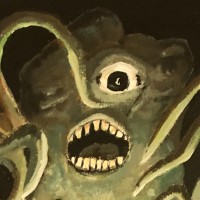
In Locastus, City of Mirrors, the Deaders are a valuable commodity. In fact, the very foundation on which the Locastrian economy is built is the cheap, uncomplaining laborers and soldiers provided by using a very abundant source - the city´s own dead. Bands of these silent, shambling figures are visible all over the city, usually under the command of a (living) human foreman, doing roadwork, sweeping the streets, cleaning the sewers or unloading ships in the harbour. The vast, cathedral-like lumber mills, tanneries and forges of the City´s industrial districts are powered primarily by these automaton-like abdead, working day and night. Militarized versions guard public buildings and patrol military installations with great vigilance and unbreakable loyalty. The rich use the more refined versions as couriers and bodyguards. The dead of the city´s poor and its executed criminals are taken by the wagonload to the necrologic production plants to be turned into unthinking, unquestioning workers. These are the silent downtrodden masses of Utopia. These are the Deaders.
Deader physiology
Deaders (as they usually are created from human corpses) are humanoid, but covered in a thick layer of an asphalt-like substance. For aesthetic reasons, the bitumen is usually thickly applied on the face area, leaving their features blunt, anonymous and dehumanized. They smell faintly of tar and weird alchemy, but never (unless incorrectly cured) of decomposing flesh. The matte-black protective asphalt is inscribed with glowing Power Sigils, stamped deeply into the tough, resin-like surface. The design and placement of these animating glyphs may vary from manufacturer to manufacturer, but their numbers and sophistication are always a good indication of the Deader´s intended purpose. While military Deaders are usually dressed in some kind of uniform (sometimes with armor permanently affixed to their bodies) and kept clean and presentable, street-working Deaders are not uncommonly covered in gang-sign graffiti or otherwise vandalized by the city´s street kids. Missing fingers, toes or whole limbs is not uncommon a Deader is not repaired unless its damage prevents it from doing its job. Even though Deaders are quite durable, older specimens usually sport numerous repairs, where tissue has been roughly stitched together and daubed with fresh asphalt. Unless an injury affects the structural integrity of a Power Sigil, a Deader can continue to function indefinitely. The common worker Deader - the most abundant type - is usually unclothed, barring tool belts and other items it might need for the task at hand.
The creation of a Deader
The first item needed to create a Deader (obviously) is a reasonably fresh corpse that has not yet started to decompose. The process starts with the corpse being drained of bodily fluids and cut open, whereupon the viscera, genitalia and eyes are removed. The cranium is opened, and the brain, medulla and spinal cord removed. Usually all orifices are sewn shut or plugged with wax. Once this grisly business is finished the body is marinated for several weeks inside a rune-carved glass-and iron tank through which a fluorescent green alchemical cocktail is circulated. The strange fluid preserves the muscles and skeletal structures, and a puissant current is run through the tank, galvanizing the dead tissue back into a semblance of life. Once the alchemical processes have run their course, the Deader is removed from the tank and coated in a sticky black asphalt to protect it from the elements and to further preserve the tissues. The body is then inscribed with the mystical, glowing Power Sigils that provide locomotive and intellectual power, enhance performance and inhibit decomposition.
Deader Psychology
Depending on the sophistication and number of the Power Sigils on its body, a Deader can be more or less intelligent. Deaders tailored to perform simple tasks (factory worker, cleaner, toxic waste handler etc.) are no more intelligent than a simple insect. Their actions are dictated by a handful of simple response/action cues, and they have only a few, primitive Sigils on their bitumen skin. More complex tasks (military Deaders, personal servants, couriers etc.) with capacity for simple threat/response analysis, inductive/deductive response capability and so on demands more sophisticated and numerous Sigils. The most advanced military models (that are covered from head to toe in brightly glowing, incredibly intricate Sigils) are even able to act as officers for other, lesser Deaders, although even these are without true self-awareness. The level of sophistication of Power Sigils that are allowed on a Deader is strictly regulated by the Guild of Sigil Scribers to prevent Deaders from gaining true sentience. Other edicts prevent Deaders from being equipped with any form of vocal communication, or indeed any form of response other than following orders. One can assume that military research has delved into the possibility of creating a truly self-aware Deader, but if so, the outcome remains unknown to the general public.
Deader Senses
A Deader perceives the world though the resonance its puissant emanations cause with the surrounding world, almost like a sort of magical echolocation. The magical output of a Deader is determined by the power invested in its Sigils, which in turn determines its perceptional acuity. Even though a Deader is effectively deaf and blind, its powerful interferometry cannot be fooled by camouflage, darkness or spells of invisibility.
Controlling a Deader
The rudimentary sentence residing in the interconnected Power Sigils on the Deader´s body can be manipulated by anyone with any level of psionic Talent. For people without such capabilities, there are controlling devices (usually a ring with green crystal stone) that enhances their mental acuity to the point of where the Deader´s puissant field can be manipulated at a thought. The level of autonomy of a Deader varies, but usually leaves enough marginal for the Deader to do its task efficiently, as well as to avoid hurting others or itself. Military-grade Deaders are of course allowed a greater autonomy, but are keyed to only obey orders from the correct command structure. They are always protected from unauthorized access by incredibly tough firewall spells. Even so, there are stories of powerful psionists hacking into military Deaders to circumvent security and to cause mischief.
Destroying a Deader
As mentioned above, a Deader is hard to damage. The only sure-fire way of destroying one is to target its animating Sigils. A Deader with a damaged Sigil will slow down, become clumsier and less intelligent. This effect accumulates as more and more glyphs are destroyed. An irreversibly damaged Sigil will release its stored puissance in a bright flash, throwing red-hot sparks, and, if the glyph was especially powerful, a small lightning bolt. A Deader with too many Sigils destroyed to remain active will become inanimate, burst into flames or explode. Military models, although this remain unsubstantiated, seems to have a self-destruct mechanism built in, causing a massive detonation upon taking heavy damage.
Plot hooks
A powerful psionist has developed a method of hacking into security Deaders, enabling her to walk into banks and the mansions of the rich to grab whatever she wants. If the PC´s corner her, she will set her hacked Deaders to fight and delay them while she makes her escape.
The Locastrian Workers Movement, unhappy with the way Deaders are replacing human workers in the factories, have started to systematically destroy Deaders on the streets. They have learnt to use Molotov cocktails and alchemical bombs to take out entire crews of the slow, stupid road gangs. The PC´s are hired to infiltrate the Movement, and to take out its ringleaders.
Semi-magical street graffiti placed on a regular worker Deader has caused an arcane cross-reaction with its Power Sigils, which in turn has given it true self-awareness. Unfortunately, it has also developed a great rage and a taste for the flesh of the living. Even more disturbing, it can alter the Power Sigils of other Deaders to create more of its kind. The PC´s are hired to investigate a number of murders with cannibalistic overtones in the poorer parts of town, and must eventually confront the hive of mutant Deaders that hides there.
The City´s Deader population is being decimated by a plague of zombie-eating vermin, tiny scarlet ants that build hives inside the hollow bodies of the Deaders and consume them from the inside out. The fact that the ants can thrive in the toxic, cured tissues of the Deaders is an indication that this plague is not a natural one. Is this a biological experiment gone wrong, or the Worker´s Movement´s new angle of attack? The PC´s are hired to investigate.
The state-of-the-art Military Deader that protects the vault of Locastrian gold reserve has malfunctioned and now cannot be deactivated. Until such time as someone can either work out a way of repairing it, or destroying it outright, the Locastrian stock exchange have to remain closed. (This scenario, I think, work best with a more intellectual group of PC´s that will have to try to find a way to solve the problem without just hacking the Deader to bits.)
Add/View Ideas (0)
Add/View Comments or Vote (23)
Ghulas - Eaters of the Dead By: CaptainPenguin ( Lifeforms ) Intelligent Species - City/ Ruin
Below the surface of the Earth, dwelling in darkness and forgotten catacombs, the goat-headed Ghouls, dark spirits of murder, feast on the dead. Ghouls dwell in old, forgotten places, luring others down into the grasping claws of their evil tribes.
Ghouls (Ghulas, Eaters of the Dead)
Below the surface of the Earth, dwelling in darkness and forgotten catacombs, the goat-headed Ghouls, dark spirits of murder, feast on the dead. Ghouls dwell in old, forgotten places, luring others down into the grasping claws of their evil tribes. Ghouls rarely appear in the daylight, though it causes them no harm, for it serves their secretive tendencies better to be shrouded in darkness. Ghouls have their own loathsome gods, terrible, nihilistic deities who mortals have luckily forgotten.
Ghouls are human enough in form from a distance, or in their preferred darkness, with two arms and two legs, despite a somewhat hunched stature. But when approached, the truth becomes clear. Their spatulate feet and hands are horrible splayed claws, stained a rusty-brown with dried blood. On their meaty chests, there are bloody wounds where their hearts should be. Long tufted tails hang from their backs. But their most inhuman aspect is their heads, for they have the heads of goats, with filthy, blood-crusted grey hair and curving black horns. Their red, strange-pupilled eyes represent the terrible evil of their former lives.
Ghouls seek only to do evil, for one reason or another. Some claim ulterior motives for their vile deeds, while others refute such rationalizations. Ghouls often spin elaborate fantasies to clothe their existences in, fearing to see the truth, that they may slay themselves of it. Some ancient, powerful Ghouls have made wickedness into an existence in itself, and do not even think that they do anything different than any other being. Young Ghouls are often vilely clever, and devise elaborate means to trick mortals into their lairs or traps. Elder Ghouls, having had centuries or even millenia to gain knowledge and power, are vastly intelligent, and more sagely even than mortal sorcerors (some ill-intentioned mortals seek out these elder Ghouls for forbidden knowledge, though the price is often far too high).
Ghouls can see in the dark, and have a taste for human flesh and blood. They use the skins and bones of their victims to create elaborate sculptures macabre and grotesque. Some Ghouls dwell in large tribes- such a life makes it easier to trick mortals by having the aid of others.
Add/View Ideas (0)
Add/View Comments or Vote (8)
Greendeath By: Kassil ( Lifeforms ) Third Kingdom - Forest/ Jungle
"Though they walk as men and grow as weeds, they are neither; the angry dead, feeding the green with the rage until they walk again, yellowing bones bound by the twining green."
Full Description
The Greendeath appear as skeletons twined with creeping vines and colorful blossoms, a contrast of colors and strange creaking marking their every movement; all of them have their skulls broken. Strange ‘muscles’ of greenery flex as they move, and taught vines serve to bind their bones together. The result is a creature with something far beyond the shambling of other rotting undead; the vitality of the woods flows in their unnatural forms, and they move with the graceful deadliness of a forest predator.
They have little need of weapons, having sharpened the bones of their hands and feet shortly after arising, as well as having thorny plants twined about their bones. Even a glancing blow from one of these undead will leave poisonous lacerations, and a direct strike often leaves the victim strangling on the blood from his own torn-out throat.
Additional Information
The Greendeath only arise in those woods which are being swiftly felled by woodsmen, far faster than the wood can replenish itself. Inevitably, fights break out, and a woodsman by himself, too angry to be near his fellows, will often have his life ended by a deadwood branch dropping on his head, the forest’s spirit sensing his wrath.
All too rapidly, the plants of the shrinking wood invade the corpse, consuming the soft tissues to fuel their growth and nurturing the anger resonating within the corpse, building it to a fever pitch as they bind the bones together with creeping tendrils, replacing ligaments and muscles with the dense strength of the woods.
Soon, all that remains are the bones, the plants that twine about them, and the anger; anger enough, between the woodsman and the forest, to drag the strange assembly to unnatural life. Driven by hate, they set off to slay those who kindled that anger, becoming a loathsome and unnatural protector of the natural world as it does so.
Plot Hooks
-Woodsmen have begun disappearing in the nearby forest; unknown to the locals, who fear rabid animals or perhaps an angry tribe of forest-dwellers, a Greendeath stalks the wood, slaughtering any who would bring iron to threaten the woods.
-A druid has begun deliberately creating greendeaths, using magic and herbal taints to drive tempers to the boiling point before staving the skulls of those who head off by themselves. Soon, the druid intends to release the hatred of the undead on the nearby town that has been logging in the forest far beyond their needs.
-What to do when a friend goes missing in the forest after a fight with his father? Go looking, of course! Unfortunately, by the time the party finds their friend, the poor soul is only recognizable by the pendant around his skeletal neck…
Add/View Ideas (0)
Add/View Comments or Vote (16)
Hungry Ghosts -1 By: CaptainPenguin ( Lifeforms ) Ethereal - Any
A Hungry Ghost is born when the lower soul (the animal soul of the body, containing physical urges and violences) becomes angered and, rather than descending to the Underworld, lashes out against the living, which, in its instinctive state and having dulled senses, it percieves as enemies who have “wronged” it.
Hungry Ghosts (Bogghon, Blood Drinker)
The Hungry Ghost (from Mysian bogghon, “one who devours”) is relatively common, as Undead go. A Hungry Ghost is born when the lower soul (the animal soul of the body, containing physical urges and violences) becomes angered and, rather than descending to the Underworld, lashes out against the living, which, in its instinctive state and having dulled senses, it percieves as enemies who have “wronged” it. The animal soul can be angered in many ways- murder victims, especially those whose murders go uninvestigated or unavenged, often produce Hungry Ghosts. Those who are poorly buried or buried without proper ritual sometimes yield Blood Drinkers. But it is most often the unburied or uncremated dead (or in some cases, those who are not pleased according to local ritual) who give up their Hungry Ghosts.
Hungry Ghosts vary in appearance depending on the person. Often, they manifest merely as an apparition of the person, though twisted and animalistic; others are more monstrous (the Hungry Ghost of King Ytath of an ancient country is a crouching evil shadow with four clawed arms). However, all Hungry Ghosts are semi-immaterial. Their touch is icy cold and often raises blood blisters or wounds on the flesh of the touched. It is dangerous to fight a Hungry Ghost, for in sustaining their touch they cause more serious wounds, and their breath is like terrible slaying ice. They consume the blood and flesh of those they slay.
Hungry Ghosts have dull senses- they see only poorly, in shades of grey, black, and very dulled color; they hear screams, cries, and sobs very clearly, though laughter they hear not at all. They cannot feel, and when they eat they taste only ashes (some mad Hungry Ghosts consume vast amounts of food and wine in attempting to taste again). Hungry Ghosts are not harmed by bright lights, but rather, avoid it, for its brilliance overwhelms their poor vision.
Add/View Ideas (0)
Add/View Comments or Vote (3)
Ironbones By: Spark ( Lifeforms ) Constructed - Underground
Skeletons are weak. The armies of darkness made them into something much more suitable.
“And upon the city walls fell a terrible scratching and clanking, and the city folk were afraid, for they knew what awaited on the other side. Iron, and bone.”
- Excerpt translated from “The Army of the Night” - Dagon Heironos, 1432 First Age
Let’s face it - skeletons are weak. Puny little shambles of scraping bones that crack under hammers, snap under swords, and crumble under magic. Yet they are popular with necromancers for the reason that they are so common in crypts and graves, as they are the part of the body that takes the longest time to decompose. 99% of skeletons encountered will be animated by a necromancer rather than intelligent undead, as any lich so old as to consist of naught but bones will not be throwing himself into the paths of swords so readily.
At the end of the age of Founding, the armies of darkness gathered their forces, of men and dark beasts, in what would be a prelude to the Mage Wars that would soon shake the lands. Many among them, drawn to the Dark Gods’ call, gained the talent, or curse of being able to make bones walk. Yet while before them lay hosts of crypts, graves, and battlefields to be raided for bodies, most survived in the form of crumbling skeletons. It was up to the Hands of Darkness to forge these moldering bones into a tool that would strike fear into the hearts of their enemies. It is fair to say that they were quite a success.
An ironbones is a fearsome opponent indeed, almost as frightening to behold as it is to confront. It has the form of a human skeleton, which it was made from, but rather than showing dry bones, it gleams with the dark luster of burnished metal. As it walks, the sharp sound of metal on stone can be heard, as can a faint metallic scraping, as its metal limbs grind against one another.
Ironbones are in essence skeletons that have been animated and covered in a dark alloy of steel that has been magically bonded to the bones. This steel covers their entire bodies, from their skulls to their feet, and is about as thick as a quarter. This plating has also been used for offensive capabilities, turning finger bones into knife-sharp metal blades, and crumbling jaws into dagger-filled maws. Ironbones also are much stronger and faster than the average skeleton, as they were created by the finest and most powerful of the army’s magi.
Following the end of the Mage Wars, many of the Ironbones were either destroyed completely or imprisoned in caverns with no escape. Those remaining dwell mostly in caverns and ruins, protecting the lairs of their old masters, or even retaining a bit of their master’s will, and seeking to hunt down good characters and creatures.
Ironbones are divided into four classes - Swords, Fists, Claws, and Hoods. Pack up on potions before facing these guys!
Add/View Ideas (5)
Add/View Comments or Vote (9)
Maire's Monsters By: Dossta ( Lifeforms ) Constructed - Any
The unnatural offspring of a zombie father and a human mother.
Overview
First created by the necromancer Maire, the Monsters are the fusing of an undead being (the zombie father) and a living one (the human mother) and thus carry the properties of both.
Like their father, Monsters have beyond normal strength and stamina and are very difficult to kill. The only ways to reliably do so are decapitation and burning them to ashes. Wounding a Monster may make it break off the attack, but a Monster can keep walking with even the most dire wounds (although the mental discipline needed to withstand the pain is enormous).
Also like their father, their bodies do not replenish on their own. If a Monster is cut, the bloodless wound will not heal, no matter how much time passes. The same is true for broken bones, scrapes -- all the big and little hurts that life visits upon them. The pain continues to pile up until the Monster chooses to heal them, at some cost to itself.
A Monster can only heal itself through tapping one of two energy sources: Flesh or Soul (yes, Monsters do have a soul of their own -- more on that later).
Flesh and Soul
Flesh is the energy that a Monster receives from consuming living beings -- human or animal. Metaphysically, this is akin to tearing off a chunk of the victim's own soul to use as fuel, and is incredibly painful and psychologically scarring to the individual. The Monster receives less energy from freshly killed corpses than they do from live ones, and no energy at all from corpses more than a few minutes old (so ground hamburger is NOT a substitute). Any flesh -- down to grubs -- will provide the Monster with some life energy, but as a rule, the more intelligent the life-form is, the more Flesh energy a Monster can get from it. This appetite for living flesh is greatest when the Monster is a child, during the period of quick-growth from infancy through adolescence. This is also when they have the least self-control.
Soul is a limited pool of energy that the Monster carries within itself. Burning it ages them slightly, but it is roughly ten times as efficient as burning Flesh. That is to say, the monster will gain ten times the speed/strength etc when burning Soul as opposed to burning Flesh. Wound heal almost instantly, all physical attributes are enhanced to superhuman levels. Burning Soul alone will fuel a Monster's growth from infancy through late childhood, but is generally not enough to get them through adolescence. A Monster must consume Flesh in order to arrive at full adulthood.
Given the control they have over their own life-force, a careful Monster
can essentially choose when it is going to die. If it wishes, it can
expend all of its remaining Soul in one fast burn, assuming a nearly
ethereal appearance while doing so.
Or it can preserve its Soul with scrooge-like care, expending tiny sips
at a time when its hurts finally become too much for it to bear.
Monsters in the World
Monsters are unable to reproduce, being sterile hybrids of two different beings. As such they are
exceedingly rare. Six were originally created in Maire’s dark
experiments, but the rituals required to produce more were encoded in The Book of Mother Monster and sent out into the world. Most who have tried to replicate them have failed, but some have undoubtedly succeeded. Being so rare, Monsters have no society of their own, and most ordinary people have no knowledge of them.
The most notable part about them, however, is probably their special status in the eyes of the gods. No god -- not even the God of Death -- can touch them, or lay claim to their soul in any way. They are essentially "outside the jurisdiction" of the gods, and thus immune from most clerical magic (including healing). This can be an advantage for a Monster, but can also prove very frightening as well, as the Monster is given absolutely no assurance of an afterlife.
Playing a Monster
Like their human mothers, Monsters have human-level intelligence and their personalities vary wildly with the individual. They also appear quite human-like, save for a few small quirks; cool, waxy skin, the inability to bleed, and the fact that their hair and fingernails do not grow (they must burn Soul for that) come to mind. A full-grown Monster will often sport a completely bald head, because their hair has a tendency to fall out unless they are actively burning Soul to replenish it. Monsters also have no need for sleep and can work tirelessly, though resting is still beneficial for their very human-like brains.
The closest thing to "family" that a Monster has is typically the
necromancer who presided over his or her creation (the father having
long since decayed, and the mother most often dying in childbirth). As
such, Monsters can be fairly twisted individuals -- a reflection of
their twisted home life and upbringing.
The Original Six
Anndrais, the Patron:
The first-born and eldest of Maire's monster children, albeit only by
several months. Anndrais's mother was Siùsan, the timid redhead who
Maire first found wrapped around her husbands loins. Being the first and
most volatile of Maire's experiments, Anndrais has some troubles with
his regeneration; it seems he must expunge twice as much of his soul to
replenish just as much flesh as his younger brothers and sisters do. In
spite of his increased need for flesh consumption, he only rarely preys
on humankind for sustenance; only when his wounds dire or his craving
insatiable.
Anndrais took much of Maire's teachings to heart and became quite well
learned. In adult life, he is a land owner; playing the game of politics
and holding quite a high standing in the courts. Anndrais hides his
'affliction' well, and very few people know of his true nature.
Being the eldest, he considers himself guardian of his younger siblings
and will always seek to help them in any way he can - whether
financially, or using his political power to get them out of trouble
(yet again!!), or finding his poor, weak youngest sister a tasty beggar
to sate her thirst on. While Anndrais rarely gives into his craving for
human flesh, he forgives even the most bloodthirsty of his family for
their discretions.
Anndrais's Plot Hooks:
- The PC's have been invited to dinner at the manor of Anndrais. The lord is quite accomodating and pleasant. However, something does seem... odd, about him. Hopefully Anndrais isn't TOO hungry or the PC's may not make it out of his manor alive!
- The brave PC's have managed to slay/lock away an undead menace who has been terrorizing the town, killing beggars and prostitutes in alleyways! But soon, the militia is after them instead! The whole town has turned against the PC's, as Anndrais uses his power in the courts to criminalize them, as revenge for daring to attack his younger brother!
(Anndrais and plot hooks submitted by Shadoweagle)
Ghleanna, the Maggot Cruncher:
Second born, Ghleanna was possessed of the fiercest hunger. For her entire life, it has been a daily struggle to restrain herself -- leading her to seem unnaturally quiet and withdrawn as she fights for inner control. During her youth she lost the battle far more often than she won it, and very nearly gave into complete savagery during the turbulent years of adolescence.
Her saving grace was Iseabal, the youngest Monster. Ghleanna felt a fierce protective instinct for the weakling child, but had to learn to be gentle and safe when around her. After all, if Ghleanna really cut loose, she would terrify the kind-hearted Iseabal into tears. So profound was the impact of this relationship that Mother Monster required that the two go everywhere together, at least until Ghleanna had reached full adulthood.
By the time Iseabal passed away Ghleanna had gained a small measure of self-control, but without her sister she didn't feel safe around others anymore. Although Anndrais offered her protection -- including well-guarded seclusion -- Ghleanna opted instead for hermitage. She set out into the wilderness and walked until she found an uninhabited valley, far from the nearest human settlement.
There, she lives in a near-constant state of meditation. The only food she allows herself are maggots and other insects, which she cultivates in a large compost heap near her small wooden shack. These she keeps in a bowl or pouch near at hand, and can often be seen absently pulling a handful out to feed upon.
Ghleanna's Plot Hooks:
- It has been half a century years since the time of Mother Monster, and a hermitage has grown up around the valley where Ghleanna sits in seclusion. The monks believe that Ghleanna has found the path to holiness, and attempt to emulate her in every way (up to and including the consumption of live maggots). They believe that "the Lady of the Valley" has found the key to everlasting life, and rumours about the eternally unaging woman have slowly spread outwards, attracting visitors. Ghleanna is so deep in her meditation, that she takes little note of the people surrounding her. If she were to sustain a grave injury or be otherwise knocked out of her meditative state, however, the peaceful monks may find that there is a monster in their midst.
- Several centuries after her last sibling perished, Ghleanna is the only original monster left in the world. When a cult of human necromancers rises, intent on starting the zombie apocalypse, she may be the only creature who can give the PCs vital clues on how to stop them. Perhaps she can be convinced to leave her solitude to help protect her Mother's legacy. Or perhaps she will simply lose control when they manage to wake her.
Erienne and Tavis, the "Twins":
Clawing their way forth from their mothers' wombs within several hours of each other, Erienne and Tavis have been inseparable from birth. They had similar interests, similar senses of humor, and found that they could read each other very well as they grew into adulthood. For those in the close-knit circle of Maire's family, it came as no surprise when they announced their engagement on the eve of their 20th birthday.
Of the original six, these two were perhaps the most at peace with their dual parentage. They feel no remorse for their "unusual diet", and privately laugh at those of their siblings who cannot accept their own nature. As the twins grew, they applied themselves to their studies, and became their Mother's most trusted assistants and confidants.
When she died, they were not content to raise her as a mindless beast, forever a slave to her own hunger. No, nothing short of perfection would do for their dear mother. They carefully preserved her body in a state of non-decay, encased in a special box of their own design. They then expanded on her research, writing The Book of Mother Monster over the course of several years.
The twins remain aloof from Anndrais' meddling and from Faolin's blunders, living in solitude on their Mother's old "country estate".
The Twins' Plot Hooks:
- The twins constantly strive to perfect their craft, and the creation of new types of undead was a big part of that. Intelligent undead, in particular, were of primary interest. Using Anndrais' contacts, they managed to secure a steady source of live test subjects from the local slums and prisons (harnessing the intelligence and/or soul of a person after death was a much more difficult feat). The party gets involved when the wrong person gets fouled up in the twins' experiments, and are hired by the victim's relatives to track him down.
- After years of research and experimentation, the Erienne and Tavis have finally done it! They have created a form of undead that is both intelligent and stable, yet doesn't require the lengthy breeding process developed by their mother. These new "blood-drinkers" are strong, fast, and can create new offspring via a simple bite to a living host. The twins have created about a dozen to serve as their personal slaves, but are considering the creation of a whole guard. Doubtless Anndrais would be interested in securing a company for himself. What happens, then, when the blood drinkers rebel against their masters and escape into the general populace?
Faolan, the Wolf:
Faolan is a predator, and he knows it. He revels in his superior strength and burns "flesh energy" almost constantly to give him an extra edge in speed and endurance. He fuels this burn by feeding far more often than any of his siblings, to the point where it becomes a real problem to hide from the general public. While not completely feral, Faolan sees everything but himself and his siblings as potential prey, to be treated with contempt.
Above all, Faolan loves the hunt. When he was young, small animals like cats and dogs were enough to satisfy his need for the chase, but they became boring once he learned all their tricks. He moved onto bigger game then, like elk or even bears. By far the most interesting opponents he faces, however, are human -- particularly strong, capable folk with some fighting ability.
Anndrais keeps Faolan pacified by taking him on regular hunting excursions to the wilds, and by occasionally finding a suitable mortal or two to loose within the vast grounds surrounding his manor. As such, the two brothers are very close. Anndrais appreciates Faolan's carefree demeanor and wicked sense of humor, though he dislikes his younger brother's carelessness. Faolan benefits from Anndrais' calm control, and sees in his brother a fellow hunter (albeit a frequently boring one).
Faolan's Plot Hooks:
- Faolan is sick of running down the occasional guard or mercenary, and wants a real challenge for once. The party has been "volunteered" for this purpose. Perhaps Anndrais was upfront with them about it, they were offered a rich reward to attempt the challenge. Or perhaps they were lured into it with the promise of wealth, only to be betrayed later. Or maybe they were just clubbed over the head and dumped on the grounds. However it happens, the party is stripped of all magical weapons/aids/supplies and left with common weapons. Will they be able to outwit their supernaturally strong opponent and make it out alive? Even if they do, zombie bites are contagious you know . . .
Iseabal, the Heartsick:
Most in touch with her human side, and most despising of her own nature, Iseabal is a very sick child. She refuses to eat except in the most dire circumstances, and thus has very little energy with which to grow. She has spent most of her own soul's energy to get through childhood, but has no reserve with which to attempt puberty.
Iseabal hates and loves her mother in equal parts, but adores her elder brother Anndrais who takes care of her. Though somewhat frightened of Ghleanna's latent ferocity, Iseabal makes a special point to accompany her sister everywhere so long as she stays within the manor grounds. But Iseabal fears to go outside, for any injury she sustains at all will add to her mounting pile of hurts.
She has tried everything to get over her "affliction", including consuming normal foods, fasting for extended periods of time, and praying -- always praying. Iseabal fears death with as much fervor as she hates her life, and so is stuck between both. Her greatest wish (apart from being a normal human girl) is to gain some insight about what will happen to her soul after death. Will she burn up into nothingness, or will she be cast adrift, unclaimed by any of the gods?
Iseabal's Plot Hooks:
- Erienne and Tavis have developed a process by which they hope to "cure" Iseabal of her humanity, making her more accepting of her whole predicament. They plan to do a "soul-graft" between Ghleanna and Iseabal, thereby helping both of them immensely . . . if the procedure works. Iseabal has gotten wind of the plan and has run away, taking Ghleanna with her. There is a rich reward posted for the return of the two missing monsters.
- Iseabal has been entertaining various clergy within Anndrais' manor home, a practice he tolerates because it seems to calm her. She has befriended one of them, a monk by the name of Odhran, to whom she has revealed her family's dark secret. Odhran has promised her that a cure exists for her condition, in a monastery far to the South. This is, of course, a lie. Odhran is attempting to buy time in which to make the journey and warn his brothers about the new undead "menace". Odhran departed over a day ago and Anndrais needs someone to hunt him down before he reveals the family secrets to anyone. He hires the party for that purpose. Expect Iseabal to try and thwart the party in whatever way she can (up to and including hiring mercenaries of her own to protect Brother Odhran or to intercept and intimidate the party). (seed idea provided by caesar193, expanded upon here).
Add/View Ideas (0)
Add/View Comments or Vote (12)
Necrosia Animensis By: Wogden ( Lifeforms ) Flora - Any
“Since the vile Plante’s Deceased Hoste is not technically a Part of its Anatomy, any attemptes to Kill the Monster using regular methods is likely to prove Futile, especially that of Beheading the Creature. It seems to regarde its Head as a most Unnecessary part of its Composition, and thus as it moves its Head exhibits a frightening lacke of Expression, and lolls in a way most Unpleasant to observe.”
Of the Necrosia Animensis, by Solomon Haelbergh
“A foul thing to beholde, the Necrosia Animensis (Dead Man’s Seede in vulgar) is like to a great budding Plante, which bears numerous and singularly repulsive Tendrils, each extending a near seven handspans and each adorned with various clinging Spines which allow the necrosia a steady graspe upon its Prey. The Bulbe of the Plante is like to that of an enormous Onion, yet bearing upon it many Pustulent Boils like to those borne by Plague-ridden Vermin. Yet the singular most Repulsive aspecte of this Plante lies not with its outward Appearance, nor yet its terrible Stench, like to that of molde and Witches’ foul herbes. This Vegetable seems to exude an intangible Aura of Fear, Loathing, and Nausea, such that even were a Gentleman within sufficient distance of the Plante yet unable to see nor smell it, still would it work its vile Charms upon the minde, forcing those near to severe Discomforte and Mental Anguish.
“Yet more repulsive than the Plante’s aspects of Physical and Psychological nature is the manner by which it subsists, not upon the minerals in Soil that wholesome Vegetation so cherishes, but instead upon the discarded Bodily Manifestations of those that have Departed this Plane of Existence. With utter disrespect for the Healthe of the Spirit that has so recently evacuated the Body, this heinous Plante will spread its Seede within the Hearte of the newly Deceased and there spring to Budding and Full Growthe ... whilst Expanding within its Repulsive Neste, a bizarre Phenomenon will manifest itself, as the Deceased Corpse will begin to exhibit a Heartbeat, despite a compleat lack of the necessary Spirit for such an Operation ... As the Plante springs to Maturity, its tendrils curl around the Hearte, forcing its Chambers open and shut in a twisted Mockery of honest Living Entities ... The vile thing exudes a sort of Sap, which appears to function very much like the Bloode which courses in honest Men’s veins, and is forcefully Injected into the Deceased’s arteries, dissolving the dried Bloode which once made use of those very Passages for the Nourishment of a Living Being ... Within days, the Plante has gained enough Control over its Hoste so as to Animate it, as is exhibited in Twitches and Jerks of dead Muscles ... After a week, the Plante is freely able to move its Hoste as it pleases ...
“Yet this gruesome Animation is filled with an utter Lack of Human qualities, as the Monstrocity does not walk Upright as a Man, nor displays any of the Four Characteristics of Humanity as set down by Maensen: neither Beauty, Logic, Emotion, nor Vigor is present in its Being, as it simply shambles, barely standing, in search of Prey, which it falls upon and Murders, afterwards implanting its own hideous Strain within its victim in a repulsive manner like to that of Impregnation. It is for this reason that I greatly advise Against the keeping, breeding or further study of this most Awful Abomination, especially in the presence of Ladies and Womenfolk of a Sensitive nature.
“Since the vile Plante’s Deceased Hoste is not technically a Part of its Anatomy, any attemptes to Kill the Monster using regular methods is likely to prove Futile, especially that of Beheading the Creature. It seems to regarde its Head as a most Unnecessary part of its Composition, and thus as it moves its Head exhibits a frightening lacke of Expression, and lolls in a way most Unpleasant to observe.
“... I can but pray to Our Champion’s Holy Spirit that my exposure to such a Vile Thing has not tainted my Soul for Departure, as many Witch-practices are known to do. Despite this Creature showing no signs of Enchantments of any Dark or Unnatural persuasion, still I feel an unpleasant similarity between this repulsive Vegetable and the varied methods used in the heretical Animation of the the Dead by the accursed Witches and Warlocks whose Kind would do better to be Expunged from our Good Earthe.”
-Exerpt from Solomon Haelbergh’s Anthology of Natural Phenomena , Guildhall Presses, Long Ford, 1879.
Add/View Ideas (0)
Add/View Comments or Vote (7)
Oldu Corpses By: Michael Jotne Slayer ( Lifeforms ) Constructed - Any
They march, march forever. Eerie chanting fill the air. Death Cometh.
Soldiers were headed towards our outpost, that’s all we knew. Why the castle had sent a priest was what we asked ourself. It was pitch-black that night, nocturnal animals were headed our way. Their eyes giving of an animalistic shine when they looked in the direction of our torches. The priest was grim, his eyes focused on the darkness, his hands tight around his holy symbol. Then I heard noise, the sound of metal and what I thought was moaning. Then I realized it was chanting, not moaning. Something stepped into the light- It was about five foot ten, slumped, narrow shoulders with a puffy, wagging belly. It wasn’t wearing any clothes or armor and its mottled gray flesh was all torn and pockmarked. It smelled like the beach, like rotten kelp and salt-water. I pierced it’s head with my spear, like the priest had told me to. Then lightning struck and I saw them, all of them. Thousands marching, crawling, stumbling towards us. When the creature I had killed got up again the matter was pretty much settled. I ran, I didn’t even realize that I had soiled myself. The last thing I heard were the horrid screams of the priest.
Almar Trand- Soldier
We are Legion
They march forward in serried ranks, carrying tattered banners and other unholy marks of their devotion. And as they march, there can be heard a ghastly chanting, a litany of words that some claim are evil enchantments, while other swear they are the names of their fallen comrades. Some are little more than a writhing mound of pulsating flesh, gaping maws and vicious spines, while others are nearly human except for the blankness in their eyes. Their means of locomotion will vary from creature to creature, some may walk upright, others on all four as horses or dogs. Those whose limbs have atrophied beyond all usefulness may drag themselves forward by their vestigal arms or bunch and ripple along the ground as worms or slugs or snakes.
Saga
Forever onward in pale, cold moonlight.
The Oldu march, an oath to keep.
They bring destruction and death to all-
Behold the legion- Death they reap.
Long ago, ages past- They were promised life to last.
If only they would rally- Protect the City of Life.
If victory was theirs, entry they would gain-
Entry to the City of Life.
The promise was broken, cursed from above they were.
Now they march forever, until they find the city of Life.
And somewhere in the army of the Oldu-
marches a blackened corpse that bears a golden ring.
~~Excerpt from the Saga of Oldu~~
A brief History
Long ago, centuries some say, ages past others argue, something terrible happened. A scar in time, that echoes trough history. A gruesome unjustice took place, a promise was broken and an oath took place. The oath became a curse and it wanders the world forever.
Once it was a great city called Nuamlev- The City of Life, it is now lost in a cataclysm of mystery. It was nestled in the mountains, protected from the world. Great to behold with it’s many towers, walls and castles. The people living here had all they needed and they were happy. Hot springs in the valley extended their life-spans. The City of Life was their utopia- Kingdom of Heaven. Natural shelter was provided by the mountains and they knew naught of war or violence.
This did not last. The rumours of a city where all could live in peace and harmony forever reached the outside world. And on day an army of ruthless mercenaries gathered at their gates and demanded to be let in. The citizens did not wish to share their wonderful life with these filthy outsiders and considered their options.
They sent out scouts to the north to hire another army that could protect them. The hired army was promised eternal life inside the walls if they liberated the City of Life from the siege. The battle outside the walls lasted for days, mountain vultures gathered in thousand, eating the corpses that littered the battlefield.
The army representing the City of Life won. They’re numbers had gone from thousands to a few hundred. Tired, injured and relieved they saw that the grand city gate to the city opened. But once inside the tired and unprepared mercenaries were ambushed and slaughtered. In the center of the carnage one soldier cursed the citizens and swore revenge. As he spoke the curse his arm was lifted towards the sky and legend has it that he was hit by lightning and flash blinded the citizens. After that, the bodies of their mercenary army was gone.
Current Time
If the city of life exists or has ever existed no-one knows. Legend has it that it was located somewhere in the great mountains of the world. To this day, the army of Oldu is looking for the City of Life, Nuamlev. Looking for what they were promised; eternal life in something resembling paradise. Scholars claim that the army flickers in and out of our existence. Wandering forever the roads of two worlds. Some claim to have seen the army during blizzards, marching trough mountains. Sometimes large amounts of people in one region dream about the army for weeks. The army is a part of the folklore all across the lands.
But there is more than that, there are many recorded attacks. Cities burnt to the ground troughout history. Scholars and priests agree that the army attacks great cities, mistaking them for the City of Life. The City of Lanterns is the last of the recorded attacks. It happened thirty years ago.
Last Stand
~~Excerpt from a moldy diary from a ruin city.~~
The earth trembles, nay- The World trembles as the Oldu Corpses approach our fair city. They cannot be reasoned with, bribed, or coerced. They know neither fear nor mercy. They need no sleep or warmth, neither drink nor wholesome sustenance and, as they march onwards, their ranks are swelled by the corpses and trapped souls of their former opponents. The legions of the living dead are terrible to behold hordes of corpses walking resolutely forward, dry flesh creaking, decaying innards exposed, and corroded wargear scraping and clanking. The nauseating stench of death hangs over the army like a cloud of contagion, the air is full of grave dust and glowing witch-lights. Long-dead warriors ride to battle mounted on the rotting carcasses of warhorses. The earth trembles beneath the tread of Oldu, and their chanting fill mortals with dread. Where the they walk, the night follows. I fear that we shall not last for long.
Emmanuel Satras- Holy Scribe in City of Lanterns
Additional Information
The Oldu corpses actually have memories of when they were alive, but their live their undead lifes in a dream-like state. What appears to be reality to them might be a dream they have been dreaming for hundreds of years. Oldu is the name given to the Will of the army as a whole. Oldu is what drives them on in their undead existence. Oldu is in many ways the black curse.
It would be very unhealthy to somehow spend time amongst the Oldu as it would drain your life force and incorporate you in the collective mind of Oldu.
The Oldu Corpses are extremely hard to kill. That’s why some of them are little more than writhing mound of pulsating flesh, gaping maws and vicious spines, while others are nearly human except for the blankness in their eyes. They get up again no matter how many times they injured. Even after severing arms, legs and head- an Oldu Corpse might find away to function.
There are even tales of Ash beasts among them, Oldu corpses that at some point have been completely incinerated-
But now form a vague humanoid shape of ash. If this is simply a rumour or not has yet to be proved.
The Golden Ring
Among the hordes of Oldu walks a charred corpse with a golden ring. The corpse is no different than any other Oldu corpse, except the ring. This ring is is where the power of the curse is centered. It is where the power of Oldu, their collective mind is. The soldier that spoke to the gods during the ambush is the black corpse. If the ring is destroyed or removed far away from the army of Oldu the army will crumble to dust and the curse will be lifted. The only hint to this is in the Saga of Oldu where the ring is mentioned.
Plot Hooks
The world saving- The PC’s find an ancient book containing the history of how the Oldu came to be. After investigating they unfold this sad and horrible tale. Can the ring really be the key to ending this scourge from the lands?
Last stand- The PC’s are trapped within a city that is besieged by the army of Oldu Corpses. In the darkest hour, can heroes rise to meet the challenge?
Caged- Somehow a single Oldu Corpse has been captured and caged by some mercenaries, or at least they claim it’s an Oldu Corpse. Then scouts report an army slowly marching towards the city…
Add/View Ideas (0)
Add/View Comments or Vote (16)
Sarks: The Sark-Hound By: CaptainPenguin ( Lifeforms ) Constructed - Any
The Sark-Hound is a basic form of Sark which is created for a very specific purpose, to wit, the hunting and killing of the necromancer’s enemies (in Centas, the place of the banal zombie is taken by these creatures).
Most of the undead of Centas fall under the category of Sarks. Sarks are undead who are created through the use of necrotronics, the necromantic science of reanimation. Most Centasi necromancers are merely theoretical necromancers, who study necromancy simply for the knowledge; a smaller amount are oracular necromancers, who use various necromantic methods to contact the spirits of the dead for information. Sarks, however, are created by that tiny portion of necromancers who are devoted to the reanimation and use of the spirits and corpse of the deceased (sometimes called necrotronicists).
The etymology of the name “Sark” is uncertain. Studious gentleman hold that the most likely explanation is that it is a corruption of the name of the ancient and evil pagan god Lord Sarku, the Lord of Worms, God of the Living Dead, whose fearful Temple of Rising from the Grave is still known as a place of horror. Others say that it is a shortening of “Sarcomani”, an ancient term meaning “rotting ones”, which was used in Old Kingdom texts to refer to evil things.
In any case, Sarks are the creations of necrotronicists, and are pure evil. They are created almost solely to serve as killers (though there are notable exceptions; see upcoming Oracle Sark, Sark Advisor). The basic defining aspect of Sarks is the necrocolumn. This device is, essentially, a series of metal devices in the shape of a spinal cord. These are bolted onto each of the vertebrae of the selected corpse, so that large, heavy bolts protrude from every vertebrae up to the base of the skull. Copper wires are strung throughout the corpse from the necrocolumn into every extremity. When these basic procedures are done, the Sark is attached to a special frame in the labratory of the necromancer (think Frankenstein’s monster), with special clamps attached to each bolt on the necrocolumn. To animate the creature, a huge elyctric charge is transferred into the necrocolumn, and thus through all of the implanted wires, activating the necrotronic energy of the body, and bringing the corpse to hideous life (think Frankenstein’s monster).
The most basic and well-known form of Sark (one that features in many fairy tales) is the fearful…
Sark-Hound
The Sark-Hound is a basic form of Sark which is created for a very specific purpose, to wit, the hunting and killing of the necromancer’s enemies (in Centas, the place of the banal zombie is taken by these creatures).
The preparation of the Sark-Hound is a detailed process. The first job of the necromancer is to find a corpse which is not deprived of it’s musculature (fresh corpses are most preferred) and pickle it in foul sciochemical fluids which lend the Sark it’s characteristic withered, mummified appearance, peeled-back gums with animalistic grimace, and grey-black skin color. The corpse is then de-sexed. The newly preserved and neutered remnant is then augmented with machinery- after the implantation of the necrocolumn and associated wiring, sections of the torso are generally banded with metal, joints and limbs which have crumbled are replaced with clockwork or metal replacements, and, typically, the left arm is replaced with a fully mechanical arm which ends in a vicious blade.
Generally, the eyes and eye-sockets of a Sark-Hound (and the entire front of the skull sometimes) have a metal shield bolted over them. The rationale behind this is that while the eyes are very easily tricked, it is more difficult to decieve the ears and nose of the Hound, which are augmented with necromantic magic.
Sark-Hounds are charged with the task of hunting down and killing the enemies of the necromancer. They serve as dark, relentless assassins, who can chase a target for centuries across entire continents. They are stealthy, tireless, and vicious in the extreme, amoral, and completely without conscience. They live to hunt and kill. They hunt by sound and smell alone, and have noses more sensitive than those of bloodhounds.
Sark-Hounds are not perfect assassins; they can be decieved by sound tricks and baiting scents.
As with all Sarks, Sark-Hounds cannot truly die until their necrocolumn has been severed or disconnected from the spine.
Add/View Ideas (0)
Add/View Comments or Vote (7)
Shivenhusk the Unliving Refuse By: Mourngrymn ( Lifeforms ) Unique - Underground
He stood before me, a freankenstien of a man beast that towered twenty feet tall or more. Its rigor colored flesh stunk of eons of decay both sickly sweet and of putrescence beyond what the mortal mind could fathom. I tried to gag it from my throat but my stomach refused to relieve its contents and for that made me more uneasy.
Former Cult Leader who outlived his usefulness
The flesh from His scalp hung limp as if removed by a cut from a sword, the hair falling in front of his eye seeming to blind him yet He ignored it as an bear would an ant. His hair was like wire, caked and grimy with something I fear to guess. His blacked nails were jagged and cracked, crusted with what looked to be chunks flesh and dried blood. While gaunt in a dead looking state, he moved with a power and fluidity beyond measure.
Even with muscle and flesh exposed, bone protruding from his leg and ribs showing broken in multiple places, he moved effortlessly as a predetor would stalk its prey. He stood strong on powerful legs that ended in cloven hooves of a goat or horse, it was hard to distiguish as the flesh hung off them as well, with maggots dripping from the gapes in the flesh as drizzle from a darkened rain cloud. He wore no clothes, instead allowing his corrupted manhood to hang freely. Which seemed like a beast unto itself as it moved of its own accord.
Closer inspection of his flesh revealed more than I can recall, my mind shutting out that which was unbelievable which I am thankful for. I recall seeing screaming faces in the folds of his flesh crying for release. Fingers protruding from his shoulder and back as if attempting to claw out from his insides, but being held at bay by shear will. Once I swore I saw a face poke from his exposed ribcage and silently mouth in a screaming manner to help her, but it was gone in an instant.
"I am Shivenhusk the Unliving Refuse! Bow before Me and I shall grant you one more day walking this earth as a mortal. Do as I command and you shall have power beyond what your puny imagination can fathom. Defy Me, and you will walk among my minions neither living nor dead, forever at my command. Never dying, yet never living. Fear Me, for the Goddess of War does."
Shivenhusk is, for all purposes a minor God of the Undead. He is an abberation born of Gods ignorance and hatred. His mother, the Goddess Arnan, was the Goddess of war, prosperity, and fertility. Preaching that war is as eternal as the need to give birth, a vicious cycle of blood and pain from birth to death. Yet she was a caring Goddess who was not one for malicious behavior. Hearing the prayers of her followers, she attempted to give birth to a son that would walk the lands of mortals leading them to glorious victories. She chose a powerful mortal warrior as a regent, making her soon to be son only half mortal and half god but powerful he would be.
Her sister Goddess Earina, the Goddess of the frenzied carnage of battle, the prophecy of death, and the slaughter of innocents. She "Saw", more foretold, what would befall the lands of mortal when her sister's child walked among them and it did not bode well for Earina. He would walk among men and align the armies of mortal men and conflict and war would end. She would perish among the ages of dust for no one would cry Her name again. This could not be, this abonination of a half breed would not be born, could not live. On the birthing bed she struck when her sister was most vulnerable, before the moment of her nephew came, she stuck her sister in the belly with her battle spear hoping to end the infants life before it began. Earina was drug from the birthing chamber and banished from the Celestial Gates for her treachery. Fearing for her sons' life, Arnan poured her divine life energies into her son hoping to keep him alive so that he might supplant her devious sister.
Arnan was alive long enough to watch her son be born and she screamed in horror at what she saw. His scalp hung limp across his face where the spear had struck him. He was pale and his eyes were vacant, his first cry was horse and cracked. As her eyes faded to darkness she noticed that blood did not flow from his wound, or that he did not suck in breath. He was alive, yet as he clutched her with infant hands pawing her breasts, his cold lifeless body chilled her. He was dead, born dead.
He was cast out of the Celestial Gates to the mortal world to rot and be forgotten. Thrown from the Heavens and plunged into the dark and dank abyss of the Shallows. He survived in the dregs and sewers, feeding on corpses and anything he could kill. Being a half god he grew quickly and was able to kill for food within hours. He began attracting followers in his youth, would be necromancers unaware of his birth, at first trying to dominate him. He ripped their souls from them and fed off the energies. He became stronger the more cult followers he acquired, so much so he began gaining his divine powers from his mother side. Able to travel between worlds, he traveled to the realm of the dead gathering strength and knowledge in the hopes that one day he will supplant his murderous Aunt Earina and take her place in the Celstial Order.
Shivenhusk the Unliving Refuse does not have a single cult of followers, instead he listens to anyone who cries his name or kills in his patronage but takes umbrage at those speaking his name yet insincere in their devotion. A short list of known cults that follow Shivenhusk is as follows.
- Cult of Harvest
- Cult of the Unliving
- Cult of Shivenhusk
- The Deadborn of Shiven
- Lost Souls of Refuse
Abilities
- Soul Leech - He can drain the life essence of those he kills and absorb their power and knowledge for his own. Occasionally those of great knowledge he refuses to devour completely and forces their soul to live inside his husk granting him further omnipotence.
- Supremacy Over Undead - He can control nearly all forms of undead without speaking commands. Directing them by pure thought alone. More powerful undead can stave off his control, however he can still influence them by shear strength and Willpower. Seeing as he is half a God, there are very few undead that are powerful enough to stave off his commands.
- Putrescence - He can spew forth a great cloud of bile, stink, and insects from his mouth and direct it toward enemies. It causes a fog to envelope the area causing anyone caught within to double over in pain and sickness as their skin burns and their stomachs empty uncontrollably.
- Animashtal - Shivenhusk can create undead soldiers of horrific power from the bodies of the dead, piecing them together in any manner and form. They vary in appearance but all are the same humanoid shape and roughly ten feet tall. Limbs and body seem gorged to near bloated proportions. The eyes are a cold blue that burn the mind and soul when their gaze falls on a victim, and their child-like voices chill to the bone. While the body of the Animashtal can be made from a single body, its armor is crafted from the bones of the fallen. Rib cages mend and interlock to form a solid chest plate of bone, while shoulder blades and other bones crack and split open like frozen logs to form greaves and other protection for the animated soldier. He has on occassion granted the knowledge of bringing these monstrosities to unlife to a very select few of his highest cult leaders.
Shivenhusk can be summoned as would a divine being, demon, or powerful undead via summoning circles. In order to summon Him he requires the blood and flesh of thirteen virgins to be spilled so that he may suckle their pure spirit on arrival. He has hinted at being summoned for much less at times, but the demanded sacrifice seems to be a desired price and not one that is needed. He seldom trades for information fairly, and rarely will trade for power unless the benefit is great for Him.
He will never do favors for those summoning him either, instead granting the use of a Animashtal for a short period of time to those whose requests are intriguing enough to grant the honor. Those granted with the use of an Animashtal are highly honored among the followers of Shivenhusk. Those failing in their desired task however are punished severely and made examples of, often being turned into the next Animashtal yet still being aware of their former failure. Which is torture itself, as they feel the pain and pressure of the bloating and bone shattering and fusion of the outer bone armor vividly.
He can speak to and summon any form of undead as long as they are not more powerful than himself, which are few as he is in fact a Demi-God. He can create all forms of undead beneath him and has aided a select few of his followers to complete the final task of crossing over to a realm of unliving into becoming a Wraiz-gul. A powerful form of undead that retains their memories and abilities of their former life yet becoming a husk of a being that refuses the very thought of a mortal coil. They tend to not enjoy the company of the living for long and those they have as servants or followers tend to outlive their usefulness quickly. The are seen as pale figures robed in white, with "haggard hands" and wearing crowns of bone from the fingers of those slain to help create their state of being.
Plot Hooks
The PC's are approached by an unknown woman, old and brittle and hunched over with age. She begs the party to find her lost son and beseach him to stop his foolish advances and return home. On investigatoin the party finds out that the old woman is actually the supposed dead Goddess Arnan and her son she is speaking of is Shivenhusk the Unliving Refuse. Her old and weakened form is what remains of her after giving most of her powers to help her son be born. As much as she regrets giving birth to this undead half God, he is still Her son, and wants him to return home.
The PC's are approached by a youthful female telling a tale of her young daughter being taken captive by the Cult of Harvest. Soon to be sacrificed to the vile one who claims to be the false God named Shivenhusk. She proclaims that he is not in fact a God but a powerful undead that has broken his bonds of servitude and wrecks havok on the world in his rage. The female is in fact the Goddess Earina and is sending the party on this one way mission to mearly harass and inconvience her long lost nephew. If she sees any hope that the group can in fact defeat him, she may provide aid.
There is one day every year that a Demi-God's powers wane and their divine coil touches the lands. On this fateful day any one of the half children of the Gods can be hunted down and killed, thereby ending their Divine hold and bringing their world crashing down. It is rumored that should one kill a Demi-God on this day their power will transfer to the one who dispatched them to use as they please. This day, is the day of their birth, when the seperation between mortal and divine are solidified and seperated. A crusted tome or parchment finds its way into the hands of one of the Good players, (preferably a priest, cleric, or holy warrior.) and detailed that in just a few weeks time the fateful day when Shivenhusk was born.
One of the PC's (must be female) is mistaken for someone else and taken captive by a cult of Shivenhusk. This person they were mistaken for was a person of note, a rich merchants daughter, a noblemens neice, a princess in disguise, etc. She was taken thinking she was a virgin and is to be given to Shivenhusk as a trophy. The PC's must track and find the cult, infiltrate the bowles of their lair, and rescue their party member before its to late.
After years of gathering followers and amassing souls and power, Shivenhusk has chosen his next move to coincide with the solstice. (Either one is fine.) He plans on making an assault on each and every church of his hated Aunt, the Goddess Earina in the hopes to call her to action so he can finally destroy her and take her place as a full God in the Celestial Gates. It just so happens that the group is currently at one of the well known temples of the Goddess, resting, worshiping, or discussing certain current events when the temple is attacked and Shivenhusk arrives. Soon after the Goddess Earina shows to thwart her benevolent nephew and attempts to persuade the party to join her cause in dispatching the infernal creation of Shivenhusk.
Add/View Ideas (0)
Add/View Comments or Vote (11)
Sorcerghul By: valadaar ( Lifeforms ) Third Kingdom - Any
Beware this wizardly cadaver! His spells might not kill you, but you will wish they had…
Appearance:
Sorcerguls appear as emaciated cadavers, with their empty eyesockets blazing with cold blue light. Their mouths, filled with blackened, sharp teeth, are stained red by their gruesome diet. They are typically garbed in once fine robes or other clothing associated with magi, but are invariably in bad shape and as heavily bloodstained as their faces.
Details:
The Sorcergul is an undead spellcaster of significantly less power then the better known Lich. Most closely related to the common ghoul, they are generally much smarter and more powerful.
In addition to whatever spellcasting abilities that they may have had in life, they acquire a powerful touch attack that may be drawn from the following list:
- Progressive Paralysis. At first the target is slowed, then paralyzed, and eventually breathing and heartbeat is stopped.
- Withering cold. Touch draws immense amounts of heat from the target, freezing the affected area. Can range from simple frostbite, to total loss of the affected area.
- Clutch of the Grave. Entropy as it affects all things is accelerated. Target person or object is aged.
- Infestation. Target is subjected to the effects of The Ghastly Sack of Garthian
Feeling that physical combat is beneath it, the Sorcergul will always prefer to use its magic.
Having fallen short of the Lich form, the Sorcergul’s years are numbered. In a mere century after creation, the magics holding the form together begin to fail and the spirit will pass onto whatever fate awaits it in the afterlife. Prior to its passing, the final days will be marked by excellerated rotting. Parts will begin to drop off, an unholy stench will arise, and colonization by vermin will mark its end. Many sorcerguls will destroy themselves by magic rather then undergo this final stage.
Sorcerguls sustain themselves with escaping life forces, though are unable to drain it directly as some undead can. Instead they devour their fresh victims - preferably still alive but restrained by magic.
Creation:
Sorerguls are known to arise either from a deliberate ritual, or from failed attempts to become a Lich.
The ritual which transforms one to a lich is quite difficult and risky, and the normal result of failure is death. However, a different fate is sometimes possible, and that is the transformation into the Sorcergul. The would-be lich is instead trapped into this inferior form, denied the powers that lichhood would have brought.
The second means is use of a deliberate transformational ritual. The sorcergul form is not powerless, and the ritual is much more likely to succeed. In addition the various materials and costs are much lower.
Campaign Use
A perpetual runner up and driven to improve its lot, the Sorcergul makes a good low to mid level villain, smart enough to scheme and powerful enough to hold it’s own against low to midlevel PCs. For higher level games, the creature can serve as lieutenants for more powerful forms of undead.
This is the End
A sorcergul, after having for decades attempted to achive full lichhood, has failed and its time is up. It chooses to take as many other with it before it goes and it plans a suitable end for itself. Seeking a magical disaster allowed by some means, the PCs must prevent it from obtaining the device/ritual/monster, and perhaps advance its timetable of self-destruction.
Add/View Ideas (0)
Add/View Comments or Vote (10)
Souless By: Mourngrymn ( Lifeforms ) Intelligent Species - City/ Ruin
The call to Him is unnerving. The power He gives is unmatched. He is the reason why I turned my back on my God and now worship Him. I will live eternal for the trade of my Soul to a God. I can live with that.
-Rakeos -Follower of Sethalis, fallen Priest of Aduivo
Full Description
The Souless are previous clerics of other deities who have flocked to the call of Sethalis (enter Evil God Here) and have chosen to forsake their previous duties and follow Him unerringly. Whether Sethalis came to them, or they began searching for Him, the end result was a deal that took a portion of their soul and left them with powers they had never wielded before.
They will appear usually as they did in life, except for pale skin and gaunt features as their bodies get older. While they do not age, their bodies will in fact begin to slowly die. They augment this by taking in the life essence of their victims. By taking this essence they effectively return that which is lost and rejuvenate their bodies and minds. This essence is not their blood but their lifeforce, their inner spirit. Since the Souless have no souls, they sap the energy from the souls of the living.
If one does not partake in the taking of essence they will literally become a mindless husk frantic on feeding. In their frantic state they usually end up tearing and actually eating their victims, leaving bits and chunks of flesh scattered about. Enough so as to have them die within seconds of the attack. Where the typical Souless only needs the skin pricked to open the body for the transfer of spiritual essence, and while blood is drawn no blood is taken in this exchange. Souless who are in charge of their senses do not care for the taste of blood as it dirties their spirit, they are more interested in the soul that they do not have.
It is instant pleasure and a feeling of highened elation but it is fleeting and never stays more than a few days. The young and strong in spirit usually sustain them the longest. During this draining of essence, they can gain knowledge and memories of their victims.
Their bite is probably the most feared attack that the Souless have. While it may only do minor injury there is a small chance that those bitten will contract a wasting disease and become one of the Damned. The Damned are those who are under the full control of the Souless. This bite is two fold. One is has the ability to turn the bitten into the Damned as stated, but it also drains the Spirit from the target and rejuvenates the Souless, repairing any injuries they may have had. This is also what keeps them mentally intact and rejuvenates their appearance.
Additional Information
The Souless are not injured by the sunlight, but are uncomfortable and have trouble seeing. It causes them no physical pain but they do have a itching discomfort in the back of their mind as if their previous God looks down on them in scorn. Running water, garlic, and silver do no injury to them and does not harbor their passage. Water sanctified by a church will harm them as well has block their path until it dissipates. White ash has been known to give them pause but this has not been verified.
They seem to be vulnerable to holy items, especially those from their previous church. It is apparently their old worshiped God holds contempt for them and has their members try and hunt down the abominations.
Add/View Ideas (0)
Add/View Comments or Vote (8)
The Chosen of Uep-Hawet By: Wulfhere ( Society/ Organizations ) Religious - Country/ State
Transformed by the Ghulscorch Ague, the Lords of the Ghouls walk among usâ?¦
An Evening on the Town
As he prepared for his evening, Adreyan Giltwright’s aristocratic pallor and carefully manicured hands marked him as a member of the gentry. He adjusted his cravat carefully as he checked his appearance in the mirror. A visit to the theatre, and then, perhaps, a pleasant meal with a few friends would be nice…
All have heard the tales of ghouls and their ilk, grim undead predators that rend the living with their hideous fanged bite and their unnaturally long claws. Haunting the graveyards and charnel houses, these horrors tunnel beneath the cities of men, hiding until night, when they come forth to sate their wicked lust for human flesh. What many fail to realize is that some of these creatures look quite different…
An unpleasant grimace touched his face, as Adreyan waited in the roadside café. As often happened, his friends were late, and they were likely to miss the best seats at dinner. He waited impatiently, watching as armies of grimy workmen shambled home from their labors. The black grit of the mills coating their skin and worn clothing, they trudged past like broken spirits, penitents in some mindless purgatory of backbreaking drudgery.
Easy pickings for those who would prey upon them…
The Ghoul’s Curse: Ghulscorch Ague
This lethal fever, carried by ghouls and their ilk, has the power to transform men into ravening undead abominations. In most victims, the ravaging touch of the disease first strikes at the mind. Their intellects degraded by the lethal fever and their sanity warped by inhuman hungers, the ague’s victims often degenerate into vicious and brutal creatures, driven by primitive hunger and animal cunning. Doctors, driven to despair at the pestilence’s relentless course, will often stave off the victim’s final degrading transformation by administering a lethal dose of pain-deadening herbs.
Although it is not very contagious, passing only through blood, touch, or intimate contact, the cruel and degrading course of Ghulscorch aroused such dread in ancient days that victims and their effects were burned alive lest they spread the ague. More recently, advances of medicine have made this barbarous practice outmoded. Such precautions are now only seen in isolated areas, where superstition and fear have prevented the people from learning “more enlightened” ways.
Given careful treatment by a knowledgeable healer, many of the dread contagion’s victims can fully recover. Some victims still fall into savagery, but it is no longer the scourge it once was: Many sufferers, tended by doctors and loving relatives, survive the disease’s cruel course. They gradually regain their strength and energy, until they appear to have recovered. Some signs of their ordeal linger, but, for the most part, they seem as vital as they ever were.
”Finally!” thought Adreyan, as he and his friends belatedly arrived at the dark portal of the Eidolon Club. As an attentive servant let them in, the aristocrat admired the ancient Sallvian sculptures that decorated the foyer. Relics of the desert land’s Ninth or Tenth Dynasty, the massive jackals flanking the entrance had none of the unrealistic style that characterized later periods. The door to the cloak room was to the right, adorned with mysterious pictoglyphs praising the terrifying Sallvian jackal god Uep-Hawet.
Adreyan wondered about the strange foreign glyphs as he disrobed in preparation for the repast.
The Aftermath of Ghulscorch
With aggressive treatment, the horrifying degeneration that makes Ghulscorch so dreadful can be minimized. Some victims make a full recovery, bearing few signs of their ordeal.
Unfortunately, not every victim who “recovers” is so fortunate: Seeing their loved one regain their strength and appetite, the victim’s family may overlook a continuing unhealthy pallor and strangely thickened fingernails. Even the gradual lengthening of their incisors and canines may pass unnoticed, for the harrowing experience of the Ghulscorch fever leaves the survivors little inclined to smile.
The Carriers
The hopes of the victim’s loved ones deceive them, leading them to overlook these small changes. While the disease’s victim seems marked by his brush with death, the changes to his appearance are only the tip of the iceberg. A host of new and alarming hungers lurk within the victim’s imagination, such as a craving for human flesh, particularly when it has been seasoned by the touch of decay and the hungry kiss of the worm. Such meat seems not only palatable, but preferable to their accustomed diet. The strong-willed among them may yet refrain; their will battling constantly, they may yield only as far as hoarding fragments of raw meat from the kitchen to devour once it has become… ripe.
Dim, flickering light from a pair of antiquated hanging lamps filled the structure’s basement with dancing shadows. Adreyan and his companions, clad now only in simple loincloths, seated themselves and waited for the… show to begin. Despite their meager attire, the room was stiflingly warm.
Soon, like an apparition from the smoke-filled shadows, the master of ceremonies appeared, clad in the traditional robes of the priests of the jackal god. His mask examined the seated celebrants, its canine face gleaming with aged gilding. He gestured dramatically with an ancient mace as his voice echoed through the basement chamber, clearly heard despite his obscuring headgear, “Bring forth the bounty of Uep-Hawet for his faithful! The Feast of the Jackal awaits!”
With that, six hideous travesties of humanity loped out of the shadows, their lean forms almost radiating a malign hunger. Seizing iron rings set upon a massive stone slab in the center of the room, the degenerate spawn of the Ghulscorch fever dragged the stone clear of the pit below. A pungent odor of decay filled the chamber as the maggoty remains below the slab were brought to light, causing mouths to water at the anticipated feast.
The Companions of the Jackal
Somehow drawn to each other’s company, those corrupted by Ghulscorch’s strange effect often gather to feed in the shadows of the night. Able to sense the hungers they each hide from all around them, they band together to gratify their twisted desires. Enslaved by their revolting hunger, human laws and limits soon seem meaningless to them: They gradually cast aside all inhibitions as they descend into predatory savagery.
The Cult of the Chosen
Within the Free Cities, as in many other places, the Lords of the Ghouls hide from public scrutiny, secretly gathering for depraved feasts and revels. The priests of the Cult of Uep-Hawet lead these gatherings, carefully recruiting those who have felt the call of the evil pestilence.The Eidolon Club is exemplary of such places. To the public, they are just another of a hundred foreign groups and sects, secretive as such groups tend to be. Servants and tradesmen, corrupted by Ghulscorch’s embrace, gradually expose isolated members of the aristocracy to their foul disease. After treatment by the cult’s doctors (who better to treat such an illness?), these poor souls are “cured”, transformed into carriers of the horrifying ailment.
As far as these priests are concerned, they are the “Chosen” of the god. He has touched them and made them more than they were before. Where once, they could eat nothing but what was clean and pure, now they revel in decay and corruption. They are convinced that their dark god has made them strong and tireless, fit leaders for the hordes of undead that the disease will someday unleash upon the land. When that day comes, the temples of Uep-Hawet will rise again within the cities of men.
Sated from the feast, Adreyan leaned back, hoping that the Ceremony of Sacrifice would not take much longer. “Priests are all the same,” he reflected, as the masked man expounded on the might of Uep-Hawet. Finally the man’s interminable oration wound to a close, as a pair of awkward, drugged workmen were led into the shallow pit. Two swings from the priest’s mace, and the stone slab was again slid into place. The Ritual of Sacrifice was not as inspiring as the priest’s other ceremonies, but given such unpromising raw material, the man could hardly be blamed.
At last, Adreyan could get back home to his family. He planned to skip the orgiastic celebrations that would follow the sacrifices, for the children’s fevers should be breaking soon, and he wanted to be there for them. If one didn’t take care of his family, one could hardly be considered a gentleman, he reflected.
A Cure for the Chosen?
Unfortunately, no certain cure for the curse of Ghulscorch is known to healers. Once one has fallen beneath the thrall of this evil plague, they may not be saved. The corrupt hungers brought forth by Ghulscorch take a progressively deeper hold on its victim as time passes.There is hope that a cure may be found: Within the crumbling scrolls of the Sallvian Sorcerer-Priest Ptesh Na-Khet, an incantation is described that allegedly has the potency to reverse the fever’s curse. In the original scrolls, this little-known ceremony is scribbled within the margins of Scroll XIV: Of ye Travailles of ye Bryngris of Famyne, a passage describing supposed prophecies known to the Sorcerer-Priests of Shetam Kham. The ceremony requires several rare herbs and other ingredients normally found only within the lands of the great Sallvian Desert and guarded zealously by the Gohhi tribesmen that wander those lands.
Unfortunately, the most well-known translation of this ancient ceremony, that of Lord Graff d’Aumare, contains several errors, particularly when citing the types and quantities of the strange herbs that must be burned during the ceremony. If taken uncritically, the choking fumes generated by his version of the rite would generate clouds of pungent, slightly toxic smoke certain to disable the unfortunate participants in the ceremony.
Even a perfect translation would not produce a certain cure, however. All the ceremony accomplishes is to “turn back the clock” to the critical point of the Ague’s fever. At this point, the victim may be cured, or may fall again under its fell influence. Some victims may even be slain by the plague, rising soon as undead ghouls.
Add/View Ideas (0)
Add/View Comments or Vote (9)
The Corpse Eater By: Maggot ( Lifeforms ) Constructed - Any
In the strict caste based society of the mystical sub-continent of Valur, belief in re-incarnation is powerful and the concept of ‘‘dah’‘, or the actions of one’s previous life having far reaching consequences for the present one, holds powerful sway. Thus, does one receive great punishment or reward in his next life, depending on the actions of his current existence.
In the strict caste based society of the mystical sub-continent of Valur, belief in re-incarnation is powerful and the concept of ‘‘dah’‘, or the actions of one’s previous life having far reaching consequences for the present one,holds powerful sway. Thus does one receive great punishment or reward in his next life,depending on the actions of his current existence.
And for one hailing from the elevated king-priest cast thato commits an unforgivable crime such as the killing of the sacred ox or the desecration of the holy scriptures, terrible indeed is his punishment. For him, there will be a cruel and sinister twist to the typical cycle of birth and rebirth.
Two months following his inevitable demise,he rises from the grave as a Corpse Eater, a dreadful pallid thing that resembles nothing so much as a skeletal mockery of the human figure. Naked and utterly devoid of hair, this wretched thing is extremely emaciated with its bones streching out clearly against its parchment brittle skin. No eyes does it possess, with only twin slit like nostrils and a large slack maw filled with hundreds of shredding yellow fangs visible on its face. But this minor handicap does not thwart it from performing its functions.
In charnel grounds heaped with massive numbers of unclaimed corpses, the Corpse Eater performs a vital task by feeding on them and stripping them of their flesh with its hungry jaws, thereby performing a very important task. It is a most lowly assignment in the scale of duties, one that not even the lowliest castes will perform, for getting rid of human corpses is regarded as rendering one unclean. Thus, the former son of the noblest caste in existence is now compelled to do a task that no human will touch.
But it is more than a mere cleaner of the grounds of the deceased. The unwanted dead are not all it has to feed on. On occasions, the Corpse Eater does find itself given the chance to relish the taste of live meat bursting with the nectar of fresh blood, when grave robbers make the fatal mistake of looting the grand mausoleums of important men that lie in its domain. Seemingly appearing from nowhere out of the night, it will pounce upon the stunned men as they hunch over their grim work,and begin to claw the skin off their backs with its wickedly curved yellow nails. Slowly it slays its victim, peeling off his skin with the utmost patience even as he screams in agony for the release of death. Taking its time, it will see to it that his torment goes for as long as it can before he finally succumbs to the release of death. Only then does it begin to lick the copious amount of blood oozing out of his freshly flayed corpse.
Attempts to slay it are fraught with peril. Any wound inflicted on its pale hide will issues forth a jet of putrid green liquid reeking of puss and rot, that burns the skin right off a man.When this happens, the toxic blood of the Corpse Eater will then seep into his bloodstream where it will poison him to death within a few moments.
Add/View Ideas (0)
Add/View Comments or Vote (5)
The Crying Ones By: Ria Hawk ( Lifeforms ) Ethereal - Any
What can be more maddening than the eternal sobbing of a child whom no one can comfort?
Full Description
Perhaps one of the most heartbreaking, yet subtly dangerous types of ghosts are the Crying Ones. These are the restless spirits of children who died from neglect (starvation, lack of medical care, exposure, etc). Unable to lie quietly in their graves, they rise every night, ceaselessly crying for comfort no one can give them.
Though they are seldom seen, the tiny wraiths are a pitiful sight to behold. They appear as pale, sickly, emaciated children dressed in pathetic rags. They generally take no notice of their surroundings, but are usually observed as being huddled in a corner. They are always sobbing.
These spirits are named for the noise of endless crying heard in their presence. Generally, it is a low, wordless sobbing, although some have said that there are words to be heard, if one listens close enough. (Generally things to the effect of “Please give me some food,” or “I’m so cold.”) Though the Crying Ones are not malicious spirits, and, in fact, don’t even seem to register the presence of the living, they present a very real danger. Listening to their crying for very long can plunge even the happiest of people into a deep depression that can lead to suicide or madness if left unattended to. Not even the most heartless of people are immune to this. The Crying Ones either don’t know or don’t care about the effect they have on people. Mothers who love (or did love) their children fall into the depression much faster than others, and those who hate children much slower. Other children are not immune, and may have nightmares caused by the presence of a Crying One.
Crying Ones generally haunt the place they died in, although there have been cases of them appearing in locations of great misery. They are more likely to appear in places where there either are children or have been children in the past. Orphanages (especially badly run ones) are particularly susceptible to being haunted by Crying Ones.
The only known ways to lay these ghosts to rest are to either keep the child’s grave supplied with a large quantity of grave goods, particularly food, or for a “Matron spirit” to take care of them. (Matron spirits are women who have devoted their lives to taking care of children, and devote their afterlives to taking care of the spirits of children. They are understandably rare.)
Additional Information
Crying Ones are created through actual neglect from their parents or guardians. A child who starved to death because his mother could not find enough food to keep him alive during a particularly bad winter would not arise as one, but a child who starved because no one bothered to feed him might. No one is really sure about what causes a Crying One to rise; not all children who die from neglect become Crying Ones. It is thought that the welfare of the one responsible for the child’s death has something to do with it.
Though they do not directly cause it, a place haunted by Crying Ones tends to accumulate ghosts of other types: the unhappy spirits of those who fell victim to the depression and madness caused by the endless crying.
Add/View Ideas (0)
Add/View Comments or Vote (13)
The Cyahoi By: CaptainPenguin ( Lifeforms ) Constructed - Any
The Cyahoi are horrific undead beings created as powerful servants by the cults of the frightful Lord Sarku, flesh-eating Master of the Living Dead. They are animalistic and violent creatures whose lower, animal souls have been driven wild with spiritual starvation, and whose higher, reasoning souls are held captive in their black hearts.
The creation of Cyahoi is typically a ritual entailing the mass worship and chanting of an entire congregation of Sarkukai (the faithful of Sarku). This frightful ritual involves a gathering of the congregation into one room for a long ceremony of prayer and sacrafice. At the peak of this ceremony, the high priest of the congregation extends the magic of the living dead into the gathered Sarkukai, where it seeks out and finds the priest (or priestess, though it is rare for Cyahoi to be made from the Inamoratas of Sarku) which is best suited for the making of this thing.
Within moments, the magic tears the heart from the priest’s breast and it is summoned, still beating, to the high priest’s hand, to be exhibited before the congregation, who go into a wild frenzy.
The slain priest’s body, typically hemorraghing blood, is borne over the arms of the crowd and placed upon the dais before the high priest.
All chanting ceases, and silence falls over the chamber. The high priest, with ghoulish dramaticism, holds out the heart, showing to all that it begins to blacken and bloat.
A great wave of corruption erupts from the body of the priest, and the blackened heart in the high priest’s hand slowly and then more quickly resumes beating; blood, slick and black, pours from the priest’s body.
Then, grotesquely, the body, unleashing streams of stringy, sticky blood, rises and floats drunkenly beside the high priest as the frenzied acolytes below howl and wail, leaping and orgying at the power of Sarku.
The corpse begins to cough, hack as if it is vomiting, and then it coughs forth great masses of blood and black phleghm and bile, huge sticky gobs and masses of blackened tissue. Then, horrifically, it is coughing forth it’s organs, and cracked rib bones, it is coughing forth more slick, massy blood, splattering slickly across it’s body. It’s bleeding eyes roll back, revealing the whites, and it’s jaw opens distended and wider than humanly possible. The skin seems to shrink against the bones, making the corpse more feral and fearful to look upon.
Finally, with a last shuddering retch which shakes it’s entire frame, the corpse (it’s black heart still in the high priest’s hand)vomits forth it’s intestinal entrails from it’s throat, along with chunks of shattered bone and bile, to drape abominably from it’s mouth like a curtain of grotesque bloody tentacles which waver and swirl.
The new being begins to crawl through the air, spidering across open space as if it hangs from denser and lighter sections of vapor, drifting outward with dreamy, disjointed movements, and stepping on nothingness.
The crowded Sarkukai reach out to it, screaming and chanting “Sarku, Sarku”.
The thing, like a petulant dog, flees back to the high priest, clutches like the alien corpse of a demon-ape at the high priest’s legs, draping the ground with the spewing entrails which drag from it’s distended jaw. It’s whitened eyes flash, and it’s face seems locked in an expression of animal rage.
This is a Cyahoi.
Cyahoi are among the most formidable of the living dead. Along with their ability to crawl through the air, and their disjointed, juddering movement which seems dimensionally-disrespectful, putting them at places where they should not be able to reach so quickly, they are as strong as five men, and loathsomely durable, their hardened, shrunken flesh like wood. Their hands are gnurled claws whose nails are vicious talons, filthy with unimaginable diseases. But it’s greatest weapons are it’s entrails, which extend, twist, shoot forth, crush, slap, move at the Cyahoi’s command like hundreds of prehensile intestines; it can vomit forth huge quantities of foul, steaming blood from these, and translucent acid, and most fearful of all, the Cyahoi can call forth baneful presences from the Underworld, which it vomits forth from it’s tentacle-intestines like missiles and detonate in a flash of howling souls.
Cyahoi are as intelligent as wolves, in a scheming, vicious, purely-evil way. They serve the High Priests of Sarkukai congregations, who keep their black hearts separate from their bodies; a Cyahoi’s heart is the key to controlling and destroying it. Cyahoi are usually used only as trump cards by the devotees of the Lord of Worms, and the Sarkukai are loth to use them needlessly- the possibility, though rare, that the Cyahoi may be destroyed after the immense expenditure of energy that created it is too risky. Thus, the Cyahoi are kept back and used against major threats, or when a huge statement must be made.
The key to destroying a Cyahoi is to destroy it’s heart; this is no easy thing, for the heart of a Sarku-temple’s Cyahoi is generally kept within the frightful Holy of Holies where only the High-priest may go. Cyahoi who are dismembered, burned, or otherwise destroyed while their heart remains intact reform within a day.
A Cyahoi is a powerful but short-lived undead being; the magic of the living dead which sustains it keeps it chained but a year and a day after it’s creation, at which point, the heart crumbles to dust, the body rots at a supernatural rate, and both human and animal souls flee howling to the horror-abode of Lord Sarku.
Add/View Ideas (0)
Add/View Comments or Vote (5)
The Cynocephali By: CaptainPenguin ( Lifeforms ) Constructed - Any
The Cynocephali are those wretched beings who are cursed to walk the earth after death for the betrayal of those most dear to them. The gods look upon such traitors with terrible anger, and as such, those who do nothing to remedy their betrayal or offset the sin are doomed to an eternal unlife, bearing the head of a dog.
The Cynocephali
The Cynocephali are those wretched beings who are cursed to walk the earth after death for the betrayal of those most dear to them. The gods look upon such traitors with terrible anger, and as such, those who do nothing to remedy their betrayal or offset the sin are doomed to an eternal unlife, bearing the head of a dog.
A Cynocephalus is variable in stature, though they are generally slightly shorter and bulkier than they appeared in life. They have saggy, vein-filled flesh which is unnaturally snow-white, and lack all body hair, save their heads. Their hands and feet are large and flat, and have blunt, thick nails which never grow. They possess hanging, nerveless tails like those of monkeys. But the most distinctive feature of a Cynocephalus is it’s head, which is that of a large and evil-looking emaciated dog, with patchy, stinking hair and glowing eyes. Cynocephali are often described as having the reek of wet ashes or sodden garbage.
Cynocephali are shunned from all the places of the world, and wander the wastelands, seeking the company of those others like themselves. Some Cynocephali travel in large packs, and fall upon those who are unlucky enough to run across them. They feast on the heart’s blood of those they kill, but ultimately are never sated, and constantly seek for a way to undo their former betrayals, though the gods are vengeful, and no Cynocephalus ever finds redemption.
Cynocephali are wounded by great heat and fire, and the touch of jade slays them outright. They are repelled by the scent of roses, but are attracted to the reeks of garbage and filth.
Add/View Ideas (0)
Add/View Comments or Vote (6)
The Empty Children By: Ria Hawk ( Lifeforms ) Constructed - Any
"Such well behaved children… never a word out of them and they do just as they’re told. They seem so pale though, I wonder if they’re sick…"
Full Description
The Empty Children seem to be ordinary children, somewhere between the ages of four and nine. At first glance, the only odd thing about them is their incredible paleness. However, after spending a little time around them, one begins to notice other slightly unnerving aspects about them.
They never speak, and their complete obedience is odd enough for anyone of their age to excite comment. They do not play, either amongst themselves or with other children, unless they are asked or told to do so by someone else. When they *do* play, they do so very badly, as if they do not know how.
They are very cold to the touch, and if they get hurt, they don’t seem to notice it. If they recieve a cut or something similar, they do not bleed.
The Empty Children are an experimental form of undead created by the necromancer Edrea Solon. She created them from children she killed at her orphanage. She has developed a way to keep the bodies preserved in a state relatively close to life and does not interfere with necromantic magics, and makes judicious use of it. (It makes it so much easier to hide them when they don’t look undead, and they don’t drip all over the floor.)
Empty Children primarily find use as spies, saboteurs, thieves, and assassins, since no one would ever suspect a child of such things. Edrea does a profitable (but by no means steady) business supplying some of her associates with Empty Children specifically for this purpose. There are, however, a few unscrupulous or terribly unbalanced wealthy people who somehow come to Edrea’s notice; through convoluted channels, she provides them with "perfect children" to bolster their image or "returns" beloved children who died.
Additional Information
Empty Children will follow any order or request completely and without hesitation. They are intelligent, but lack any sort of free will. They can and do find the best way to carry out their current orders, but they will do as they’re told. They are unable to speak, but can be taught to read and write, which is how information is passed from an Empty Child to their master.
The only sound Empty Children are capable of making is a sort of heart-wrenching wordless crying. They do not do so unless ordered to- for example, an Empty Child used as a spy will often be ordered to cry if detained; very few people can stand up to such an assault. However, if any one is paying close attention to a crying Empty Child, they will notice there are no tears. This is the most effective form of self-defense the Empty Children.
They feel no pain; actually they barely feel any sensation at all. It is unknown if they feel emotions, but those who use them don’t tend to care about that. Edrea certainly doesn’t. Since they are undead, they don’t bleed. They are no stronger than normal children, but very hard to destroy.
The process to make an Empty Child can only be done with a relatively fresh and intact corpse (the preservation takes care of that), and the necromancer must be able to bind a soul to it (not necessarily the one that belonged to the body) to make it intelligent. Only Edrea currently knows the secret of creating them, and is still refining the process. For some reason, she’s only managed to create Empty Children; attempts to use the same process with adults have not ended well.
Add/View Ideas (0)
Add/View Comments or Vote (7)
The Forsaken By: Kassil ( Lifeforms ) Third Kingdom - Any
Pitiable creatures, wandering forever in search of that denied them, unable to rest even as they crumble away to little more than crawling wrecks of bones.
Full Description
The Forsaken all resemble corpses in varying stages of decay, from the freshly-dead who seem almost whole save for the grey hue of their skins to the battered, broken heaps of bone pitifully dragging themselves along, their bones slowly abrading away. All bear with them a palpable aura of despair, the manifest power of the gods who condemned them to remain upon the world until their very bones crumble to dust and oblivion takes their souls forever.
Additional Information
The Forsaken arise when a true atheist dies in a world of active gods; their rejection, even at the moment of death when even the most impious will grasp at the slender thread of hope that the divine offers, draws the wrath of the divine upon them, and their souls find themselves bound to their lifeless bodies. Their minds persist for a short time, fading as their brain starves, just long enough for them to realize that they’ve died, and yet not gone into the oblivion they expected. Panic, terror, and despair rapidly sweep over them, and soon all that is left of their mind is a dull awareness, not quite enough to even qualify as an animal, consumed by the despair that engulfed them in their final rational moments.
Soon - no more than a few weeks - the spirit, reduced to little more than a vague force permeating the body, learns to move the cooling flesh and lifeless bones, and senselessly drags itself up to look for a way to free itself from this despair. Often, the undead leaves a ruptured grave behind, having clawed itself free, and fears of graverobbers plague those left behind.
Generally harmless, the Forsaken only fight if attacked, and even then will stop and wander off if their attackers draw away and cease their assault. They wander without rest, ceaselessly searching for something they can no longer understand, consumed by a need to find an ending.
Perhaps, if the spirit within could be roused to true awareness and made to recognize the gods it could be freed, but few have cared enough to even try, simply diverting the pathetic creatures as they stumble and crawl on their ceaseless quest.
Plot Hooks
-A grave has been opened in the local graveyard, belonging to a notorious antireligious individual. Are there graverobbers, or does his corpse now wander as one of these sad creatures?
-A priest of the god of mercy is trying to free the Forsaken from their curse, and needs help tracking down the creatures and bringing them to awareness. The challenges of finding them, detaining them, and restoring their minds are troubling enough - but what of the priests of other gods? Do they find it an affront to have this priest of mercy seeking to thwart their gods’ curse? Perhaps a holy war might break out over this single priest’s quest - or perhaps a divine war, if the gods take note and are offended as well.
-A grieving widow seeks out the PCs, asking them to find the Forsaken who was her husband and destroy him, even if it means consigning him to oblivion, as she cannot bear to know that he wanders the world restlessly.
Add/View Ideas (0)
Add/View Comments or Vote (9)
The Horror of Pamplemousse By: Scrasamax ( Lifeforms ) Unique - City/ Ruin
Some years ago a dark cult was founded in the Forecastle area of Hahvrensburg. The cultists were defeated by a band of heroes. A month after the heroes left the city and went on about their business, something massive came out of the earth.
Some years ago a dark cult was founded in the Forecastle area of Hahvrensburg. The cultists were defeated by a band of heroes and their secrets and plans were laid bare to the public and destroyed, well all of them save for one. The group of friends, and the city officials never found the final resting place of the cult’s victims. Well over 100 men and women had fallen into their dark grasp and had not been recovered.
The bodies were hidden in the cistern beneath the cultist’s lair. During the raid on the lair to save the princess, the leader of the cultists, Hoarth Mattock was thrown into the mouth of the well that lead down to the cistern. He fell a good distance, breaking several bones bouncing off of the walls on the way down. His fall was finally broken by the heap of waterlogged corpses in the cistern. The evil cultist died, but not before a well planned Contingency spell activated itself.
A month after the heroes left the city and went on about their business, something came out of the earth. It was massive, easily the size of a full team of draft horses and as tall as a building. The smell of wet rot and death clung to it, and it made a horrible noise. It moved quickly, smashing those who tried to oppose it, even slaying many of the town guard and even one of the Vizier’s deputies. The freshly named Death Giant was warded into the Forecastle area by means of several well placed and strong wards, but none of the sorcerers or local swordsmen were willing to try and destroy the monster.
Those who were defeated by the monster were absorbed into its semi-liquid, rotting body. Their voice was added to the symphony of agony that issued from the creature constantly.
What had happened was the contingency spell tried to reanimate the mage as it was designed to do. The magic coursed through his body, but the axiom of contagion was in effect, the power coursed through his body as well as into the bodies off all of the victims in the cistern. They were drug into a sort of half life as a zombie filled with the pain of rot and water damage. Nearly mindless the new creature shambled up out of the ground, breaking through the floor of the cultists lair. It had no goals, it was merely attracted to the warmth of life.
Add/View Ideas (0)
Add/View Comments or Vote (7)
The Mogrolyth By: Shadoweagle ( Lifeforms ) Constructed - City/ Ruin
Forget the rickety, fragile skeletons. Remove all thoughts of the limping, weak zombies. Shrug off thoughts of blood-dependant vampires. Whereas the former are reflections of necromatic magic, the Mogrolyth is a creation derived from the pure essence of unholy power - namely pain.
Excerpt from a moldy, rotting journal perhaps fiteen hundred years old, found in an unnamed tomb.
Day 7. Tomb entrance opened—
After seeing the stone slab collapse from our digging and prying, the feeling that all our hard work has paid off hit me head on. Finally, after months of preparation we are in! We set camp outside for tonight, and will send our first team in at dawn.Day 8. Tomb structure—
Amazing! I went in partway with the first team today. We breached two more lesser doors into empty rooms before I left to record this in my journal. The architecture of this place is unequaled! I cannot seem to find similarities to any ancient cultures however, it’s completely unique. The designs are intricate and the room structures seem to defy logic - I can barely understand how the rooms do not collapse in on themselves. Well, even with this superior architecture, it hasn’t stopped thousands of years of disuse making it dusty and dank. The place has the smell of death about it. I will await the teams return for their report on what they find in there.Nothing—
Dusk approaches and there is no sign of the team we sent in to study these tombs. I have decided to enter with Crawlins to see if we can find out what is taking them all so long. Our excitement from opening this tomb has faded from me, and I can’t help but feel a bit uneasy - I’m not the only one. Everyone in camp seems to be looking over their shoulders this afternoon. I have no explanation as to why we all feel so sombre. Still - time to move on.Day 9. Team still missing—
Crawlins’ and I found no evidence of the missing team, and we searched the entire tomb: It isn’t nearly as large as we first imagined. There seems to be only eight chambers with two corridoors connecting them. In the seventh chamber, we did find a fair sized crack in the wall, perhaps large enough for a man to squeeze through. It seemed to slope downwards, and there was a steady breeze coming from out of it, which smelled musty and moist - almost swamp-like. Myself and Crawlins will see if we can squeeze through there later today.Strange occurances. Horrifying discoveries—
Where to begin? Crawlins and I made our way into the tomb once again. Before we even reached the third chamber I thought I heard footsteps coming from it. In the darkness of the tomb I thought I saw a shadow moving through the door. I moved to the chamber and stared in, but strangely saw nothing - Chamber three is bare, and there’s only one entrance to it. I was ready to dismiss it as my imagination before I saw Crawlins’ face filled with bewilderment as well - He had heard and seen it too. Still, we moved on. We were readying to enter the seventh chamber when I heard a faint whisper coming from the eighth. It sounded very much like the voice of Kalin - one of the members of the first team. I raced to the eighth chamber and searched but once more I found nothing. I was sure I could still hear her voice though, distant and almost drowned by the emptiness. It seemed to have an urgent tinge to it, but I couldn’t make out the words. This time, Crawlins did not hear what I did.Unsettled, but determined to find the team, we entered the seventh chamber. Torch burning in front of me, I pushed my way into that crevice first, letting Crawlins take the rear. The crack wasn’t too long before it widened out - perhaps ten yards - but it was awkward to squeeze through. On the other side of the crack was a small cavern, perhaps eight by ten yards. The walls were hard rock and the cave led nowhere - just this empty room. After a quick, uneventful search we turned to squeeze back through the crack and saw on the wall that the crack was on, A line of ancient runic writing split in the center by our route in and out of this cave. Abruptly, the flame of my torch began to flicker, then fade out completely.
Absolute silence reigned for what felt an eternity, and in that silence and darkness, I was completely and utterly alone. After several millenia - or several seconds - A faint whisper broke the spell of non-existance which had tidalwaved over me. "Leave this place…" The dead torch in my hand flickered into life for a second before dying once more - and in that second I saw the entirety of the team we had sent into the tomb, surrounding us and all silently urging us to flee as quickly as we could manage. I saw two images of them in the one place - I saw them as completely healthy people; the people who I had been with for years. And at the same time, I saw what had become of them. I saw blood. I saw eyes violently torn out of their own sockets by their own hands so they didn’t have to see what was happening to their team members. I saw flesh rendered from bone, organs separated from bodies, limbs torn in unnatural positions. And in that one second, I felt the reflection of all the agony which had become of our exploration team. My torch suddenly burst violently alight once more.
Alone with Crawlins in the cavern once again, I fell to my knees and vomited. It was apparant that Crawlins didn’t have the same vision as I, but he could sense my terror and urgency to leave. We pushed our way through the crack once more and ran out of the seventh chamber. without slowing to think of our own safety, we bolted down the corridoor towards the entrance. Crawlins was a couple of meters ahead of me.
Just before we passed the entrance to the third chamber - the one where we heard the footsteps earlier - time seemed to slow to a crawl. A sense of indescribable danger emenated from that chamber, and as Crawlins passed in front of it a BURST of power slammed through that door. It moved so fast! - so quickly that it was difficult to track its movement at all, something surged into Crawlins. In a heartbeat my friend was crushed against the wall of the corridoor. I could hear his skull snapping against that stone with the pressure of the beast upon him. Foolishly, I stumbled to a pause for a second, turning back with the thoughts of helping Crawlins. I saw that I was already too late, and what I saw will stay with me long after I have entered the grave. It was not a huge beast, but it was clear that it was coursing with an unholy power. Its face was not unlike a skinned human head - it’s muscles and flesh open for all to see - blood still fresh and moist. It had no lower jaw, however, and the teeth on it were long and sharp. Where its eyes should be was eternal blackness in twin caverns - at the very center of those sockets pale, white pinpricks of light emenated. The rest of its body was similarly skinned, its movements causing the occasional splatter of seemingly endless blood to drop to the floor. It was naked, though it had no genetalia, and its fingertips ended in sharp, bony protusions like claws. I watched for an instant as it easily tore apart the already lifeless body of Crawlins - as it shredded the cadaver it sunk its sharpened upper teeth into flesh, feasting. blood and entrails now covered half the hall, and I turned and ran once again.
All dead—
Why I still live, I do not know. I entered camp to find all our team gone without trace - everything was still in place as it should have been but nobody was there. I was waiting in camp for my inevitable death, but the creature never left the tomb to come after me. A horrid, wilting screech did emenate from it though, the sound overwhelming me with dread - it must have been the beast within. It sounded as though it were feeling a thousand years of agony administered in a heartbeat.My theory is that this tomb was a prison for this creature, and the runes in that cave was some magical ward which entombed it. The force of our excavating must have caused that crack which broke through those runes, negating the enchantment and setting whatever this thing is free.
I feel that I should return to that tomb - I will not be able to live with the nightmares for a lifetime, so I may as well end it looking for some way that I could lock this creature away once again.
Forget the rickety, fragile skeletons. Remove all thoughts of the limping, weak zombies. Shrug off thoughts of blood-dependant vampires. Whereas the former are reflections of necromatic magic, the Mogrolyth is a creation derived from the pure essence of unholy power - namely pain. Originally used as a method of ultimate punishment for the worst of crimes, the process of creating this creature of death is gruesome indeed. It involves the surgical removal of all skin. Salt is applied to the exposed flesh of the victim to amplify pain. Eyelids are surgically removed and the eyes are deflated by the lengthwise slicing of the eye across the lens. All nails are plucked off, and the lower jaw is snipped away from the head, discarded. Death occasionally takes as long as three hours.
After several years of using this form of punishment and torture for crimes, the ancient race which used it perfected the technique to the point that the victim reaches the pinnacle of pain. One such victim ended up pushing themselves through that height, breaking the barrier of agony and found on that other side a well of unimaginable power. He too died, his corpse left in a tomb made for the burial of the people who have suffered this torture. However - he did not stay dead. A day after his burial White pinpricks of light flamed into life behind the sockets and of his ruined eyes. Teeth lengthened and sharpened into claws and the dried flesh and muscle began to moisten again, running crimson with blood. The once dead form of this tortured soul dug its way out of its grave, it sought to give all living biengs a taste of what its very bieng was - Pain.
The ancient race soon determined that the creation of this creature was due to the punishment they put on criminals and as such they have ceased such torture. It is thought that the amount of Mogrolyths existent is a single digit - less than 10 in the world.
The Mogrolyth, spawned by a pain which refuses to allow them to die, will not ever age. Its strength and speed - fueled by emotions far more intense than any human could ever hope to grasp hold of - is unparalleled and if by some strange quirk of fate a human manages to fell one of these creatures, it will only stay dead for a matter of days before arising once more. Though its life can temporarily be snuffed out by the crushing of its heart, the Mogrolyth - bound by pain to the world - will never stay dead. As such, it can be said that the Mogrolyth is the only truly immortal creature in the world. The mogrolyth cannot be dismembered, - any object is able to pierce through the flesh, but the bone cannot be shattered or cut.
Every life this aberration takes is completely devoured. No trace of blood or bone remains, and even the soul is consumed, leaving it tied to the creature. People who are in the same area as this monstrosity will sometimes be able to see images of people long dead - as the souls captured attempt to make contact with anyone around to warn them of the danger they are in.
Finally: Though the Mogrolyth is one who desires suffering to be brought upon others, it does not actively seek out and hunt prey. As such, if one is able to slay the beast and get far enough away, there is little chance of it wishing to hunt its attacker once it is revived.
Add/View Ideas (0)
Add/View Comments or Vote (35)
The Parched By: Kassil ( Lifeforms ) Third Kingdom - Desert
Slain by thirst and heat, these sad souls seek moisture - any moisture - to quench their eternal, burning thirst.
Full Description
The Parched can be born of any sapient creature who dies in a dry, hot environment; the only common traits are the tough, leathery skin that has been baked to a purplish-black hue, with the flesh beneath parched to such a degree that the creature is little more than a horrific leather sheath over the desert-dry bones. The eye sockets are empty, the soft tissues there having burned away beneath the relentless desert sun, and the flesh around the mouth has shrunk and drawn taught, revealing cracked, blackened gums set with sand-polished teeth. What appears to be sand - really the perpetually crumbling internal organs and soft tissues of the creature’s innards - trickles from cracks in the sun-baked skin with each movement, leaving a fine trail of powder wherever it walks.
Additional Information
Parched are created when a sapient creature dies under the harsh glare of the desert sun, the unforgiving light and heat forcing the moisture from it until even the deepest tissues and the very bones have become devoid of any dampness. Those whose minds and spirits linger until the last moment, their thoughts consumed by a feverish desire for cool and water, often arise as the Parched; the desires which held their minds at the moment of death become the driving force of the undead creature, driving it to crawl across the sands, becoming ever more dessicated, leathery, and burnt by the relentless sunlight as it seeks oases and shade by day.
The Parched can consume prodigous amounts of water, and radiate an aura of the desert’s daytime heat. They can dry up an oasis over a week’s time, and their leathery skin turns aside blades. However, their bodies are so dried out that any smashing weapon capable of dealing trauma through the skin will shatter the dried-out bones, crippling the loathsome thing.
Servants of the gods of sun and desert find it a simple matter to command these pathetic creatures, using their connection to things of heat to cow them into submission, while servants of cold, water, and night find themselves hard-pressed by the furious need that drives the Parched.
It is possible to destroy one of the Parched by immersion in more liquid than it can destroy in a short time, effectively quenching it. This would necessitate a truly large volume, however, and would destroy a fair portion of the water involved in the process.
Parched are rarely, if ever, encountered beyond the desert’s fringes, which they cause to gradually expand. The world ‘outside’ the desert seems painfully cold and clammy to them.
Add/View Ideas (0)
Add/View Comments or Vote (16)
The Possesive Ones By: Maggot ( Lifeforms ) Ethereal - Any
There are some men who treat their wives the way they would chattel,that is,with utter control and domination,regarding their spouses not as independent beings entitled to their free will,but as mere objects of theirs,subject to the will of their lords. Such is the nature of those doomed to become the Possessive Ones,upon their death.
A Possessive One is the restless soul of a dead man who cannot bear to see his wife move and take another to be her husband upon his death. Uwilling to surrender claim over his wife or accept the fact that she is no longer with him,the anxious spirit rises from his grave in the form of a sinister black raven swollen to the monstrous size of an of an eagle or vulture. As it flies to the home it once shared with it’s spouse,it utters an unearthly shrieke that drives made every male beast that in the vicinity. Bulls will bellow and charge at any who approach their cows,while the proud ram of the flock will gore any that attempt to shear the ewes he regards as his own. Even the tom cat will spit at snarl at the innocent child who draws near the tabby he considers his mate,and his alone. Thus does the Possessive One leave chaos in it’s wake,as it wings it’s maloveant way to the bed chamber it once shared with another.
When it finally reaches those yearned for quaters,it will immediately set about trying to get the unfortunate woman to awaken,so it can proceed to make love to her. But if it sees a man asleep by her side,it plunges into an envious rage,and will rip off his testicles with it’s vicious beak. Once it is done with this grisly deed,it will begin to rape the woman,until her traumatized mind finally gives out,rendering her unconscious. Even then,it will linger in the bed room,fleeing to it’s grave only when the cleansing rays of the dawn intrude and drive it away. And so the pattern begins,with this hideous abomination returning every night to torment the poor woman. If nothing is done to stop this horrid thing from carrying out the pattern it has set in it’s mind,the woman will grow progressively weaker as her life energies are leached out by the Possessive One,and will die ultimately.
There are a few ways of putting this cursed monstrosity to rest. A priest can be summoned to lie in wait for the thing,annulling it’s marriage as it enters. Upon hearing this,the horrified Possesive One will have no choice but to accept that it’s marriage is indeed over,since the words of a priest are binding,even to it. Or the harassed woman can declare in front of it that she is no longer it’s wife and that as such,she no longer has any obligations to it. Finally,the creature can be dispatched by a brave warrior swinging a blade of silver,if he succeeds in striking off it’s head. However,this is a very dangerous enterprise,as the Possessive One is hellishly fast on it’s wings and can easily claw his eyes out of their sockets with its vicious talons that ooze deadly toxins capable of rendering a man insane or sterile.
Add/View Ideas (0)
Add/View Comments or Vote (12)
The Soli By: Pieh ( Lifeforms ) Fauna - Desert
Malevolent Vampire Mutation? Or Brain-Dead Sun-Junkie?
The Soli:
Description
The dessicated humanoid shape standing before you has a carapace of sand-blasted, dry and cracking, skin. It stares directly up at the blazing mid-day sun with its exposure-melted eyes dripping down the sides of its hideous face. Its tongue is long and lizard-like, constantly darting between pointed fangs; tasting the dry air. As you approach, it seems to snap out of its stupor, as if startled awake. It lurches towards you and makes a dust-choked attempt to scream something. Its arms end in elongated, withered hands complete with over-long yellowing and chipped fingernail. It approaches, lashing out at you, and makes slow progress through the sand with its stiff legs.
If you run now, you will have survived your first encounter with a Soli. If you choose to stay and fight it, or stare in awe, you might not be so lucky.
Details
Going through The Soli Transformation is likened to becoming a Vampire of the Desert. The Soli survive by absorbing UV Rays from the Sun, which they are completely and utterly enthralled to. They wake each day with the rising of the Sun, and fall to the ground when it sets. Typically, they will lay on the ground staring into the Sun with their melted eyes.
Sometimes, if they become too covered in sand or a living being is sensed, they will slowly rise to their feet. If a living being is present, they will attack until they can no longer sense it or it has been killed. If the being is killed it may contract a mutated version of the Vampirism Disease known as The Soli Transformation, where, upon exposure to sunlight, the Vampire becomes a mindless slave to the Sun. It is unkown what would become of a Soli transformed at night, since they are inactive at night.
They seem to be unintelligent at first, but it is theorized that they are actually just blissfully ignorant of most things. When oberved out of range of their lizard-like tongue's sense of smell, they have been seen smiling, attempting to laugh, even slowly twirling in circles as if in some sort of zombie dance. A possible explanation is that the Sunlight causes extreme euphoria in Transformed individuals.
The Soli can sense living beings like most undead, and see them as a threat.
Special Notes
If a Soli can pin you, it will attempt to cough in your face and blind you with the sand lodged in its throat and nostrils.
Add/View Ideas (0)
Add/View Comments or Vote (9)
The Torlakia By: CaptainPenguin ( Lifeforms ) Constructed - Other
Hiding deep within catacombs of the ancients, in low, deep alcoves where they lie, spider-like, awaiting the taste of fresh blood, there are the hideous Torlakia, dark beings who once lived and are now, fearfully, undead.
In ancient times, the kings and nobles of the old kingdoms would take with them to death all the things which would relate their status to the Underworld- boats, horses, gold, treasure, clothing, and even slaves and guardians, warriors and catamites, slain and laid to rest beside their fallen lord to moulder for eternity.
These tombs, of course, needed guards, and these guards, too, were slain, to sit as eternal watchmen over the riches of their masters. After being strangled, these soldiers would be laid in deep, low alcoves along the walls of the tomb, with swords upon their chests, that they might forever defend the sacred crypts of the rulers.
But in some places, these warriors did not rest well. In tombs which were disturbed by convulsions of the earth, in places where subterranean waters flooded the deep graves, in crypts where the pressures of the ground caved in the chambers, in graves where the greedy, the foolish, and the unknowing broke the seals of these houses of dust, the soldiers stirred in their low, long alcoves, and crawled forth with shrivelled hearts full of terrible rage and hatred, seeking to extract bloody revenge against the living.
These charnel spirits, clinging to the mummified remnants of their former bodies, crawled forth from their stagnant pits and fell upon the unwary robbers and explorers with the hellish vengeance from beyond the grave. Wielding ancient blades in bony-clawed hands, the guardians slew all who entered the broken tombs of their masters, and fed upon their blood.
But their dark vigilance was tainted by their sanguine hunger, and very soon, the evils of their pseudolife polluted their tattered frames, and mutated these beings into the undead horrors called the Torlakia.
Torlakia inhabit the desecrated and damaged tombs which so long ago they protected, living in their dark, foul alcoves which they were laid to rest in, though they decorate these with the withered and eviscerated remains of their victims, and with sticky, thick webbing like that of massive spider, which they eject from their mouths. Torlakia hate the living, and quite like animals, fall upon all living beings which they sense with the ferocity that only death can instill.
Torlakia are hideous and inhuman to behold. They resemble dried-out, withered, and blackened human corpses, with bellies swollen with starvation. Their twig-like limbs end in gnarled hands and feet upon which the digits are hideous stiff claws. But the greatest horror of the Torlakia is that upon the shoulders and chest, where there should be a neck and head, there is, instead, a hideous sort of fleshy mound, topped with a circular, fanged mouth surrounded by slime-dripping feelers which constantly wave, like the head of some massive, evil caterpillar or maggot, set upon a human frame. Torlakia have no eyes, nor ears, nor nose, and can sense their way only because their hatred of living beings is like a beacon to them, and they sense the fire of a beating heart and rushing blood like the warmth of a fire in an eternally cold, grey space. They fall upon all living things which they can catch and slay them with their ancient swords or their claws, and then crack open the victim’s skull and body with their foul jaws, devouring the blood. They then drag the victim back into their chosen alcove to crush the bones and rend the flesh. Torlakia are extremely agile, and climb, spider-like, over the walls and ceilings of the desecrated tombs which they inhabit. They are blindingly fast, and ferocious, and when enraged (which is whenever they sense life), let loose an unearthly squeal which causes fear in all animals.
Torlakia are not slain by the touch of weapons (save for exceptions mentioned below). When cut to pieces, the pieces will crawl together to form the Torlakia anew. When stabbed, the Torlakia crawl up the spear-shaft to claw out the attacker’s eyes. When sliced in two, the top half will crawl to grasp at the prey’s legs. Torlakia fear the touch of fire, and of sunlight, both of which do not harm them but drive out their charnel ghosts from their bodies. They love water, which they will enter and lurk in and pollute with the foul fluids which their bodies expel in self-hatred. The Torlakia can be destroyed by the touch of wood, which burns them like acid, by their own swords, which wound them horribly with the slightest touch. But the most sure-fire way to destroy a Torlakia is to show it the corpse of it’s master, which it both hates and loves, and when shown this, the grub-headed abomination will tear itself apart in turmoil, vomiting blood to expel evil from itself.
Add/View Ideas (0)
Add/View Comments or Vote (12)
The Unclean Ones By: Kassil ( Lifeforms ) Third Kingdom - City/ Ruin
The dead, when buried without last rites, often find it impossible to rest easy…
Full Description
Most faiths speak of the final treatment of the dead; rituals that must be followed to assure that the souls will pass on to the afterlife, and the bodies will rest quietly in the grave for nature to reclaim. Often there are dire warnings about what might result if these religious rules are not followed; often the warnings alone prove enough, and the dead do indeed rest easily.
Sometimes even the simplest parts of ritual are not given to the dead, however; a drunken pauper too poor, too reviled to have even a brief prayer said over him by the priests who look after the dead before being buried in an unmarked grave, naked and without even a lone copper coin to pay his fare across the darkened river into the twilight realms. It is from these poor souls that the Unclean Ones arise.
Physically, the Unclean Ones are difficult to tell apart from the creations of a necromancer; their bodies are often rotted, with putrefied flesh clinging to bone and a terrible light glimmering where once there were eyes. Often the only outward sign that such a thing is one of the Unclean is that it lacks even the rotting rags that zombies wear; no funeral garb adorns these pathetic creatures as they shuffle awkwardly along. They exude a disquieting odor, the stink of rot mixed with the scent of the grave-earth they clawed free from, and often they produce an unwholesome wheezing sound as they unthinkingly try to draw breath as if still alive.
An Unclean One, once arisen, seeks but one goal: the items it needs to pass truly into the afterlife. While this does not always lead to violence - wise gravetenders keep a spare set of funeral clothes and a few spare coins in the pauper’s corner - an Unclean One will not hesitate to attack someone to claim their clothes as funeral garb, or their coins as fare for the toll to cross the river into the afterlife. If freely given these things, the shambling thing will shuffle away to the grave from which it arose, draping the clothing as best it can while it burrows back to the place it belongs. If resisted, however, the Unclean One fights desperately, as without the things it seeks only oblivion awaits it should it fall.
The Unclean Ones are perhaps among the most pathetic forms of the undead, and any priest with a decent degree of training can realize what the thing seeks; only the most heartless would deny the poor thing what it needs, even among the servants of the dark gods, for the Unclean Ones cannot be made to serve.
Additional Information
-The Unclean Ones are not a form of undead that can be commanded or repelled by divine means; their soul inhabits the rotting body and serves to animate it, rather than any link to an external power.
-If given what they seek, the Unclean Ones will return to their grave as swiftly as possible to continue on into the afterlife.
-The Unclean Ones will attack the living if they happen to be in direct possession of whatever the creature seeks, and unwilling to relinquish it to the creature; their fingerbones, often broken into jagged points from clawing to the surface, can be quite dangerous.
-Destroying an Unclean One condemns the soul therein to oblivion, which most faiths are likely to frown upon.
-The Unclean Ones only arise when a corpse is buried without any traces of an attempt at last rites; often this means being buried without clothing and without coins, but depending on the religion it could mean any number of things. Inevitably, they seek the simplest things which they were denied.
Plot Hooks
-Unclean Ones are appearing with distressing frequency from a city’s graveyard. Someone working there is stripping everything from the dead before burial, preventing them from resting.
-A follower of an obscure faith, buried in accordance with local traditions, has arisen as an Unclean One. What does it seek in order to be able to rest? How much damage will it cause in the seeking?
-The PCs have recently had to inter a loved one or perhaps a member of their party, and ensured that they were buried properly. Why, then, has an Unclean One bearing the recently departed’s features arisen? Is it truly an Unclean One, or is something more malevolent afoot?
-One of the items required for burial is a crystal disc etched with a holy symbol, to be traded to the guards of the afterlife in exhcange for passage. Unfortunately, the only person who could etch the discs was just buried with the last of their stock. Someone needs to find a supply of the discs to last until another crystal-etcher can be found and hired.
Add/View Ideas (0)
Add/View Comments or Vote (15)
The Year of Red Leaves By: Scrasamax ( Systems ) Mystical - Defining
In the royal year 451, also known as the year of Red Leaves, something strange occured. A star fell blazing from the heavens, in to the Midlands. Imperial Wizardry could be sent to examine the object. However things changed in the area. Royal Viziers were unable to postulate a cause for the matter, but the fact that none of the countyfolk were alive led to the whisper of one, chilling word. Zombie.
In the royal year 451, also known as the year of Red Leaves, something strange occured. A star fell blazing from the heavens, and its passage scorched the leaves from the trees in County Ailbe, in the Midlands. Most merely uttered a word of prayer, asking a small charm of the falling star, others a warding gesture. The star cooled into a lump of a strange and porous material that had the multicolored hue of stained glass, yet the resilience and ring of iron. It was well agreed among the countyfolk that the object should be left alone until such a time as a wise man of the Imperial Wizardry could be sent to examine the object.
A storm came, and the rain was hard, and struck through with brilliant lightning, and there were strange colors in the clouds. By the coming of morning, the countyfolk were quite surprised that the star had been eroded away by the rain, its mass greatly reduced, and what remained was a sloppy alkaline mess. Several jars were gathered of the strange substance, and stoppered with wax. Little more was thought of the matter, for living close to the whimsical little fae of the Green March, and the Seelie keep of
Underfall Freehold, such odditities were little cause for alarm.
It is recorded that within the span of a week, some of the countyfolk became afflicted with a strange illness. The body could hold no food, not even the smallest morsel. Anything eaten was violently expelled by forceful contractions of the stomach. The bowels suffered a similar fate, expelling themselves completely in a fit of muscular spasms. Those who lived in the vicinity of the Clergh Lake were the first affected, but by the end of the month, the majority of the county was infected by the illness. Those first affected began to show signs of decay, their skin sloughing off, and numbness in the extremities. Their hunger gnawed continually at them, and eroded their sanity.
It was later discovered that the vital blood of the living could retard this decay, and large amounts of blood could reverse the decay, but only ‘clean’ blood. The poor folk of the county grew terribly gaunt, their ribs and hips protruding from their skin. Blood dried into a crust around their lips, and the gums blackened and drew back from their teeth, giving them a baleful countenance.
Visitors and travelers who passed into County Ailbe were set upon by the hungry inhabitants who retained some of their memories, but as they decayed, their minds became more bestial. Packs of former humans scourged the county, and soon expanded beyond the county borders. These stumbling sags of skin and bone killed a large number of people who lived in smaller isolated communities and freeholds, tearing them limb from limb and gorging on their blood. It wasnt until the spring of RY 452 that the matter gained serious attention.
A large pack, numbering some 19 individuals set upon a contingent of the Queen’s Royal Guard. The soldiers managed to fight their way to freedom, but many were wounded and quite a few were slain by the fast and animalistic countyfolk. By now, the countyfolk showed the signs of decay, as winter had reduced the amount of prey, and had retared the decay process via the cold. They were largely nude, the sight of their rotting or grossly distended genetalia disheartened and disturbed those who saw them. Their toes were missing, fingers askew from smashing prey, and their faces were the most cruel. The cheeks had torn, as they forced the largest pieces of flesh into their mouths, giving them the wide-jawed maw of a crocodile, extending the bite to well beyond the normal for a human. Their noses were misshapped, many were bitten off in scrabbles with other of the county-folk.
The Queen, horrified at the sight of a shambler, ordered the Royal Guard to take fire to the countyfolk. With sword and flame, the Queen’s Guard slaughtered the countyfolk in a thorough six month long campaign that didnt end until the last of the corpses was run aground and consigned to flames. By the end of the infestation, more than 2000 Midlanders had perished, not counting the 300 or so countyfolk.
Royal Viziers were unable to postulate a cause for the matter, but the fact that none of the countyfolk were alive led to the whisper of one, chilling word. Zombie.
Add/View Ideas (0)
Add/View Comments or Vote (5)
The Zombie By: CaptainPenguin ( Lifeforms ) Intelligent Species - Any
The spirit which dies with a murderous rage upon it’s conscience cannot rest, and re-inhabits the corpse it once dwelt in, stalking the earth in search of one thing: revenge.
For fourteen years, Alohutz had dwelt in this hut in the mountains, fleeing his former position as one of the Autarch’s highest mandarins and a fine palazzo in the City of Sparrows. Casting off his fineries and foppish accoutrements, he had borrowed a rusty axe from a nearby hermit, and had chopped wood until his body was bronzed and lean and he had carven away all the fat of the city life. He hunted for his own food, and used a magic prayer taught him by the hermit to purify his water. When the hermit finally died, Alohutz burned his body in the clearing in the woods, speaking the chant the hermit had told him was to ward off the living dead.
It was chill, and the frozen wind battered against the ramshackle walls of Alohutz’s hut. Outside, he could hear the fierce howling of the winter storm. He took a sip of resinous tea. He sat with his back to door.
Sitting, he considered what he would hunt the next day. Thoughts of hunting led to thoughts of killing. Thoughts of killing led to thoughts of his crime.
His reverie was broken; what was that noise?
Steps, in the snow. He could hear them very clearly. A forlorn sound, louder than it should have been, a slow crunching walk of someone lurching unbent against the wind.
Alohutz was surprised it had been so long. He had known it would come, as soon as the hermit had read to him from the frightful black tome which had belonged to the legendary Sarkukai (Alohutz had burned that tome with the hermit; he had no desire to read of the lore within it’s manskin cover). Any moment now he would be punished for his crime.
The door opened. Alohutz’s back tensed instinctively against the cold, but it was not just the blizzard which raised the hackles on his neck and arms, and sent an icicle tingle down his spine.
“You killed my family. You had me executed.”
Alohutz sipped his tea. “It was the wish of the Autarch,” he said, not offering excuses, merely stating a fact.
“No.”
“How did you find me?” asked Alohutz.
“I knew; and when I did not, I asked.” The zombie’s voice was monotone, but something about it irritated Alohutz’s ears and made him shiver; each word brought with it a reek of funereal incense.
There were slow steps across the packed-earth floor. Ice-cold fingers and a chill, broken dagger slipped against Alohutz’s neck. His eyes turned upwards- the shadowed figure above him stared down with eyes of cold rage.
“You killed me.”
—————————————————
There are those who, in death, cannot rest. Possessed of a consuming hatred or rage, or with an unfulfilled vendetta, or perhaps having taken a solemn blood-oath which remains unfulfilled, these spirits are denied the peace of the underworld, and lurk in the region of their corpse, disturbing the patterns of of the world in strange and inexplicable ways. Eventually, these spirits grind away all of the sanity and humanity and mercy from their souls, and are left with but one thing- vengeance.
At this fearful time, the revenge-driven ghost seeks out it’s corpse and re-inhabits it, giving to it a state of hideous living death. These zombies claw inexorably from their graves, be they dirt, wooden, or even stone, in seeking out the fulfillment of their vendetta. When they reach the surface, they immediately and instinctively seek out their target- their only desire is to kill.
Zombies naturally appear as corpses in various states of decay, depending on what stage the spirit has chosen to reinhabit the body. Those which have not been entirely denuded of flesh exhibit a dark-grey stain across their bodies, and their inner parts, including their tongues and their throats, are a deep, inky black in hue. Those which retain facial musculature appear to be constantly snarling in a bitter rage, or possess a smoldering glare of hatred. No matter what the state of decay, zombies retain their human eyes, even if otherwise totally skeletal; their victims inevitably shudder to see the true eyes of their enemy staring at them.
Zombies are accompanied by the sickly-sweet breath of decay and the reek of attar or myrrh. They usually speak very little; they have toneless and dull voices, very like their voices in life, but with an eerie hard edge to it which is difficult to hear but vaguely frightening.
Belying their decayed appearance, zombies are supernaturally quick, often appearing to be in several places at once for a series of moments. Some have exhibited the ability to climb like an insect; others seem to be inhumanly strong. Regardless, all zombies are very fast, beyond human capabilities and certainly beyond the natural momentum of a corpse.
Zombies are not stupid and animalistic like hungry ghosts, spectral beings in a similar vein. They are fully as intelligent and clever as living beings, without any scrap of mercy or sense of forgiveness, without any sense of empathy or shred of humanity. They are supernaturally tenacious, and will not be stopped by anything short of complete destruction by fire. Even if dismembered or partially destroyed, their remnants will attempt to continue towards their vendetta. They are not random killers- they generally ignore any living or unliving being which does not impede their path, but any who attempt to halt their revenge or who get in their way will be annihilated. Some zombies have been known to search out information regarding their vendetta if they somehow have difficulty finding it. Zombies possess a level of common sense- when they know that they are possibly overmatched, they will flee and seek an escape (if it is simply an impediment) or an opportune moment to attack again (if it is their target). They also know not to be seen, and will do their best to travel in places and ways which will not net them extra attention.
Only two things destroy a zombie with finality- fire and the fulfillment of their revenge. Either of them will reduce the zombie to pale ashes which can be distilled into a virulent poison.
If the original revenge a zombie seeks is somehow impossible, the zombie will seek out alternate methods of carrying it out. For instance, the zombie will carry on a vendetta to the descendants of their original target. If somehow their vengeance cannot be resolved, the zombie becomes something more dangerous- a purposeless wandering zombie, lost in a world of rage. Such killer corpses often never cease to walk the world’s lonely places, leaving behind only the bodies of those unfortunate travelers whom they encounter on the way.
Animals instinctively fear zombies; hounds howl and snap in their presence, and horses and other pack animals will not cross in front of a zombie. Many animals will not cross the trail a zombie has walked for up to four days afterwards.
Add/View Ideas (1)
Add/View Comments or Vote (17)
Urn Beast By: Cheka Man ( Lifeforms ) Ethereal - City/ Ruin
Several arson attacks, and two deaths later, as the Mayor retreated from the ashy figure before him and his curtains went up in flame, he decided that burning the Bishop had been a very bad idea.
Full Description
There are some people in the world who’s strong religious beliefs or fear of fire in life, have caused them to abhore cremation for themselves after death. Normally when they die they are buried by their grieving family, but in a few cases they end up on a funeral pyre. It may be because they have died in a country where burial is illegal,unheard of, or very expensive due to a shortage of land, or because someone wants to get back at them.
If the person had a fear of cremation that was strong enough, the spirit is so angry that it cannot pass on into the next world and possesses it’s ashes and burnt bones. Such a spirit will rise a night after the pyre and look for revenge on those who burnt it’s body, typicly by setting their houses on fire by night and watching them burn alive.
If the spirit finds itself trapped in an urn when it rises, it’s anger will be incandesent and should it ever escape it will attack the first person it sees.
Additional Information
The Urn Beasts are so called because of their terrible tempers. Should it’s Urn be smashed, an Urn Beast will rise in what looks like an ashy humanoid shape with claws of burnt bone.It cannot hold this shape for long, and swiftly falls into a cloud of dust and bone,shaped very much like a Willow the Wisp. The claws can do minor damage by scratching, and a touch from the spirit can cause burns, which can get infected, not to mention setting cloth on fire, but their most dangerous attack is to try and attack the mouth.
Should any part of the ashes get into a living person’s mouth, that person, unless his or her spirit is very strong, will be possessed by the Beast. There are only three ways to extract it-first, by killing the host body.
Secondly, by powerful magic-of the level that most well-rounded PC’s do not have. Thirdly, by providing a dead human body that has not yet rotted. The Beast will transfer itself to the dead body, which should be buried and a prayer said. The Beast will then transfer itself to the afterlife peacefully, leaving the body to rot away.
If a person is possessed for more then three days, then the Beast can only be removed by the death of it’s host, as it will have consumed the soul of the possessed one utterly. People possessed by the Beast do not go crazy and slaughter people-indeed they only normally fight to defend themselves, as the Beast considers itself human again. It will have no dislike for the PC’s but will want to live it’s life that it lived before death and will have no intrest in any adventures.
Cremating a body or even burning someone alive will only create an Urn Beast if said person truely did have a horror of their body ending up as ashes after death. It may be that one or more of these is used as a booby trap in a tomb of some great noble. There are people who confuse these spirits with the far more deadly Aspergoi, which can burn a person alive just by getting close to them.
It is also possible for the ill informed to mistake an Aspergoi for an Urn Beast…with painful and fatal results.
Plot Hooks-An old graveyard has been dug up by the Royal Recoverers and the bones burnt.Since then there have been a spart of arson attacks and the PCs must find out why.
Add/View Ideas (0)
Add/View Comments or Vote (25)
Via-shaal, the Lost Healers By: manfred ( Lifeforms ) Ethereal - Any
Many of the Undead face this terrible fate for mistakes of their own. Dark sins, or conscience heavy for the criminal deeds they have commited, they cannot pass on and linger in this world. But some do not deserve this curse…
The Via-shaal are ghostly creatures with great hands of delicate fingers, small stature and a face resembling the one they had in live. Whether they were studied doctors, or simple medics, even nurses, all share such a deep desperation few Living can grasp. All their life they tried to help the Living, curing them and tending to their wounds… until at some point, they cannot anymore. Whether it is a war or a plague, their patients keep dying, and however they try, they cannot hinder it. They cannot rest, and at some point, overcome by desperation and weariness, they expire of their weariness. Days later, they rise.
A Lost Healer will never harm a living creature. But in their madness they try to cure any dead creature around, and they restore it with their cunning fingers, whatever their wounds… making it Undead.
Lost Healers are thus accompanied by many Undead, people of all sorts, even animals, that are of course aggressive against the Living. And if a battle erupts, the Healer will desperately run around, beg his way through to any "wounded" or (again) dead, and return them to unlife with unnatural speed. Helping as he can, a single Healer can be a true plague of the land.
To delay a Via-shaal, one can put fine medical instruments into his reach, these he will try to use, but fail as it is immaterial. It cannot be truly parleyed with, as it is not longer reasonable, and sees the world in different way. But if it is hindered to help its patients, blocked by holy symbols and other utilities, it just stop helplessly, and cry a single black tear. It is said that if a mortal touches the tear, he will die from desperation. Some Alchymists are willing to pay a fortune for such a tear.
A Healer never fights, and will try to evade any combat. There is a way of putting it to rest peacefully… it must be prevented from "helping" its patients, which have to be laid to rest in the usual way (killed and buried). Lastly, it must be buried in a proper ceremony, priest and all, with praises being sung on its abilities, and the many Living it has saved in life.
Add/View Ideas (0)
Add/View Comments or Vote (13)
Whispers By: Kassil ( Lifeforms ) Ethereal - Any
The leftover remnants of Mind can sometimes cling to existence when the Body fails and the Spirit departs…
Full Description
Unseen, intangible, and ephemeral, the Whispers are undead creatures born when a living being with a strong will to survive and a potent intellect passes on; the body fails, and the spirit moves on to the afterlife, but the will to survive persists in the remnants of the mind, giving it a pathetic kind of life as it strives to maintain itself against oblivion’s cold grasp.
The Whispers are reliant upon other living creatures, particularly sapient ones, for their continued existence. Without a living brain of their own to sustain them, these creatures steadily unravel, their energies fading and diminishing unless they infest another creature, infecting their minds with the echoing thoughts of the dead creature the Whisper was born from. As such, these creatures are found in cities and other places where the living congregate, as their own use of the host’s brain gradually damages it, leeching off vital energy until the unfortunate either lapses into a perpetual comatose state, or kills itself, driven mad by the voice it hears muttering and whispering within it.
Additional Information
Whispers are immaterial, being the remnant patterns of thought and sapience from a now-dead creature; they cannot last for long by themselves, requiring the mental activity of a living creature, however meager, to sustain themselves. They can technically survive on the minds of verminous creatures such as mice and particularly massive insects, but these are, to a Whisper, the equivalent of thin gruel, barely capable of letting them exist. More powerful minds are highly attractive, as they contain more energy to let the Whisper sustain itself against the cold grasp of oblivion.
Victims of Whisper possession are often unaware at first, with only a slight diminishing of their mental abilities for the first week or two as the creature acclimates itself to the mental structure and begins to draw on the available energy. After this point, the Whisper’s mental patterns begin to infiltrate and replace the victim’s own natural patterns as the undead feeds on them, resulting in both a noticable loss of ability and a ‘voice’ that seems to mutter and whisper within the victim’s head. In strong-willed individuals, this will continue until the victim is little more than an idiot who mutters and whispers along with the voice that has essentially consumed the body’s original inhabitant, until the body eventually expires of natural causes. Most victims die much sooner, however, driven to suicide by the voice that is slowly consuming their very thoughts.
Whispers can be destroyed most easily by isolating their current victim at least a mile from any lifeforms capable of hosting them. Priests of deities of the mind, knowledge, and similar effects can force them out of their current host, pinning them outside of a body for the time it takes for them to dissolve. Most difficult, if the host dies in a sufficiently traumatic fashion, destroying the neural structure too quickly for the Whisper to withdraw, the undead creature will be demolished with the host. As the creature can react at the speed of thought, however, even staving in a victim’s skull is seldom sufficient, and those attempting such ends often find themselves infested by the very creature they were trying to destroy.
Plot Hooks
-A powerful atheistic archmage has died recently; now the shreds of his potent mind are a Whisper, consuming the minds of his former apprentices. Can the Whisper be stopped before the current victim goes mad and goes into a mad frenzy of spellcasting at imagined foes?
-One Whisper has been around for a very, very long time; it was the unknown reason behind the building of the city’s asylum centuries ago. Now the town has shut down the asylum, and the last of the inmates, pathetic host of the ancient Whisper, is about to expire. Where will it go next?
-A Whisper has traveled from the far wilderness astride the minds of wild animals; now, as it approaches civilization, it encounters the minds of the characters - much stronger and more tempting than the animal it currently resides within…
-A Whisper of one of the PC’s former foes was born when they slew it; now the former foe has infected a character, a henchmen, or someone else who was close by at the time. Can they free the victim and destroy their foe a second time?
Add/View Ideas (0)
Add/View Comments or Vote (17)
New Submissions


December 18, 2005, 13:11
This disease can lead to a new kind, for a fantasy game, of zombie.
December 18, 2005, 17:24
Everyone: Start handing out the hall of honour awards.
December 18, 2005, 19:54
December 23, 2005, 10:05
August 29, 2008, 8:35
December 24, 2005, 2:07
March 19, 2007, 8:55
March 19, 2007, 9:16
October 30, 2007, 15:03
October 31, 2008, 19:59
January 8, 2012, 9:18
Awesome collection of submissions!
September 23, 2012, 15:25