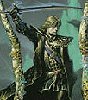
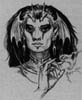
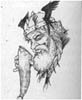
When I was making my “Relic Transport” quest, manfred popped the idea into my head to make a Codex of all things religion-related, and gave me a few submissions of his as well, to start it off.
So, what is holy?
Define - Holy - “Belonging to, derived from, or associated with a divine power.”
That said, in a fantasy setting, there is some wiggle room. A divine power is usually a good or neutral god, yet within those ranks there’s an astonishing variety of deities and systems. Some gods are made of magic, some control magic, some are ascended mortals, some are created by mortals, some are supernatural beings, some have human flaws, and some are the epitome of perfection.
Yet all deities have some things in common - they are worshipped, they have power, and they are certainly NOT mortals.
As a result, we have a plethora of rich campaign material and world detail that has divine roots.
Temples and churches add majesty and grandeur to cities, be they centuries-old stronghold or gleaming towers newly sprung from the town. Shrines and monastaries dot the countryside, offering shelter and prayer for wayfarers.
Ages-old religious orders control kingdoms and fiefs, drowing the populations in dogma and forced worship. Pagan cults rise in secluded flyspeck villages, as scholars discover archaic texts in forgotten tombs telling of long-lost sermons and dead gods.
And clerics take the word and sword of their deity into those tombs, slaying usurpers and fiends with their god’s own blessings at their back, as the local friar heals the wounded in the town.
Simply mentioning anything holy gives a feel of authenticity and richness to a world, but following through and developing a religion, a church, even a clerical character is even better. That all being said, anything dealing with churches, temples, clerics, priests, sermons, teachings, and just holiness in general would find good company here.

Please
register
to add an idea. It only takes a moment.
Codex
A day in the life of a cleric...
By: Erebus
( Plots ) Discovery -
Encounter Clerics in roleplaying. Some ideas for incidents that might occur to them while at their chapel.
[
Show / Hide Submission ] [
Visit Submission ]
Aside from being drawn into adventures, what are some ideas for role-playing incidents that might occur to them, be they mundane or dramatic, during the course of being stationed at a chapel.
Add/View Ideas (3)
Add/View Comments or Vote (6)
and These Are Our Churches
By: MoonHunter
( Society/ Organizations ) Religious -
World Wide We have your gods, but only the merest mention of worship, priests, and temples. This thread is the correction for that oversight
[
Show / Hide Submission ] [
Visit Submission ]
This Codex is related to two submissions:
“These are our Gods” and “One Deity Fantasy”
We have your gods, but only the merest mention of worship, priests, and temples. This thread is the correction for that oversight. I want you to list your priestly orders. How to the clerics or priests of your gods interact with each other, their deities, and other faiths. (i.e. make a group/ organization/ society listing for your religion).
And at no extra charge, you can add other religious posts here. I want you describe your temples, holy places, or cathedrals. I want you to list your holy holidays. Bring it on.
Add/View Ideas (0)
Add/View Comments or Vote (4)
Bells of Chaos
By: manfred
( Plots ) Duty -
Single-Storyline The task easier than usual, escort a group of pilgrims from the sleepy town of A to the dwarven forges of B, get the bell and return. But…
[
Show / Hide Submission ] [
Visit Submission ]
The task easier than usual, escort a group of pilgrims from the sleepy town of A to the dwarven forges of B, get the bell and return.
The church of Anathon long needed a bell for ceremonial purposes, and finally amassed the money needed. The pilgrims are faithful believers, travelling light and stopping here and there to perform minor rites, visit shrines and churches along the way etc. (Insert any encounters you feel are necessary.) On the way back from Barukh, pilgrims meet another pilgrims and the joy is great. Setting up a camp, they exchange stories and news and talk freely, till the purpose of the journey is mentioned: the bell.
A bell is not well, for the saint Camius (a religious figure getting more and more renown) explained to the children of (insert god), (s)he shall be revered with silence, or using your voice only. So many instruments formerly used -yes,bells count too- are now considered sacrilege.
This wont make the pilgrims happy, for they worked long and hard to get the money, and the pilgrimage is their reward. Thus words start flying around, and a little conflict ensues…
Both sides are pretty much inept at fighting, youngsters and old ones. The adventurers should take care nobody injures himself, and might get ‘attacked’ by walking sticks, brooms and other non-lethal weapons ;-)
For more fun, add relatives/friends to confusion, who surely will try to change their friends minds about the problem.
For still more confusion, thieves may be planning to steal the bell and this chaos is an excellent chance. (a bell = a great lump of quality steel, may be good for weapons? other plot to explain this…)
And so the heroes may be forced to state their opinion abuot ceremonial details of the church of (god) -do they have any?- , ‘fight’ innocent people but protect them from harm -their job is to protect pilgrims,ANY pilgrims- , possibly lose their main objective -the bell- and somehow are dragged into an uprising religious schism.
And it looked so easy this time…
Add/View Ideas (0)
Add/View Comments or Vote (13)
Cestus Etherium
By: Siren no Orakio
( Items ) Melee Weapons -
Magical Sacred tools of protection granted to those who must travel in the name of the One God, these lightly made, weighted gloves are easily overlooked.
[
Show / Hide Submission ] [
Visit Submission ]
Full Item Description
The Cestus Etherium is a thin, light leather glove, of whatever hide is locally available, while golden threads weave an intricate pattern of blessing over the backs.
Concealed in the wrists and in the first two knuckles of the glove, however, are small metal weights, lending force to blows delivered while wearing them.
History
As preachers of peace and unity, the priests and monks of the One God are forbidden, by the laws of man, to openly carry a weapon. Yet, in these dark days, The One God seems only to help those who help themselves, and there are many dark corners where His acolytes must go. To aid in their survival, several orders of these acolytes have begun to slightly modify the traditional gloves of the priesthood, creating the Cestus Etherium, easily concealed weapons that work well with the routines of the One God’s Moving Meditations.
Magic/Cursed Properties
The Cestus Etherium counts as a lightly blessed fist weapon, adding a modest amount of damage to hand to hand combat, and they are especially effective against those creatures that would be harmed by the presence of the One God.
In times of great crisis, it may be possible for the exceptionally faithful to place all of their need into a prayer and a strike, and have the prayer answered in a burst of the One God’s power, channeled through the striking hand. This is commesurate to need, and is not in anyway reliable or consistant.
Add/View Ideas (0)
Add/View Comments or Vote (7)
Chapel of the Wayfarer
By: MoonHunter
( Locations ) Establishment -
Water The temple/ church in this sea side town is just another one. It is part of the common faith for the region. You might not give it a second glance. But if you are a worker of the sea, it is the holiest of shrines.
[
Show / Hide Submission ] [
Visit Submission ]
The temple/ church in this sea side town is just another one. It is part of the common faith for the region. You might not give it a second glance.
However, it has something extra. It has an additional chapel with its own external door. Here, in this out of the way temple/ church is a major holy site. It is a powerful one. Miracles have occurred here, morso than any mere magic spell. There are relics here, from “miracle ships” (those that have survived some terrible fate). There seems to be tons of candles illuminating the dark wood floors and seats and off white stucco walls with a warm glow. This is The Chapel of the Wayfarer.
Anyone who has lived by the sea has heard of this place, but few seem to really know where it is. It is the chapel dedicated to sailors and fishermen. Prayers for lost souls are heard here. Prayers for good weather and runs are heard here. Prayers for the lost, that they may find their way home, are heard here. Truly it seems the prayers are heard here. The locals and others, if pressed will tell you tales of what has happened here. People are known to travel for days (by boat usually) to pray here when it is important to them.
One lone priest is known to sit the chapel. He is always a former sailor or fisherman. The call of the sea pulled him here, just off the waves. When he dies or can no longer fulfill his duties, it seems that another arrives soon after to take his place.
Add/View Ideas (0)
Add/View Comments or Vote (4)
Holy Dissent
By: Strolen
( Plots ) Duty -
Single-Storyline The entire city is in an uproar. Two factions proudly identify themselves to each other by wearing red or white scarves or handkerchiefs on their bodies in plain site, or hanging them from their place of business identifying themselves and their belief. Apparently a very respected high priest of the local religion has recently disappeared and so has the entire church coffers leaving it penniless. A city divided on the possible guilt of the missing.
[
Show / Hide Submission ] [
Visit Submission ]
The entire city is in an uproar. Two factions proudly identify themselves to each other by wearing red or white scarves or handkerchiefs on their bodies in plain site, or hanging them from their place of business identifying themselves and their belief. Apparently a very respected high priest of the local religion has recently disappeared and so has the entire church coffers leaving it penniless. Those that wear red believe the priest has skipped town taking all of the churches offerings with and those that wear white believe he has been kidnapped and the treasury stolen.
Parishioners and other priests and clerics are in an uproar but don’t know what to do. The priest had just recently been pressuring the members of the church to donate more money for a new church to be built. Many priests and parishioners were uneasy with his tactics for getting the collections but it was for a good cause and he was getting results. They are unsure about his true innocence and want to believe he is innocent but just don’t know. The church is being pressured to make a stand but they can’t make a declaration without more proof and this is causing the city to get closer and closer to violence.
The church, and the city need an answer.
Add/View Ideas (0)
Add/View Comments or Vote (8)
Konelis Larach
By: Iain
( NPCs ) Mythic/ Historical -
Religious Konelis Larach, St. Cornelius of Zarant. 26th Abbot of Zarant; eminence grise to Dominic the Great; author of the Annalia: monk, scholar, saint and martyr.
[
Show / Hide Submission ] [
Visit Submission ]
Excerpt from “A History of the Zechen-Rotliegendish Commonwealth” by Henryk Kaszarjd (1656-1732)
Introduction
Of all the great and holy men who held the sacred office of abbot of the Monastery of Zarant, none can equal Konelis Larach, 26th Abbot of Zarant.
Konelis Larach, or St. Cornelius of Zarant as he is better kown amongst the nations of the south, was born a lowly serf in the Lech of Olfensee in the Zechen-Rotliegendish Commonwealth. His parents’ fifth child, the exact condition of his family is unknown, but there is no reason to believe that it was any better than that of a typical serf’s.
Virtual slaves to their masters, a serf family was expected to eke out a living from a plot of land that would have been hard pressed to support a single man - that is when they were not labouring in the fields of their master. In such circumstances, it is not surprising that many young men took holy vows - not only did the monastery at least offer food and shelter, there can be no doubt that the devoutness of many of the serfs of this era was utterly genuine.
Early Life
Konelis Larach was one of these. In 843, when he was fourteen he entered his novitiate at the great Monastery of Zarant, a monastery dedicated to the worship of the Blessed Ruth, Our Lady of Silence.
At that time the Monastery of Zarant was nearing the zenith of its existence. Founded in 449, several centuries after the Act of Secession and at a time when the civil wars that followed had largely dissipated, the Monastery was founded as a result of a large gift to the Order of Silence from the Szlachta (parliament) of the Zechen-Rotliegendish Commonwealth. The gift is generally believed by historians to have been a successful result of the Szlachta’s attempt to weaken the dominance of the pagan Order of Earth, strongly loyal to the Sejm (ruler), within the Commonwealth. The donation provided for the establishment of a large Monastery of Silence within the Forest of Zarant in the heart of the Commonwealth, the Monastery “to provide a perpetual and living monument to the Blessed Ruth, Our Lady of Silence and to aid the growth of Silence throughout our dominion.”
For the next few centuries the Monastery of Zarant prospered; under the patronage of the Zechen-Rotliegendish Commonwealth it quickly became the leading centre of Silence worship in north-eastern Laurentia and one of the largest in Laurentia. At its height, the Monastery housed over 700 monks, priests, scholars and acolytes and possessed considerably influence.
It is little wonder that in such an atmosphere young Konelis prospered. Freed of the grinding poverty of his youth, his keen mind blossomed in the enquiring atmosphere of the monastery. Intelligent and devout, he soon rose to the office of prior, an almost unheard of event in a time when noble birth was almost as much a prerequisite to high office in the church as it was in secular life.
Prior and Abbot
It was in this period that Larach achieved his most lasting achievements. A great scholar, he developed the complex Silence prayers Invisibility Sphere, Blanket of Silence and Vow of Silence amongst others. It was during this era (7th –9th centuries SS) that the Forest of Zarant began to be known as the Forest of Silence due to the frequent deadening of all sound in large regions of the forest in the course of research. Nor were his efforts limited to such earthy matters. Between 870 and 880 Larach wrote the first three volumes of the Annalia, his masterpiece of the doctrine, scriptural interpretation and philosophical underpinning of Silence worship that has done more than any other work to shape the development of Ruthine theology.
In 882, upon the death of the 25th Abbot, Piotr Rachza, Larach assumed the position of Abbot. Under his astute leadership, the Monastery of Zarant gained even greater prominence and, as chief adviser and eminence grise to Dominic the Great, 37th Sejm of the Zechen-Rotliegendish Commonwealth, Larach could in truth be said to have been guiding the affairs of half a continent.
Alas, this golden period was not to last. In 894, a Drogkhar uprising flared up in the region and the Monastery of Zarant, famed for its power and wealth, was an obvious target. Konelis Larach was cut down before the doors, defending the monastery against the unclean hordes. He left the seventh and final volume of the Anlalia unfinished and a gap that could not be filled.
After his death, the Monastery of Zarant declined. Though preserved from destruction in 894 by Larach’s martyrdom, the monastery was razed to the ground in both the first and third Drogkhar uprisings of the 10th century, with many monks and priests being slain. The troubled times led to the people turning from Silence to Order and War and though the monastery was rebuilt, it was on a much smaller scale than before. In 1083 the monastery was once again attacked, this time in the Rokosz (legal rebellion) of the Duke of Toarcia. Large sections of the monastery were burnt. With the decline of the Commonwealth and the steady withdrawal of Zechen-Rotliegendish influence from the region, the funds and political will were lacking to once again rebuild the monastery and it was finally abandoned in 1125.
Larach’s Legacy
Despite the fall of the monastery, and of the Zechen-Rotliegendish Commonwealth itself three centuries later, Larach’s influence has only grown with the years. The Annalia remain the most quoted theological tract throughout Laurentia and in 1052, Konelis Larach was canonised by Patriach Johan IV.
Of the Monastery itself, little remains. The buildings themselves have long since gone, either eroded by the elements or the stone carted away by peasants for buildings elsewhere. Though some relics from the Monastery can still be seen in the region (items may be found in the Ducal palace in Bajada, in the city of Zechstein and in various places in Rotliegendes), by far the greatest number, including the famed statue of Ruth, were removed in 1137SS by an expedition from the University of Linnarson. The expedition also removed Larach’s bones from the ossuary for preservation. His grave can now be found in the chapel of Cornelius College - the college that he endowed - in Linnarson, where they are watched over by the great statue of Ruth.
Legends of Larach
As with any saint, the legends of Konelis Larach are innumberable. It is said that as a babe he never cried, clothed even then in the sacred mantle of silence. His intervention is credited with permitting the passage of the messenger, Szczepan of Toarcia, through the invading army of Siluria, unseen and unheard and for the lifting of the curse of deafness from Dianantes III of Aesthen.
One of the more intriguing legends concerns the ill-reputed Temple of Akhtanpet. Built by the Atavines, the Temple is thought to have stood in the midst of the Great Western Desert, though its exact location is unknown. In the Annalia, Larach writes of an expedition that he made to locate it. Unusually reticent, he refuses to describe what he found inside, only saying that it was for this reason that he derived the Ritual of the Larachian Refuge, one of the most powerful Silence rituals known, “in order that no others may find the Temple and discover its vile secrets.”
The fact that the Ritual effectively renders all further searches futile has done nothing to deter thousands of treasure seekers through the centuries from seeking to locate it. Their bones are no doubt whitening in the desert.
Ritual of the Larachian Refuge
The ritual - which may only be performed on the night of a full moon - conceals an area, essentially removing it from the map. People walking up to it will simply appear on the other side, no scrying spells can see in, the countryside (or buildings around) subtly change so as to make it seem as if nothing is wrong.The area might be detected by careful use of, e.g. sextants. There must be a way to get in – one tiny area where the illusion is imperfect that will be known to the creator - but this would be almost impossible to find unless you knew where it was. The only flaw in the Ritual is that the concealed area will become seen (in a ghostly, ethereal way) under the dark of a total solar eclipse.
Add/View Ideas (0)
Add/View Comments or Vote (11)
Of Saints
By: Ancient Gamer
( Systems ) Divine/ Spirit -
General Saints and Sainthood: The inside story on the ascended
[
Show / Hide Submission ] [
Visit Submission ]
In a cold, unforgiving and brutal world the people need their legends to be told around the fireplace. They need heroes both strong and mighty who can oppose the forces that be and prove that sometimes justice do prevail. On occasion these legends get real, as flesh and blood heroes journey through the lands and show the populace that miracles can happen, heroism does exist. When these heroes face grievous perils whilst defending the population against a greater evil, it may happen that the peasants begin to pray for the safety of their heroic benefactors.
In cottages and farmhouses across the land small candles are lit, figurines are carved in the resemblance of the heroes. Farmers hands shake nervously and are folded; prayers of hope and protection are whispered, and blessings are uttered. Prayer beads are given to the avatars of the peoples hope; the heroic benefactors. Tears of joy are shed when tales of the benefactors latest victory is told and wailing and great lamentation can be heard if such a hero should perish. With time the benefactors embody the dreams, desires and hope of the population, and as entire nations pray for the safety of an individual, ancient magic awakens; remnants of Prime Creation which the Gods could not undo or could not perceive. Under these circumstances a hero might discover that his abilities improve drastically, his perception of the world is altered. He may witness things hitherto unseen; he may experience weird and unexplainable events, and it might come to be that he fears for his very sanity. It feels like he can sense the spirit of a tree; like he can even spy lost souls as they dazedly and nervously search for a path to the afterlife. The hero has ascended, has become a saint, and abilities and feats beyond what mere mortals can achieve are now at his disposal.
Ascension after the hero’s demise
When a beloved hero dies tragically and the populace vehemently mourn his passing, he may ascend. His soul will return from the afterlife as a spirit and a force of nature. As such a spirit he can choose to occupy an avatar by possessing an unfortunate individual. He may also opt to remain a spirit, some kind of ghost, and travel the land, drawn to those praying and calling upon his name, beckoning him into their service. These Saints depend upon their followers and the more popular Saints have greater powers than those who have slipped into oblivion, and have become forgotten long ago.
Ascension while the hero is alive
In rare cases a hero becomes so loved by the people, so utterly praised that it borders on worship. Gradually his senses will develop, become more and more acute and his skills will grow with unprecedented speed. New abilities such as supernatural strength, supernatural speed, supernatural skill, and supernatural stamina are common within those who ascended while alive. The Saints are still mortal, can be slain by the lowliest street urchin, but his chances of survival multiply tenfold. Sometimes the Saints develop other skills, like the ability to translocate or control the winds. Some even bond with other creatures and can sense what these creatures sense. In one documented case a Saint gained the ability to change his shape into that of a pack of wolves with entirely white fur. Surely other abilities do exist.
There have been some cases in which a newly ascended saint has been mistakenly accused of witchcraft and summarily been burnt alive. As these incidents occurred within Silmar, the rumour of witchcraft spread and the hero worship ended abruptly, dooming the hero to death for sure. Usually a living Saint becomes a spirit saint upon death, but in these cases the heroes reputation became so stained that all worship ceased, a truly tragic fate for a valiant hero.
Add/View Ideas (0)
Add/View Comments or Vote (7)
One Deity Fantasy
By: MoonHunter
( Systems ) Divine/ Spirit -
Defining This scroll is for posting monotheistic religions to be used in games.
[
Show / Hide Submission ] [
Visit Submission ]
Most gamers think “Fantasy” requires “Many Gods”. A trend that is only exacerbated by DnD, which is the training wheel system for most gamers. To a point, there is nothing wrong with it. Many gamers choose a many gods option because it is required, in their minds, for game worlds. Many gamers choose a many gods option because they think, they can seperate their reality and their fantasy (even though a significant portion of the world’s population is polytheistic) and avoid offending someone’s religious beliefs (like most Christians are not offended by polytheism/ or would take an adverse view of any game/ story that had a less than perfect priest in it ... Like The Three Musketeers). The inspiration of this many gods option came from Conan and many early works of fantasy that inspired the early gamers.
Yet some of the best fantasy fiction, especially fiction based on Medieval history, are monotheistic. Historical and Historically styled games need a monotheistic religion. It is almost imperative to have one, if you want a real medieval feel.
Now some people feel uncomfortable using the Catholic faith as their game’s religion (though there is plenty of source material to study about it). I can understand that. If you are not running a strict historical game, there are lots of ways you can create a monotheistic game religion. This gives you all the medieval feel without being bound by “real” religion.
That is what this thread is about. Post your ideas for a primary single God religion. (One religion per post if you can.) While most of these will be analogs to Abrahamic religions (Judism, Christianity in all its forms, and Islam) or Zorasterism, other options are possible (A single Earth Mother Diety or so on). (You can also crib ideas from other books/ works of fiction).
And remember, just because it is a religion with a primary diety, does not mean it can’t have minions beings (like Angels, Devils, etc).
Add/View Ideas (0)
Add/View Comments or Vote (3)
Pildun Bowl
By: manfred
( Items ) Other -
Magical Invented by the Pelezians, the ceremonial bowl became a part of the holy tradition, coupled with a most practical purpose.
(Made for religions of agriculture.)
[
Show / Hide Submission ] [
Visit Submission ]
Finely etched with symbols of the local deity of agriculture (the original version depicted Gemionn and his wife Alenia), the bowl is most often made of wood or clay, never of stone or metal. It is typically made to keep 1 Pildun (an old unit of volume, about 1.2 liter) or 2, very rarely 5 Pilduns.
It has always been so, that a priest lived with the people, through their good days and bad days, helping with the blessings and wisdom. The people in turn, they helped the priest to make a living. Tradition commands to give at least a single fruit of each tree to the temple at harvest.
Another custom is the Autumn Sharing: giving the tenth part of grain that shall be planted next year. The priest(s) will have a store to come through the winter, and to share it with the less lucky. While most people are surely honest, a coming winter can make even the best man nervous, reluctant to part with the hardly earned fruits of labour… and some really ‘underestimate’ their future need, making a priest’s life harder.
It is unknown, who had the first idea, but granted, all followers of Gemionn are friendly and practical people, unwilling to force others to their faith. And so they found a different way to reward the faithful, and punish (albeit indirectly) the less virtuous.
Magical Properties:
The bowl must be blessed to work. Many beginning priests bless it in larger temples, or inherit it from an old priest.
The bowl’s only purpose is the measuring of grain, usually taking on the form of a small ritual (in fact, it is one). When done so by the priest and the farmer, words of tradition are spoken, rhymes and vows pronounced, and blessings offered, words differing from village to village but similar in purpose everywhere.
If both the grain’s owner and the priest concentrate in their well-meaning, they cast a blessing on the grain, protecting it over winter from rot and spoiling, and helping it to grow in spring. And while the overall effect is not dramatic, it clearly shows over the years, that it pays to be honest to the priest… which is as it should be.
Part of one such a rhyme:
Through winter meek,
the spring you seek,
then sleep you bind,
till earth you find.
Start to grow,
as you greet the plow,
From our strain,
shall grow the grain.
From earthy bed,
will come the bread,
then we come near,
to the next year.
Note: many of these bowls are used by a priest lifelong, and are then inherited to another priest. After many blessings and uses uncounted, they grow into true magic items, and could provide weaker blessings on the grain even without a priest. For many a village is its Bowl a real treasure, though it is not always recognized.
Add/View Ideas (0)
Add/View Comments or Vote (14)
Relic Transport
By: Spark
( Plots ) Hired -
Mini-Campaign An elder cleric asks the PCs to transport a relic to a nearby city. A simple quest with endless possibilities.
[
Show / Hide Submission ] [
Visit Submission ]
This is a quest in the style of those cheesy “Choose Your Own Adventure” books you would pick up at library book sales. I’ve laid out a pretty specific storyline, but there are plenty of places where you can pick up and take off on a tangent of your own. Note that the specific names of religions, gods, and months can be changed as one wishes. I simply avoided generic titles (X God, Y Cleric) to give some more flavor to the story. Also note that this could easily become a single-player campaign, simply by taking off some s’s from “clerics”. Lastly, the plot is “fluid” - that is, nothing is set in stone. For example, if the PCs make X choice, the ranger is evil, and if the PCs make Y choice, the ranger is good. All the information depends on the choices of the characters. That being said, let’s dive in.
The clerics had stopped in the dirtclod town of Sarente to rest, recoup, and pick up some new horses before journeying to Barynthor, the central city of the kingdom. A few days into their stay, a young courier delivered a message to the innkeeper.
“To ye hands of the horns - Bishop Sevir has need of your prescence.”
Tracking down the name led to the central hall of worship, a small timberframe building in the center of town, its mantle engraved with the ten horns of Baran. Upon entering the dim, incense-filled hall, the old man near the speaking stand stood up and introduced himself as the Bishop. It appeared that in the past month, a fire in the undercellar had revealed a priceless relic stored under the floorboards, a finger of St. Sarin. Sealed in a blackened iron box, it appeared to have been buried over a century ago by the previous bishop, when the house of Baran had stood many stories above the town. Upon discovery, word was sent to the high house of Baran, to whose magistrate replied,
“The finger falls to the hand of barring trespass, on the eve of summer’s eye.”
In the words of the house of Baran, this translates to, “Transport the Relic to the tower guard at the high house of Baran, on 21 Skyfires (the summer solestice)”.
Seeing the horns of Baran upon the shields of the clerics, the Bishop has asked them to transport the relic to the High House of Baran, in Barynthor itself. Upon agreement, the clerics must agree to swear upon the oathstone that they are indeed hands of Baryn, and that should they themselves harm the relic, or deliberately put the the relic in the path of harm, that they should be marked for death in the holy fires of the House.
Now - what could go wrong?
Add/View Ideas (3)
Add/View Comments or Vote (7)
Saint Duncan
By: Scrasamax
( NPCs ) Mythic/ Historical -
Religious Saint Duncan is dead, and lies in his tomb, but every year thousands will visit it to lay their hands on the cold stone, and whisper a prayer to the patron saint of exorcism.
[
Show / Hide Submission ] [
Visit Submission ]
Special Equipment:
Crozier of Saint Duncan - This relic, crozier six feet tall capped with a brass symbol of the heavens carries an echo of true faith, and is an indespensable tool for the working of exorcism. The Church of Saint Duncan very rarely loans it out, and then only in the protection of a cadre of holy monks.
Appearance:
Saint Duncan, Father Duncan when he was alive was an unassuming, and gentle man. He stood average height and was slightly overweight in his declining years. His hair was once brown, but slowly it turned grey. Now, his earthly remains are held in the nave in the cathedral he sponsored, which completed after his death and canonization, was named in his honor.
Background:
Saint Duncan was raised in a monastary, his parents abandoned him on a forest road and as a squaling infant he was rescued by one of the monks. Within the monastary he grew into a well behaved, and well educated young man. At the very young age of 21 he was made the Cellarer of the Monastary and was responcible for the material needs of the monks there.
At the age of 24, in a clerical upset, Duncan was raised to Prior of an aging cathedral following the untimely death of the old prior. Vigorous and filled with devotion to his deity, Duncan renovated the cathedral, and reinstated the purpose of the church in the area. He served as Prior for a number of years until the Bishop was found guilty of heresy, and simony as he was selling church positions to nobles and merchants in exchange for political favors and gold.
Duncan continued his vocation, traveling to and fro from where he was needed, as he had the power of his deity in his voice, and armed with only a brass crozier and the immacualte text of his deity he banished fell spirits, placated the angry ghosts of the dead, and exorcised evil spirits from human victims.
All of this he did with great humility, never accepting more than a normal monk would recieve for his services. Duncan always worked hard to keep the church free from the intercene politics and petty warfare that plagued many of the nobles and their holdings that were under the jurisdiction of the church.
After seventy three years of service, Duncan died in his sleep, peaceful in his bed. The public outpouring of grief stunned even the church. It was not known just how extensively he traveled, even into the infirmity of his venerable years. Tens of thousands traveled to the new cathedral he sponsored in tandem with the local king. The church recognized his many great deeds by making him a saint.
The canonization was formalized after several exorcists claimed success in banishing evil spirits by invoking his name, and his crozier was found to be a holy relic, sanctified by his piety and humility. Saint Duncan was listed among the saints in the immaculate texts, and the Cathedral was named the Cathedral of Saint Duncan.
One of the naves was remodeled, and a large stone sarcophagus was made, his mortal remains placed in a lead lined coffin and laid to rest within. Pilgrims continue to visit the tomb of Saint Duncan even to this day, praying to protect them, or for divine healing.
Possessed are on occassion brought to the cathedral, and invariably, the evil spirit is driven out sometimes by the efforts of the monks, sometimes by proximity to the tomb.
Roleplaying Notes:
Seeing as Saint Duncan is dead, there are not many notes for playing him. He is meant to add background flavor to a campaign, change the ordinary temple stocked with clerics into something else. The Cathedral is adjoined to a monastary, and is supported and tended by the monks, as well as by the clergy. There is a steady stream of pilgrims to the tomb/shrine, and the hospitality of the Cathedral of St. Duncan is well known even in lands beyond the kingdom.
Add/View Ideas (1)
Add/View Comments or Vote (10)
Shadow Shrine
By: MoonHunter
( Items ) Other -
Non-Magical A shadow shrine is an elegant solution to a complicated problem for those that are Godsworn.
[
Show / Hide Submission ] [
Visit Submission ]
Full Item Description
It starts with a two tiered worked brass base approximately 9” (23cms) long, 7” (17cms) wide, and 2” thick (5cms). Most frequently it has a nice beaten pattern in it, but some shrines have intricately etched designs on them. The base has a small knob to open it. This know also serves as a snubbed candle holder.
The base interior will hold one to three thin 5” (12cms) glass disks. Each glass piece is etched with a holy symbol, a mandala, or a wisdom glyph, as appropriate. In addition it will hold a curved piece that is inserted in to the top of the base when in use. This curved piece hold one glass disk in place.
Usage
This works best in a darkened room.
A tealight candle (or any other tiny or flat candle) rests upon the knob of the beautifully worked brass base. An appropriate disk glass is inserted in the holder rising up from the base. The mesmerizing flame is projected through, and in the reflective glass magnified. The dancing light creates an enchanting interplay of light and shadow, projecting the image etched in the glass (usually a holy symbol) upon the wall.
It is commonly used for meditation and prayer. Combined with a small ceremony of sanctification, it creates a temporary “holy space” suitable for religious workings.
History
The inspiration for these tiny portable shrines came from one famous shrine in the south western province. There, candles are lit and shine through sculpted glass to project holy glyphs into the murals behind. Some enterprising cleric took it one step farther and commissioned the first one. He took it on his travels to every temple and shrine he had to visit on his circuit. While he used it for evening devotion in inns along the way, he had to show it off to all the other priests. From this first circuit, the item (or the idea for the item) has spread across the land.
Of course the original brass worker makes more to sell to pilgrims to the shrine, so they can take the feel of the place home. That may have more to do with the spread of the item than the network of clerics.
Now these Shadow Shrines can be found for any number of religions. For some they are just switched out glass disks. For others, the shrine is made of silver or stone or wood, and sometimes shaped differently.
Any cleric who travels in their duty (or thinks they might) will probably have a shadow shrine. Those who are very devote will have one as well, used while travelling or kept as a personal shrine in their rooms.
Magic/Cursed Properties
None intrinsically. The shrine, when used properly, can provide bonus to prayer and meditation skills. It can be used IN magic, as a holy talisman or to create a temporary alter/ shrine.
Note: This idea has moved into the mystic community. They use it as a meditation focus and some even use it for empowered glyphs (as a casting aid).
Add/View Ideas (0)
Add/View Comments or Vote (18)
Tales of the Divine Brethren
By: Murometz
( Plots ) Mystical -
Campaign Tales of the Divine Brethren. The Brethren are unaware of their own origins, and are merely cognizant that they are part of a larger group known as the Kin-Across-Worlds. All Kin and hence all Brethren, pay homage to their Sire…The SOURCE
[
Show / Hide Submission ] [
Visit Submission ]
Plot Description
These are The Myths of the Divine Brethren, Children of the SOURCE, the Kin-Across-Worlds. They comprise the Pantheon of the myriad tribes of the Great Grass Sea. The Panthoen gave rise to the half-breeds and Abominatons, the Children of Chaos.
Divine Brethren
Woqo the Eternal
Avveid Father-Sky
Oluu Sun-Disk
Prassagua Grain-Giver
Quool, the Terrible
Mokkus the Trickster
Nax All-Come-To-Him
Som, the Eternal Sleeper
The Living and Breathing, Som’s Avatar
Shibvaluuz, Lightning-Lord
Rood the Shepherd
Vog the Mighty
Seneschals
Roc-King, Wing-Of-Worlds
Shaking Shang, Guardian of the Simian-Knot
Abominations
Thunderbell, the Half-god, Son of Avveid
Jul-Ghose the Prophet, The Elephant-Mantis, Son of Mokkus
G’bod the Giant Slug, Son of Woqo the Eternal
Spider-Count-The-Days
Qarrudu the Bleeder
Hyne Snow-Eater
Add/View Ideas (0)
Add/View Comments or Vote (6)
The Charter
By: Scrasamax
( Plots ) Discovery -
Single-Storyline Arriving in a small village the adventurering party is drawn into a meeting of the Parish Guild…
[
Show / Hide Submission ] [
Visit Submission ]
The Village is a small, and unimportant one located midways between two larger cities or towns, both complete with established stone churches, or one might even have a lofty cathedral. The villagers have tired of not having a church of their own, and having to walk or ride a full day to hear services, be wed, or have last rites said over the bodies of the dead or dying.
The Church Guild was formed as a way to finance the building of a real stone church, rather than the wattle and daub, earthen floored building that serves as a church when a traveling monk, exorcist, or priest deigns to stop and preach the good word. Otherwise, the communal building serves as a resting place for travelers who are willing to give the Guild a few copper pieces. A silver piece will get them a meal.
After enough time, the Guild would hoard enough gold to finance the building of the stone church, but suddenly time is not on their side. The Prior of the closest Cathedral is unhappy about the prospects of another church being opened in the vicinity of the cathedral. Running such a large establishment is a costly venture and the church would bleed some of that money away. The Prior has been sending acolytes, and other servants to the guild to gather alms for the poor. This has been depleting the coffers of the guild.
The Prior of the church in the town on the opposite side has had the same thought, as he wants to build a cathedral to rival that of the opposite town. The new church would cut into his profits as well, but it hits him worse since his cathedral is still in the planning phase. He has responded by also sending priests and acolytes to gather alms for the poor from the guild.
The party has arrived in time for a meeting the Church Guils which has become distressed by the depredation of its neighbors who seem much more concerned with secular things than in the spiritual providence of god(s) and they beseach the adventurers for help.
A. One of the Priors has decided to undermine the guild by playing dirty. It could be that laybrothers disguised as lepers block the road, or zealots of a church were induced the tear up the road, or collapse a valuable bridge. Or a Prior has hired a band of brigands covertly to harass travelers on the road unless they are expressly going to his church of cathedral.
B. The guild beseeches the party to help finance the church, or even help in its construction if they are big strapping types, in its design if they are intelligent mage types. If there are clerics not aligned with either church, they will plead for their aid. Once the church is built, it will need a prior and staff as well.
C. The guild trys to pump the PCs for money.
D. Upon reaching one of the other parishes, the PCs are drawn in to meet the Prior of a church. They are questioned, and either sent to harry the church guild or are dismissed in an unpleasant, rude manner.
Well, that is my plot. Scrap hammers at the ready!
Add/View Ideas (0)
Add/View Comments or Vote (10)
The Paper Shrine of Laymeret
By: FASTFIRE
( Locations ) Establishment -
Any This large shrine the god Sunglory, is not famous for religious reasons as for architectural reasons.
[
Show / Hide Submission ] [
Visit Submission ]
The Paper Shrine of Laymeret
Location: The town of Laymeret, on the south-eastern coast of Kingdom Name
Location Type: Large Town
Environment Type: Coastal
Description:
This large shrine the Paladin god Sunglory, is not famous for religious reasons as for architectural reasons. The shrine is made from white marble with black marble used for detail, and the columns covered in highly polished gold and sliver. The architectural nature of the shrine is ordered yet free flowing and seems to be almost eleven in nature. The numerous arched and vaulted roofs, ceilings, and windows are made from ½ inch thick layer of white marble that is semi-transparent. Further more, the marble has all been acid-etched to give it a paper-like appearance and feel. On sunny or even overcast days, natural light comes thru the roof and ceiling.
Location History:
The Paper Shrine of Laymeret was built in the year 9674*1363 to replace a shrine that had burned down in a city wide fire that destroyed 2/3 of the city twelve years earlier. This being the time of great shrines, a time comparable to earth’s cathedral craze of the middle ages or even earth’s skyscraper boom of the early 20th century and the city losing it city center in the fire and thus it’s reputation (In till the fire, Laymeret was famous of it’s huge market place).
Magical Effect:
None, although magic was used in its initial construction, the Paper Shrine of Laymeret is not inherently magical itself. However, the local towns people will use any means necessary to protect it including the use of magic. Due to the nature of the construction, the roofs and ceilings are quite fragile and will shatter like glass when hit for more then 12 points of damage, and has an AC of 1. Falling shards will do 1d8 on each hit. The city has a law that forbids the carrying of missile weapons on the grounds of the paper shrine, doing so will land someone with a week of jail time and a large fine (500+GP). To willing attack the shrine with a missile weapon carries the sentence of losing ones own life, but no one has tried as of yet.
Add/View Ideas (0)
Add/View Comments or Vote (6)
The Temple of the First Man
By: EchoMirage
( Locations ) Establishment -
Forest/ Jungle
A place more holy than any other
[
Show / Hide Submission ] [
Visit Submission ]
Once, when the world was clad in blissful ignorance
once, when prayers were said with childish innocence
once, when gods were as one
once, when, pure as the sun
was the faith of a man, leather and hide wearing
about the well-being of his deities caring
he built them an adobe both simple and sweet,
a well secured place for them too meet.
To discuss matters - wordly, divine
to do what matters, for them and for you
to do what is right, in this holy shrine
every day every night, to keep his heart true.
The man’s name was Bear, for back then, then people were few, and needed no more names than one, and no titles. Back then, the gods also were simpler, for they did not need to shroud themselves in mystery, and the faith of the people was pure and unsoiled.
Bear’s heart delighted every time he saw a smile spread across someone’s features, and the whole day he laboured, hauling boulders and logs, and cutting them in shape, so that he might build dwellings for his friends, when the caves became too small and crowded. Of solid timber, tough oak and tender sandstone he built, of sun-baked brick and sun-dried thatch.
One day, through a forest deep he strode, a log on his shoulder, when he stumbled across Alivanah, the Lady of the Wind, the Singer of Learning, the Eternal Voyager, and great was his joy. Likewise, She was pleased, for She knew Bear, and knew he strived hard to learn new techniques and improve his works. So she bade him to come over.
Flattered and filled with joy, he accepted, and sat next to her, and watched the child-like figure with awe, as she was nibbling on an apple, naught but her eyes betraying her wisdom and age.
So they sat, and the day grew old, the sky dark and the air chill. Alivanah shuddered, and Bear offered her his fur tunic to warm herself. He talked little, but She made up for it, telling of places far and wide, and of strange people from other lands, and Bear delighted in her presence.
When she rose to depart, a tear ran down Bear’s cheek, and he asked: "Where do you live, where is your home, so that I may visit thee?"
And she smiled: "I wander all day, and don’t call any place my own." With these words, she leapt into the air, and the winds carried her off.
Bear cried, for great was his pity of the Lady: for all her works she has no roof above her, no place to rest her head? Little did he understand the ways of the gods, but love them he did, especially the child that sat next to him that day. Still crying, he wandered off.
On a hill close to the sun, where clear sparkling water gushed from the ground, and flowers and fruit trees were abundant, there he stood, and began his work - from far and wide he brought the most beautiful stones and strongest logs, and built a dwelling anyone at his village would have been proud of - with a chimney of red brick, walls of sturdy stone and roof of stout wood and thick shingles, it was beautiful to behold. In its center, there was a hall, supported by pillars of oak, and there he led the water into a pool strewn with white pebbles, and a great table, with a chair for every one of the gods, for if they came over for visit, Alivanah would need a place to seat them, and into every chair he carved the name of the deity, as he did on his dish and spoon.
When he was done, he strode off into the woods, hunting, for the Lady should dine better than chewing an apple picked on the side of her path. So he brought meat of elk and pheasant, sweet grapes and batatas, and the eggs of wild fowl and set them upon the table.
Finally, Bear returned to his village, for the last part he could not complete alone. Great was the surprise when his family saw him, for they deemed him lost. And Bear spoke: "Follow me, for we shall sing to the Gods." And they went.
All done, he called out to Alivanah to offer her his gift, and his voice, carried by the winds, reached her ears. Curious, she heeded the call, and delighted by the gifts she shed a single tear that spread all over the place and made everything sparkle in the purest shine.
This was the first home man built for a god.
This was the first time he offered food and drink as a sacrifice.
This was the the first time man sung in a blessed place, filled with love and devotion to a deity.
It was the first time a human was given the choice whether to enter the cycle of reincarnation or stay,and Bear chose, becoming the patron of masons and architects, guiding their quill and chisel.
Alivanah soon showed the gift to her fellows, and they too were pleased, and made it their meeting point to discuss matters of importance, and regardless of how heated a discussion became, none dared to misbehave in the place Alivanah called her home.
Thus it became the meeting place of the divine crowd, a festive hall and a symbol for the relationship between man and god.
And it became also far, far more…
As the ages passed, the gods grew apart in intent and heart,and ripe was the strife between husband and wife, between ally and peer, and Azar spread fear, for he was the Lord of War, the Steel-Clad Slayer, the Thousand-Bladed Scourge, and he set out, on the blood of his fellows to gorge, for he claimed that all other gods failed, and slew Devi, the patron of children, they in sorrow wailed…
Yet as he pursued Raelis, nature’s lady true, so she fled here, the armed menace behind her, none him to subdue.
Yet at the threshold of the temple, all gods overcame their fear and stood, united by Alivanah’s call, and the symbolism of this place, and Azar could not breach the walls, not slay them, and he beat his fists against the stones, until they were but bloody stumps, he gnawed at the logs, until his teeth fell out, he battered at the door with his horned helmet, until his brain splattered, his reign was ended…
Still the place became far more, as Raelis hid the half-divine offspring of her and her brothers before the fury of their fellows, and here, it was that Davia, Derren and Dorsti joined the pantheon of the Elders.
And all gods agreed - this place is sacred, this place is saintly, none shall be harmed here, none shall suffer.
So it stands today, difficult to find, a humble place, a simple home, untouched by the tooth of time.
Standing amongst an orchard of half-wild trees filled with songbirds and the hum of bees and colorful dances of butterflies, there it stands, a house of large stone blocks and bricks, as well as solid wood, all in natural colors, cracks and crevices filled with mud and moss. No marble, no gold statues and no pompous promenades point out that this might be a place of sanctity, but other things do: the place is surrealy serene, and the salubrious aura of this place heals and revitalizes all who approach.
The sun’s shine is always soft, the air fresh and moist, and everything seems to sparkle slightly.
A single black oak grows right next to the door, where Azar fell, leaves blue-black as steel, and at its foot, several candles flicker, lit by the gods in the memory of their mad brother.
Inside, the house is plain, the floor made of stone slabs, walls decorated with fur and simple pottery, all rooms arranged around a central hall with a pool, perhaps three feet deep.
At the door, on the clothes hanger, the coats of the diving visitors hang,and one can discern who is present at the moment - if the coat is black, with shining jewels for stars, then Rukh, the Lord of the Beyond, will most probably be resting by the fireplace, while if it is woven of flowers and leaves, berries and nuts, then Raelis is visiting the place that once has been her refuge.
Plots:
*Sing to me, my angel of music: since the first song sounded through these halls, the gods made it a habit to invite a mortal to fill the chambers with music. This time, a young woman was chosen, her voice angel-like and soul pure.
Yet her mother, a devout atheist, is strongly opposed, and wants her back, here and now. Will the PCs dare to bring her letter to her daughter in the place most holy? How can they persuade the divine crowd to let her go?
*The final hope: so they did it, finally. The PCs have been too cocky for their own good and angered a minor deity, and now their only hope lies in seeking refuge in this place.
*A weapon better than all: to defeat a terrible foe, a terrible weapon is needed… what better than the Soul Scythe of Rukh? How sad that he never lets go of it.. except when he visits the temple. SO the goal is: to sneak in, steal the scythe,slay the foe and return it before he is finished drinking his coffee and munching cookies.
*Child support: After a night with a mysterious stranger, a female PC notices her belly swelling, and later, that the child born is truly unusual, bearing the mark of one of the gods. What now? Perhaps it would be good to present the child to its father - but where to find him? Yes, in the First Temple, to which no road leads and no map tells about.
Add/View Ideas (0)
Add/View Comments or Vote (31)
These Are Our Gods
By: CaptainPenguin
( Systems ) Divine/ Spirit -
General Across the Thousand Thousand Worlds, there are many gods. We, the Knowers of All Worlds, shall now endeavor to list all of the gods of a few select worlds.
[
Show / Hide Submission ] [
Visit Submission ]
Across the Thousand Thousand Worlds, there are many gods. We, the Knowers of All Worlds, shall now endeavor to list all of the gods of a few select worlds.
Deities of my game
Sample entry: -Name of god/spirit/power
-Other aspects of the god (Optional)
Gods:
-ANIAT: The First Angel, The Shining One, The Holy Redeemer
-RAU: Lord of the Sun, King of the Holy Flame
-Lantheir Goldensun: Sun Singer, Son of the Stars
-BEN-HANAN: The God of Mercy, Lord of Healing, The Forgiver
-VOTHANION: The Guardian, The Truthful One, Lord of Valor
-Vothador: The Dog-Headed Spirit, God of the Evilonares
-Vothirid: Guardian of Children, Goddess of the Metimorans
-ELDAI: The Mother of All, The Earth Mother, The Goddess of Life
-Skadi: The Mountain Goddess, The Lady of the Snow (Could also be an aspect of Fenris)
-HEMALNO: Lord of Adventure, Master of Courage, Patron of Adventurers
-DURGI: The Dwarflord, The Lord of Axes, The Forger of Mountains
-LUNA: The Moon Dancer, Our Lady of the Night
-Illusen: The Blood Huntress, the Wild Lady, the Dark Moon (Could also be an aspect of Saphieth)
-Elunea: The Moonlight Lover
-TYCHE: Lady Luck, Lady of Wealth
-Tosh: The Trademaster, The Golden Rabbit, The Lord of Coins, God of the Toli
-Semche: Lord of the Dice, God of the Kalasans
-EHLRIM: The Tree Lord, God of Nature
-The Tree: The Greatest Forest Spirit, God of the Gwyneddins
-Ehlrim-Jaufere: The Lord of the Tree-Climbers, Father of the Wood-Elves
-Korag-Herne: The Dark Hunter
-Anthubar Tharradis: Lord of the Leaves, The Forest Watcher, Protector of the Wood-Elves
-Hanuman: The Monkey Lord, Troublemaker (Could also be an aspect of Loku)
-TAULAR: The Lord of the Air, The Skyfather
-Aeryth Cloudwing: The Wind Elf, Cloudrider, Goddess of the Mountain Elves
-Aquila: The Eagle God, God of the Thursamites
-KIROS: The Seagull Lord, God of Illusion, Son of Taular
-LOKU: Lord/Lady of Change, The Storm God/Goddess, The Trickster, The Jester, Chaos-Lord/Lady
-Loku has an uncountable number of aspects.
-VESPERIAN: The Lord of Bats, The King of the Caverns, God of the Desmodu
-Tgru’uk: The Trog God, Lord of the Cavern Lizards
-GELS: The Lord of Stability, The Balance God, Ordered One, Lawmaster
-DANU: The Silent Queen, The Inevitable One, Goddess of Ordered Death, The Light Face of Death
-Nephthys: Khemiti Goddess of Mourning and Death
-SAPPHO: The Gem Goddess, The Beautiful One, Goddess of Love
-Sapphseta: Goddess of Lust, The Queen of Female Sexuality
-Vedtso: The God of the Carnal, Lord of Male Sexuality
-MALGH: The Lord of the Forge, The Iron God, King of the Anvil
-Durgi: The Dwarflord, The Lord of Axes, The Forger of Mountains
-THOURD: The Ugly God, Always Truthful One, God of the Voolazim
-CHYMNERE: The Goddess of the Hearth, The Virgin Goddess
-FENRIS: The Wolf Lord, Winter’s King, Hunter in the Blizzard
-Lupa-Garou: Master of the Wolfkin, Herald of Fenris, Lupus God of War and Leadership
-Druk-Thariik: The Tale-Teller, The Memory of the Wolves, Lupus God of Knowledge
-Ashkaan-Garou: The Avenger, White-Tail, Lupus Goddess of Vengeance
-TETHYS: The Empress of the Ocean, The Water Goddess, Mother Tethys
-Otheur: The Wavelord, The Lord of the Fishes, The Fisher King
-Sathusaz Hiselim: The Herald of Tethys, The Waverider, The Dolphin God, God of the Sea-Elves
-Sekolah: The Shark God, The Sahaugin Lord
-SAPHIETH: The Goddess of Assassins, The Queen of the Night, The Goddess of Murder, The Dark Moon Lady
-Beshaba: The Rider in the Night, Darkbringer, Lady of Ill Fortune (Could also be an aspect of Tyche)
-Note that Saphieth and Luna appear to be aspects of each other, a situation which is impossible by the nature of things. Also note the similarities between the barbarian aspect of Luna known as Illusen the Huntress, and Saphieth the Assassin.
-MOTE: The Lord of Starvation and Death, The Lord of Hunger, Lord of Sterility, The Dark Face of Death
-Corvino: The Carrion Crow, He Who’s Feathers Mark the Grave, Imperial God of Disease (Could also be an aspect of Cherm)
-HASHUT: The Black Lord, The Usurper, The Lord of Darkness
-Seerth: Prince of Lies, The Lord of Murder, Patron of Evil Thieves (Could also be an aspect of Saphieth)
-NERGAL: The Lord of Fire, Flame of Fury, The Volcano God, Lord of War
-Red Eye: He Who Sees Only Blood, Inciter of Rage
-Ahra-Maz: Lord of Elemental Flame, Consumer, God of the Zurends
-CHERM: The Unclean, Lord of the Last Great Sickness
-Usfeth: The Horned Rat, The Gnawer at the Roots, God of the Ratmen
-MORMO: The Witch Queen, The Snake Mother, The Queen of Venom
-ARAUSHNEE: The Spider Goddess, Queen of Plots and Poisons, Queen of the Dark Elves, She The Treacherous
-ONEIROS: God of Sleep and Dreams, The Lotus Lord
-TAMUL: The Old Man of the Desert, The Wise One of the Sand, The Great Ancestor Spirit of All Desert Folk
-URKU: The Spirit of the Orcs, The Demon Who Stole The Sun, The Birdheaded One
-Graurakh: The Orclord, Marshal of the Orcs, Orcish God of Leadership and War
-Skothur: The Diseased One, The Corpse Orc, Orcish God of Disease (Could also be an aspect of Cherm)
-Shakrush: Mother Orc, Orcish God of Females and Secrets (Could also be an aspect of Chymnere)
-Gnash: The Orc-Mage, Orcish God of Magic and Knowledge
-Kluyrgrush: Sea Orc, Drowner, Orcish God of the Sea (Could also be an aspect of Tethys)
-LONDAR: Lord of Laughter, Father of the Gnomes, The Chuckler, Master of Humor, The Machinist
-Erstwhile Therius: The Time Keeper, Carrier of the Sacred Hourglass, The Imperial God of Time
-RAJAHNA: Lord of the Tigers, The Wise Warrior, Great Father of the Woren
-Imakandi: Lord of the Lions, The Hunting Warrior, Woren God of the Hunt (Could also be an aspect of Luna or Ehlrim)
-Ajsheera: Lady of the Leopards, The Stealthy Warrior, Woren Goddess of Assassins (Could also be an aspect of Saphieth)
-Kajira: Lord of the Panthers, The Dark Warrior, Woren God of Darkness (Could also be an aspect of Hashut)
Other Unique Spirits
-The Barons of Move Like This: The Spirits of Movement and Dancing
-The Minister of Imperfections: The Spirit of Imperfections and Uniqueness
-Vadtrilath: The Ancestor Spirit of the Northern Barbarians
-Hakurad: The Spirit of Arguments and Disagreements
-The Administrator of Rivalries and Grudges: The Spirit of Rivals, Grudge-holders, and those who take vengeance
-Lady Tisipak, Keeper of Sacrifices: The spirit that gathers and distributes offerings to the gods
-Kings of Nobody Really Cares: The spirits of forgetfulness, bad memory, nonchalantness, and empty-headedness
-The Cloud Carriers: The elementals that hold up the clouds in the sky and ride Taular’s winds
-Ysbadduth, Shogun of Greed and Hoarding: The spirit of pack-rats and greedy people
-The Shogun of All Flames: The elemental that administrates and controls all flames
-Uteraak: The elemental that administrates and watches those who die of cold
-Lacedon: The elemental that administrates and watches those who drown or die of poisoned water
-Chamoskil: The elemental that administrates and watches those who die from burns or fire
-Stratinekodeka: The elemental that administrates and watches those who die from falls or being struck by lightning
-The Minister of Stolen Glances: The spirit that regulates young love and the rituals of mating
And many, many more…
Add/View Ideas (17)
Add/View Comments or Vote (9)
February 13, 2006, 18:44
February 14, 2006, 1:00
February 14, 2006, 16:01
Could you give a link?
February 15, 2006, 13:06
February 14, 2006, 3:47
(Hmmm... now why can't I vote on this? Is it because of the Suggested submissions?)
February 17, 2006, 12:27
February 20, 2006, 20:06
March 20, 2006, 8:47
February 12, 2008, 15:29
May 12, 2009, 14:36
June 18, 2012, 18:53
May 20, 2013, 19:40